• Security incident: ISF was recently accessed by intruders. Please change your password, and change it anywhere else you used it. Read more

On this day in history.

View attachment 71537

The Hood going under. The result was twofold. One, Bismarck became one of the more overrated battleships in history, and two, it pissed off the Royal Navy. It's always bad idea to piss off the Royal Navy. The new footage from the Magellan expedition shows just how brutal their vengeance was on Bismarck.

It wasn't vengeance for Hood. They just wanted to make sure Bismarck was unavailable to the Germans. Bismarck was a battleship and hence very difficult to sink outright without a lucky hit on the magazines (as is what probably happened to Hood). So it took a lot of munitions to send her to the bottom.

I think I might have discussed the German WW2 surface fleet in the "Bad Ideas in War" thread.
 
I don't know what that is supposed to mean.
He loved Gee Whiz over functionality. German equipment was notoriously over-engineered. And the vergeltungswaffe were a drain on material to the line doggies. There was real concern that the heavy panzers would collapse river bridge in the Ardennes, cutting off supplies to the front line troops.
 
Last edited:
He loved Gee Whiz over functionality. German equipment was notoriously over-engineered. And the vergeltungswaffe were a drain on material to the line doggies. There was real concern that the heavy panzers would collapse river bridge in the Ardennes, cutting off supplies to the front line troops.
i don't think Bismarck tried to cross a bridge in the Ardennes.

Bismarck wasn't particularly over engineered, it was just somewhat over weight and inefficiently designed. Understandable when the Germans hadn't built a major capital ship for 20 years.
 
Last edited:
1720 The ship Grand-Saint Antoine reaches Marseille, bringing Europe's last major outbreak of bubonic plague, which kills around 100,000 people

Why didn't they just build a wall?
 
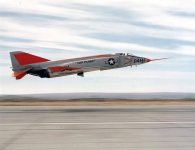
1958, legend born. Double Ugly, Lead Sled, Flying Anvil, St. Louis Slugger, Flying Brick, Snoopy, Rhino, Old Smokey,
McDonnell Douglas F-4 Phantom II made its maiden test flight with pilot Robert C. Little

1779823414705.jpeg
 
Last edited:
The British version was redesigned and built to include Rolls Royce Spey engines and unique British avionics.

F4-K was the Royal Navy carrier air defence fighter version and the F4-M the RAF tactical strike and reconnaissance version.
15 F4-J models were purchased in the mid 80s for air defence of the Falklands after the war.
K and M versions can be identified by the large diameter radar nose, taller intakes and larger diameter tailpipes compared to none RR engine versions, plus the lack of a dirty smokey exhaust trail.

1779823970597.jpeg
1779824118766.jpeg

1779824040393.jpeg
 
1896 Dow Jones Industrial Average begins with an average of 12 industrial stocks, the daily closing value is 40.9

I should've invested in hats and mustache trimmers.
 
941
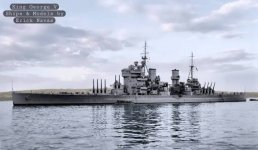
Admiral Tovey's Battleships HMS Rodney and King George The Fifth intercepted and sank the Bismarck.
It's fascinating how naval warfare changed with this episode. The Germans would hide their surface fleet in Norway for most of the war, and were stuck with their U-Boat fleet to deal with convoys. The world's navies are still drawing from the U-boat history today. Much like how Ukraine is "stuck" with drones because their air force is limited.
 
It's fascinating how naval warfare changed with this episode. The Germans would hide their surface fleet in Norway for most of the war, and were stuck with their U-Boat fleet to deal with convoys. The world's navies are still drawing from the U-boat history today. Much like how Ukraine is "stuck" with drones because their air force is limited.
They were already hiding them. After Bismarck they hid them even more. The capital ships were doomed if they came out.
Even if they got in to the Atlantic undetected, after hitting a convoy or two their presence would be known and fate sealed.

Scharnhorst and Gneisenau broke out twice. The first time they attacked a convoy but the armed merchant Cruiser Rawalpindi sacrificed herself to cover the convoy scattering, then they away when HMS Manchester appeared then they were chased away by the battleship HMS Renown that hit Gneisenau destroying A turret and the bridge superstructure.

Second time they sorties together they found a convoy of empties and sank three before running when the battleship HMS Ramillies showed up. Then they got in to a scattering convoy and sank a few ships before running from HMS Rodney.

After that Gneisenau never came out again and was bombed to pieces.

Scharnhorst was sunk by HMS Duke of York when it tried to sortie against a convoy in the Arctic.

Neither of them got their planned 1940 upgrade from the 11 inch guns they were completed with to 15 inch.

Tirpitz never sortied at all and was sunk in a Fjord.

The aircraft carrier was never completed.

The full fleet plan (Plan Z), to be completed by 1948 was cut short by Hitler starting the war early. It proposed a fleet centered on ten battleships and four aircraft carriers which were intended to battle the Royal Navy and French Marine nationale.
15 Panzerschiffe raiders (Graff Spee was one of the three they completed) were supposed to range across the globe sinking shipping projected by the Battleships and Carriers as they came and went from German ports.

Altogether over 700 ships were planned.

It was completely delusional.
At the start of the war the RN had 15 battleships in service with another 5 commissioned by the end of 1942. There were three Lion class laid down but construction of them suspended and plans for others scrapped in favour of carriers and escorts.
France had 8 in service with teo almost completed at the outbreak.

Even if delayed until 1948 the German Capital fleet would still only be half the size of the RN as built on its own.

When German plans and construction switched to U- Boats they couldn't build enough anyway. Dönitz's fleet did not reach the 300 boats he thought necessary to win a commerce war against Britain until 1943. By then the U-boats had been defeated.
 
Last edited:
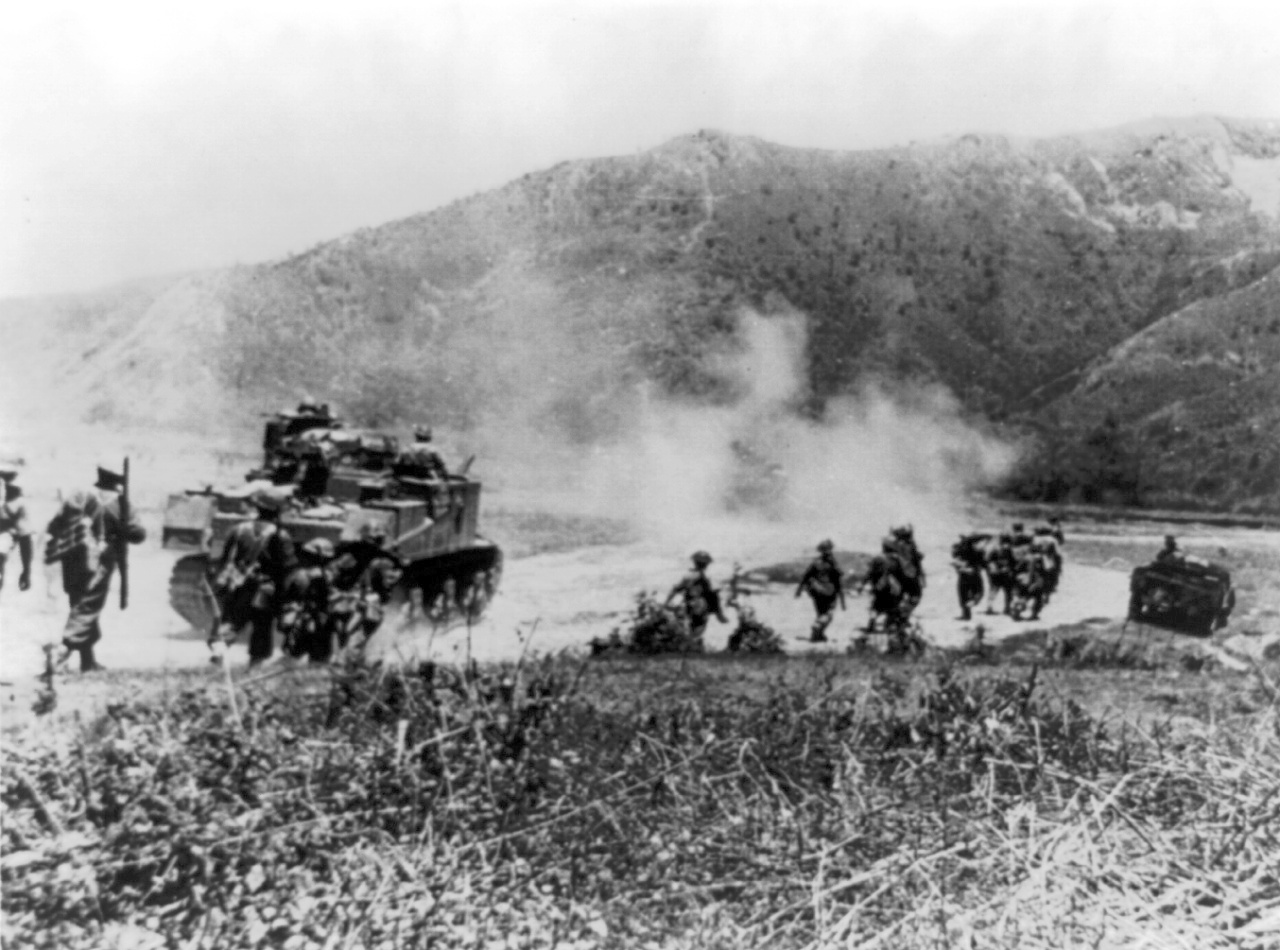
1944, the Japanese Imperial Army's greatest defeat happened in India.

Battle of Imphal and Kohima ended Japan's last offensive of the Second World War.

Of 85,000 Japanese troops only 25,000 survived the battle and retreat through the jungle.

Out of ammunition, food and medical supplies, the men were eating roots, bamboo shoots, leaves, and in some documented cases, their own dead. Soldiers injured or too weak to walk were left behind in the jungle.

At Kohima, the centre of gravity of the entire battle compressed onto a single tennis court behind the District Commissioner's hilltop bungalow, British and Indian troops, mostly the 4th Battalion Royal West Kents and the 1st Assam Regiment, held one side of the tennis court. Japanese soldiers held the other. They fought across it for 16 days with rifles, grenades, and bayonets, at distances of less than 30 yards. Officers threw grenades back and forth like cricket balls. The clay court was churned into a graveyard.

The British and Indian troops who held the tennis court are commemorated today by a small stone memorial at Kohima War Cemetery. The inscription on it has become one of the most famous epitaphs of the Second World War:

"When you go home, tell them of us and say,
For your tomorrow, we gave our today."

The defeat at Kohima and Imphal broke the offensive capacity of the Imperial Japanese Army in mainland Asia and was their last attempt at an offensive.


ISF - Join now!

Every member here is approved by hand. No bots, no spam, just people who care about evidence and honest debate.

Membership is free!

Create your free account

Back
Top Bottom