'Lost Civilisations'

not unless you have them shut, if you actually had them open you'd see this
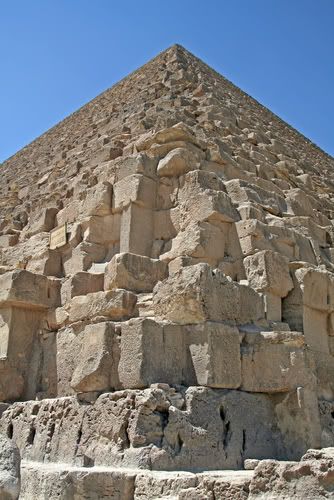
[qimg]http://i11.photobucket.com/albums/a178/belmarduk/pyramids-of-giza-egy238.jpg[/qimg]

well they didn't, heres a pyramid experts opinion


youve been reading woo and believing it, perhaps you should do a little more research, this time from credible sources !
might also help if you made an effort to understand the information already posted to you
;)

I have been there and measured the stones myself!

I have no disagreement with the comments in the article you are refering to.

I am refering to something else.
 

[a less obnoxious size]
I have ridden the donkey at that site!

I have no disagreement with the comments in the article I've yet to disclose.

I am refering to something else.

That paper makes wild allegations of donkey shows at every turn.

Aliens did it.
 
I have been there and measured the stones myself!.
right so you saw this with your own eyes
pyramids-of-giza-egy238.jpg

and then declared

the stones where actually fitted to each other perfectly
this clearly is not true as that photo was also taken by someone who was there and the stones are far from perfect
I have no disagreement with the comments in the article you are refering to
I am refering to something else.
then you need to either
1. be more clear
2. not move the goalposts after youve been shown to be wrong

but I'm intrigued, please detail the method you used to measure the 40 ton stones which have never been mentioned in any real egyptological report ever written. And please, unless you can provide something other than hearsay evidence for your claim, its not worth anything, theres are plenty of fruitloop claims made about the GP already, so don't waste anyones time with your personal beliefs
:p
 
right so you saw this with your own eyes
[qimg]http://i11.photobucket.com/albums/a178/belmarduk/pyramids-of-giza-egy238.jpg[/qimg]
and then declared


this clearly is not true as that photo was also taken by someone who was there and the stones are far from perfect

then you need to either
1. be more clear
2. not move the goalposts after youve been shown to be wrong

but I'm intrigued, please detail the method you used to measure the 40 ton stones which have never been mentioned in any real egyptological report ever written. And please, unless you can provide something other than hearsay evidence for your claim, its not worth anything, theres are plenty of fruitloop claims made about the GP already, so don't waste anyones time with your personal beliefs
:p

I used a tape measure.

As I have pointed out I was not refering to the stones in the photograph.

To wonder how these stones were cut is quite reasonable. As a craftsman myself with a good knowledge of the machinery necessary to perform such a task. It is quite obvious how difficult it would be to fit the stones the way they are fitted.

While I was there I was interested to see a small pyramid approx' 10ft high which had recently been made by experts trying out the techniques thought to be used by the original builders.
The stones where quite small weighing maybe 100kg each and it really was astonishing how bad it looked. It looked like it had been thrown together by a bunch of drunk dry stone wallers in an afternoon.

I could not see a single good fitting joint in whole shambles.
 

[a less obnoxious size]
I have ridden the donkey at that site!

I have no disagreement with the comments in the article I've yet to disclose.

I am refering to something else.

That paper makes wild allegations of donkey shows at every turn.

Aliens did it.

I was on a camel and you don't want to hear what it felt like when the guide cracked his whip and it started to gallop.
 
To wonder how these stones were cut is quite reasonable. .
its reasonable, but also totally explained, plenty of copper tools were found in situ and at the quarry, they used copper saws, drills and adzes to cut and shape the blocks. Your claim that there is perfection in the constructoon method is clearly unsupported though. As you can see from the picture.
 
I was on a camel and you don't want to hear what it felt like when the guide cracked his whip and it started to gallop.
I can only say that if your pyramid surveying skills are as underdeveloped as your camel riding skills, your point about 20 tonne blocks fails.

A camel's gait is MUCH easier on a rider than a horse.

... if you know what you're doing.
 
Your gibbering again, I am aware of how the pyramid was constructed. You can see it with your own eyes.

My question is how the Egyptians were able to cut stones weighing up to 40 tons to fit together to a very high tolerance of accuracy. Especially when many of the joints are not straight, some even have corners.

I am refering specifically to the large foundation stones around the base and forming the chambers inside the pyramids.

I can't see how this could be done today, even with lasers.

My post was couched in understandable English. I am not responsible for your lack of knowledge,but here is a good site. No super advanced unknown technology needed.
http://www.cheops-pyramide.ch/khufu-pyramid/stone-quarries.html
 
I used a tape measure.

As I have pointed out I was not refering to the stones in the photograph.

To wonder how these stones were cut is quite reasonable. As a craftsman myself with a good knowledge of the machinery necessary to perform such a task. It is quite obvious how difficult it would be to fit the stones the way they are fitted.

While I was there I was interested to see a small pyramid approx' 10ft high which had recently been made by experts trying out the techniques thought to be used by the original builders.
The stones where quite small weighing maybe 100kg each and it really was astonishing how bad it looked. It looked like it had been thrown together by a bunch of drunk dry stone wallers in an afternoon.

I could not see a single good fitting joint in whole shambles.

The Egyptians had a lot of practice. The first pyramids were pretty sloppy.


You are so desperate for the occult,the paranormal and and 'things beyond our knowledge' to exist,you do no research,and draw erroneous conclusions. These experts were not experts,they did not have the practice and the experience that the Egyptians built up over many generations. I'm not surprised that their pyramid looked like the Stepped Pyramid.
 
The Egyptians had a lot of practice. The first pyramids were pretty sloppy.

No, see... uh... the ones that "the man" thinks are older are actually NEWER, and they look worse because that was the humans trying to imitate the alien's masterwork. Or something. Yeah, that's the ticket...
 
Please note, there are no earlier more simply versions of PP lego stones anywhere to be found...in fact the later builds/repairs seem to be the more simple ones to carve or construct.
 
The Egyptians had a lot of practice. The first pyramids were pretty sloppy.
[qimg]http://www.internationalskeptics.com/forums/imagehosting/thum_234094db047e8c6f9c.jpg[/qimg]

You are so desperate for the occult,the paranormal and and 'things beyond our knowledge' to exist,you do no research,and draw erroneous conclusions. These experts were not experts,they did not have the practice and the experience that the Egyptians built up over many generations. I'm not surprised that their pyramid looked like the Stepped Pyramid.

What are you babbling on about now, next you'll be assuming I think there's a
star gate in there.
There isn't by the way, I've looked:D
 
Correct me if I am wrong

You what? The post you just quoted already did. The article linked even tells you where to find the published study should you not believe me and wish to investigate further. There's no need for me to correct you any further because if you'd bothered to read my post you'd already know that you're wrong. Elephants cannot get drunk by eating rotten fruit.

See, this is why you have such problems here. You don't just make up nonsense and expect people to believe it, you don't even pretend to read any of the evidence contradicting you. I give you a scientific study showing that elephants can't get drunk, you pretend it never existed and instead refer to some program you think you might remember watching that might have showed something, maybe. And it's not the first time you've referred to a program that you have no evidence actually existed. Instead of just blurting out your fantasies with no regard for what other people have said, try actually reading the posts here, and maybe even doing your own research. Who knows, you might actually lean something instead of just making an idiot out of yourself.

All that said, I concede that getting an elephant drunk may well pose difficulties and dangers I didn't fully consider.

No, it doesn't "pose difficulties and dangers", it's physically impossible.

Running them off a cliff, or into a spiked pit sounds easier.

Really? Have you ever actually been near an elephant? I would love to hear your strategy for chasing one off a cliff that wouldn't instead result in it simply stamping you into the ground.

Please note I'm not saying it's impossible to do so, I'm simply saying that you, personally, have absolutely no clue how to do so. Which is the whole point here. Many people are able to do things that you cannot. The fact you cannot do something does not mean that no-one can. That goes for hunting elephants, carving stone, and many other things. Rational thinking apparently included.

This wouldn't remove the danger, but I think I could come up with a pachyderm burger if the need were to arise. Some manner of poisoning a spear or arrow tip seems like a prudent course.

I can only strongly suggest you never, ever try hunting animals, because anything else I could say to you here would be equivalent to advocating suicide. It really is truly bizarre how you massively overestimate your own competence at things you have never tried and demonstrably have no idea whatsoever how to do, but have such difficulty imagining someone with years of personal practice and centuries of cultural experience could be a bit better than you at something.
 
Please note, there are no earlier more simply versions of PP lego stones anywhere to be found...in fact the later builds/repairs seem to be the more simple ones to carve or construct.

this is another demonstration of ignorance on your part isn't it.
The Puma Punku temple was one of the last structures built at Tiwanaku and if you think thats impressive then you haven't seen the architecture at Teotihuacan
http://en.wikipedia.org/wiki/Teotihuacan
;)
 
Even if the Egyptions had the tech to polish the limestone perfectly smooth you couldn't get the blocks to fit together "perfectly"--they used a type of limestone with fossils in it, which means voids in the rock which cannot be polished away. Trust me, I've tried! Those foraminiferas necessarily make things rough.

Like King of the Americas, you need to develop a better understanding of the materials being worked with. You obviously missed a great deal that would be critical to a stone carver when you were out there, punshhh.

dafydd said:
These experts were not experts,they did not have the practice and the experience that the Egyptians built up over many generations. I'm not surprised that their pyramid looked like the Stepped Pyramid.
As I learned history, the Egyptians started with a single "step"--really a square temple with gently sloping sides (necessary for that kind of construction). Then someone got the idea of putting a temple on top of another. The step pyramids were a number of temples on top of one another, essentially. Then an archetect got the idea of an INFINITE number of temples atop one another--a pyramid. He messed up the first one and had to re-design it in a hurry, which gives us the step pyramid.

punshhh said:
While I was there I was interested to see a small pyramid approx' 10ft high which had recently been made by experts trying out the techniques thought to be used by the original builders.
The stones where quite small weighing maybe 100kg each and it really was astonishing how bad it looked. It looked like it had been thrown together by a bunch of drunk dry stone wallers in an afternoon.
You again make the exact same error KotA makes: You cannot look at what ametures do and assume that this is proof of how experts would acomplish the same task. If you asked me to turn a bowl on my grandfather's lathe I'd probably destroy the thing. That does not preclude my grandfather from making a beautiful heirloom piece in the same amount of time--he is an expert, and knows all sorts of little tricks and secrets that I simply haven't had time to learn. Similarly, experts in Egyptian archeology cannot be expected to be experts in stone carving, and even if they are they can't be expected to be experts with the tools the ancients used--therefore it's not a valid test. Interesting yes, and we can probably learn a lot from it, but not valid in the sense of definitively proving how the anceints did anything.

Cuddles said:
It really is truly bizarre how you massively overestimate your own competence at things you have never tried and demonstrably have no idea whatsoever how to do, but have such difficulty imagining someone with years of personal practice and centuries of cultural experience could be a bit better than you at something.
Isn't there a psychological thing where you know so little you literally don't know how little you know, and you think you know it all? Can't remember the name, but it seems KotA is a perfect example of this.
 
Last edited:
No, see... uh... the ones that "the man" thinks are older are actually NEWER, and they look worse because that was the humans trying to imitate the alien's masterwork. Or something. Yeah, that's the ticket...

Please note, there are no earlier more simply versions of PP lego stones anywhere to be found...in fact the later builds/repairs seem to be the more simple ones to carve or construct.

LOL.

King of the Americas said:
a pachyderm burger if the need were to arise. Some manner of poisoning a spear or arrow tip seems like a prudent course.
Because everyone loves burgers made from poisoned meat. Come on now, he's not even trying.
 
For some reason this keeps getting passed over. King of the Americas, would you mind reading and responding to it? Architectural cramps and other artifacts made of "a unique copper-arsenic-nickel bronze alloy" exist at Puma Puncu and in other sites in the same region.

It follows logically that adzes, chisels, saws and other stone-cutting tools would have been made from that "unique alloy" as well. There is no need to speculate on advanced or "lost" technology, since we know for a fact that the builders of Puma Puncu employed metal tools of other kinds.

Notable features at Pumapunku are I-shaped architectural cramps, which are composed of a unique copper-arsenic-nickel bronze alloy. These I-shaped cramps were also used on a section of canal found at the base of the Akapana pyramid at Tiwanaku. These cramps were used to hold the blocks comprising the walls and bottom of stone-lined canals that drain sunken courts. I-cramps of unknown composition were used to hold together the massive slabs that formed Pumapunku's four large platforms. In the south canal of the Pumapunku, the I-shaped cramps were cast in place. In sharp contrast, the cramps used at the Akapana canal were fashioned by the cold hammering of copper-arsenic-nickel bronze ingots. The unique copper-arsenic-nickel bronze alloy is also found in metal artifacts within the region between Tiwanaku and San Pedro de Atacama during the late Middle Horizon around 600-900.

--summarized from: Protzen, Jean-Pierre; Stella Nair, 1997, Who Taught the Inca Stonemasons Their Skills? A Comparison of Tiahuanaco and Inca Cut-Stone Masonry: The Journal of the Society of Architectural Historians. vol. 56, no. 2, pp. 146-167
Robinson, Eugene (1990). In Bolivia, Great Excavations; Tiwanaku Digs Unearthing New History of the New World, The Washington Post. Dec 11, 1990: d.01.
Lechtman, H.N., 1998, Architectural cramps at Tiwanaku: copper-arsenic-nickel bronze. In Metallurgica Andina: In Honour of Hans-Gert Bachmann and Robert Maddin, Deutsches, edited by T. Rehren, A. Hauptmann, and J. D. Muhly, pp. 77-92. Bergbau-Museum, Bochum, Germany.
Lechtman, H.N., 1997, El bronce arsenical y el Horizonte Medio. En Arqueología, antropología e historia en los Andes. in Homenaje a María Rostworowski, edited by R. Varón and J. Flores, pp. 153-186. Instituto de Estudios Peruanos, Lima.

 
For some reason this keeps getting passed over. King of the Americas, would you mind reading and responding to it? ...

...

My response is just more questions...

How hard was this alloy?

Has ANYONE found even a single tool made from this substance?

If so, what kind of tool was it- a saw, a chisel, a blade of some sort?
 
KotA, poisoned arrows are decent for monkey- and ape-sized things. However, "the dose makes the poison", as they say in toxicology. You're simply not goinig to get enough poison on a stone arrow to take down a mammoth or mastodon. You don't get a whole lot of poison dart frogs (and none of the really nasty ones) at the edges of glaciers, where there were a lot of mammoths and mastodons.

Again, you really don't know as much as you seem to think you know about these subjects. There are proven methods for killing mammoths--we've found a small number of kill sites. Here's a hint: one person only makes probiscids mad.
 

Back
Top Bottom