So you admit oxyacetalyne torches were used in the world trade center. Thankyou
Of course the structure formed a natural Jet burner effect a long chimney with air holes just like in the second picture.
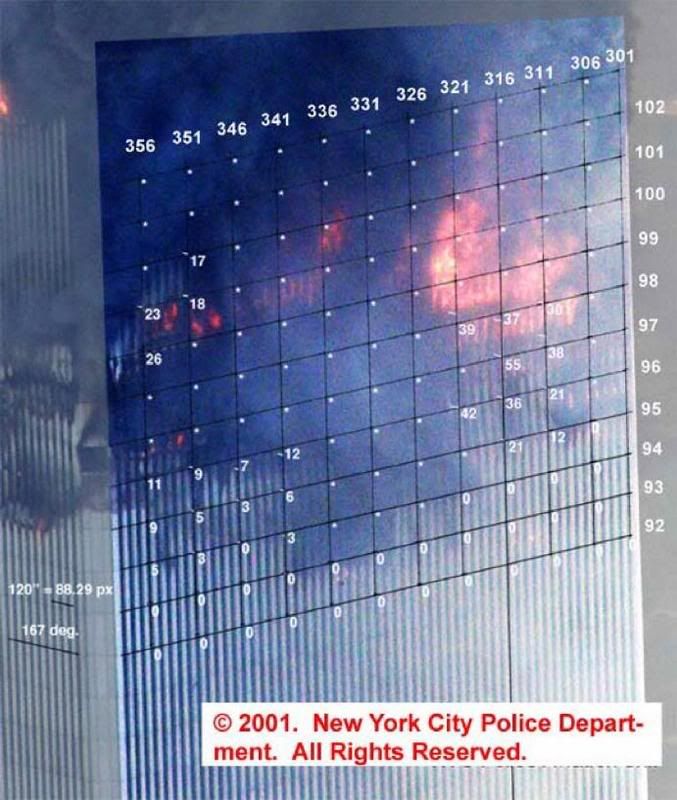
Also you still did not answer what was burning in the first picture.
The oxyacetylene torch would work better don't you think if I actually turned on the Acetylene. There is no Acetylene going to the tip only oxygen and heated steel along with a little aluminum. It is a test to see what happens when you burn steel in proximity inside of Aluminum.
Charcoal was the fuel source the same as first fuel ever used to make steel.
" The combustion of iron and certain other (highly heated) metals in a pure oxygen flow is technically of great importance due to the accompanying huge quantities of heat - huge when compared with the unit volume of the metal, for iron, it is around 12900 cal/l compared with 2½ cal/l for hydrogen. A strongly condensed sharp oxygen jet, meeting a plate made out of malleable iron or steel at a location, which has been heated to about 1 350ºC, combusts the iron there into iron oxide and blows the oxide away. The heat tone of the combustion heats and combusts neighbouring sections; locations in the direction of the gas jet pass through the same process, and since this continues, you can make deep groves in plates and eventually cut them (autogenous). A metal can be cut autogeneously only when its temperature of brisk combustion and oxide melting point lie below its melting temperature. This is the reason, why cast iron, copper, aluminium, et al. cannot be cut, but only melted through. The combustion of aluminium into aluminium oxide (Al2O3) forms the foundation of alumino-thermics (H. Goldschmidt, 1899), which serves generation of high temperatures, especially for welding (rail links, large machine parts), but here the oxygen comes from the interaction of aluminium with iron-oxide. During the conversion of 1 kg thermite mixture, consisting of 3 parts Fe2O3 and one part of Al, there arise about 850 kcal. This enormous heat tone of the reaction is due to its rapid development during a few seconds; the estimated maximum temperature is 3 000ºC."
http://kr.cs.ait.ac.th/~radok/physics/j5.htm
Once you acheive a substainable mass of heated metal steel can burn in air.
You just have to have enough steel to continue the reaction, it is a critical mass relationship between the cooling effect of the air, and the Oxide Combustion reaction of the steel, If you heat the air, you need less mass to keep the steel burning.



 (a hydrate of carbon)


