Around here, the carnivore diet is more often than not touted as the only natural diet for humans, by people who imagine that early sapiens hunted and ate big mammals every day. There are all sorts of ideologies attached to it for them - denying that we're omnivores seems to feed their supremacist beliefs. It's nearly always coupled with anivaxx and alternative med beliefs as well (but they're all into weird supplements and treatments).
Can they point to any - just one! - "natural" society of humans whose diet was exclusively carnivore? Just one?
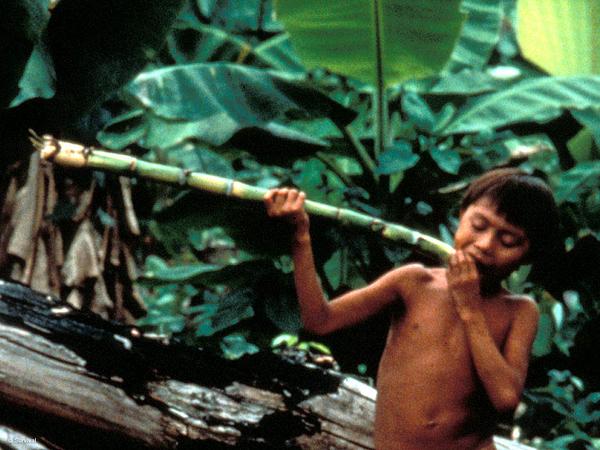
Looking at today's remaining peoples that have managed to maintain to some degree at least a "natural" (i.e. pre-contact, tribal) way of life, I find e.g. this:
There are about 305 Indigenous peoples living in Brazil today, totalling around 1.7 million people, or 0.8% of Brazil’s population. From the Amazon rainforest to the Atlantic forest and urban areas, they live all around the country, with many different ways of life. Many are threatened by the...
www.survivalinternational.org
The Yanomami cultivate 500 plants for foods, medicines, house-building and other needs. They use nine different plant species just for fish poison. The Tukano recognize 137 varieties of manioc.
Indeed, hunter-gatherer societies are notable for their, compared to our, vast and almost encyclopedic knowledge about the plants and animals in their environment. I remember from Jared Diamond's "Gubs, Germs and Steel" the claim that children in inner New Guinea learned the names, properties and uses of a
thousand plants early on.
Of course every pre-technology society anywhere will use as food almost everything that is edible. No group of early homo sapiens sapiens could hope to survive if they did not discover that most seeds and nuts and many fruits, tubers and roots give you usable calories.
It is equally trivially true that every pre-modern society will use any usable animals in their environment - mainly for food, clothing, tools and ornament, occasionally as partner.
Whether animal or non-animal diet dominates will largely be a function of availabilty, which changes with climate, season, era, geography, topography, to name a few. In hot, humid conditions, there will be plenty of fruits as well as plenty of insects and larvae; in cold, dry climates, perhaps roots dominate plant use while animals tend to be larger.
And perhaps that last phrase reveals a glimpse into the "carnivore" mindset: Our (meaning: us internet users mostly in the industrialized, developed service societies mostly of Europe and North America) idea of pre-historic life is very much shaped by images of ice age culture and life, of surviving under cold conditions, practically on the edge of the ice sheets, in tundras and prairies, where the mammoth, the wooly rhino and the reindeer roam. So humongous steaks for breakfast, lunch and dinner are imagined.
But of course homo (whether erectus, sapiens, sapiens sapiens...) came out of Africa and already dealt with a range of different habitats long before and also while some bands made it to cold Eurasia.
And all that this shows is that societies of homo survive and thrive on lots of diets. We are omnivores.