• Security incident: ISF was recently accessed by intruders. Please change your password, and change it anywhere else you used it. Read more

Ed India going down the Dictatorship road fast...

"I'm free to do everything that is proper to do. Why should I be upset that I am not free to do improper things?"

It's not just dictatorships, either. Unlike in the US, in the UK your silence can be held against you in court. To me, this is a fundamental unfreedom. But I'm sure most UKians take it well in stride.
So what's the solution? No rules at all? That'll work well.
 
Will one of India's most celebrated writers really face prosecution for things she said more than a decade ago?

Last week, 14 years after the original complaint, Delhi's most senior official granted permission for the Booker Prize-winning author Arundhati Roy to be prosecuted under India’s stringent anti-terror laws. The Unlawful Activities (Prevention) Act (UAPA) is notorious for making it exceptionally challenging to get bail, often resulting in years of detention until the completion of trial.

She originally said

“Kashmir has never been an integral part of India. It is a historical fact. Even the Indian government has accepted this,”

at a conference organised by the Committee for the Release of Political Prisoners, in October 2010.

https://www.bbc.co.uk/news/articles/c3ggyz13m2po

Totally an act of terrorism and any right thinking government would lock them up for such things.
 
Will one of India's most celebrated writers really face prosecution for things she said more than a decade ago?

Last week, 14 years after the original complaint, Delhi's most senior official granted permission for the Booker Prize-winning author Arundhati Roy to be prosecuted under India’s stringent anti-terror laws. The Unlawful Activities (Prevention) Act (UAPA) is notorious for making it exceptionally challenging to get bail, often resulting in years of detention until the completion of trial.

She originally said

“Kashmir has never been an integral part of India. It is a historical fact. Even the Indian government has accepted this,”

at a conference organised by the Committee for the Release of Political Prisoners, in October 2010.

https://www.bbc.co.uk/news/articles/c3ggyz13m2po

I’m sure millions of words have been written on the subject of Kashmir’s right to autonomy or not. Arundhati Roy’s statement is no different, and is not terrorism by any stretch of the imagination.

The statement by the other defendant sounded a bit more like terrorism, but it’s been edited, so it could be less controversial than the BBC makes out.
 
So what's the solution?
The general solution taken up by the more free societies that we have (none are perfect) is a combination of rule of law, democracy, separation of powers, and the protection of certain rights and freedoms. I think these solutions while imperfect have all shown themselves to be valuable. But their usefulness does rely on the robustness of the institutions that provide those protections.

No rules at all? That'll work well.

Why would you think that "no rules at all" is an answer anyone here would suggest? That just seems to have come completely from left field.
 
"I'm free to do everything that is proper to do. Why should I be upset that I am not free to do improper things?"

It's not just dictatorships, either. Unlike in the US, in the UK your silence can be held against you in court. To me, this is a fundamental unfreedom. But I'm sure most UKians take it well in stride.

This made me think of another example of ways in which we're not likely to feel our freedom of lack thereof just from day to day life:

Most of us are never arrested or put on trial. As such we have no personal experience of the degree to which our freedoms in relation to a fair trial or legitimate punishment for crimes are protected. But these things are still an important aspect of a free society.
 
Not so related to the "dictatorship" aspect of the thread, but since this seems to also be our generic India thread, I thought I'd share what I found to be a very interesting short book review:

https://marginalrevolution.com/marginalrevolution/2024/06/accelerating-indias-development-2.html

What will India look like in 2047? Combining projections of economic growth with estimates of the elasticity of outcomes with respect to growth, Karthik Muralidharan in Accelerating India’s Development reports:
Even with a strong GDP per capita growth rate of 6 per cent, projections for 2047 paint a sobering picture if we maintain our current course. While India’s infant mortality is projected to halve from 27 per 1000 births to 13 in 2047, it will still be well above China’s current rate of 8. Child stunting will only decrease from 35.5 to 25 per cent, which is only a 10.5 percentage point or 30 per cent reduction in nearly 25 years. In rural India, 16 per cent of children in Class 5 will still not be able to read at a Class 2 level, and 55 per cent of them will still not be able to do division at the Class 3 level.
Bear in mind that this is assuming an optimistic 6% growth rate in GDP per capita. Even more telling is that if growth increased to 8%, infant mortality would only fall to 10 per 1000 (instead of 13). Growth is great. It’s the single most important factor but it’s not everything. If India can double the elasticity of infant mortality with respect to growth, for example, then at the same 6% growth rate infant mortality would fall to just 6 per 1000 by 2047–that’s millions of lives saved. The big argument of Muralidharan’s Accelerating India’s Development is that India can get more development from the same level of growth by increasing the total factor productivity of the state.

There are many “big think” books on growth–Landes’ Wealth and Poverty of Nations, Acemoglu and Robinson’s The Narrow Corridor, Koyama and Rubin’s How the World Became Rich–but these books are primarily historical and descriptive. The big think books don’t tell you how to develop. Create institutions to strike “a delicate and precarious balance between state and society” isn’t much of a guide to development. Accelerating India’s Development is different.

“Accelerating” opens with two excellent chapters on the political economy of politicians and bureaucrats, outlining the constraints any reforms must navigate. It concludes with two chapters on the future, including ideas like ranked choice voting, representing its aspirations. It’s in-between the constraints and the aspirations, however, that Accelerating India’s Development is unique. I know of no other book that offers such a detailed, analytical, and comprehensive examination and evaluation of a country’s institutions and processes.

More (the most interesting parts) at the link.
 
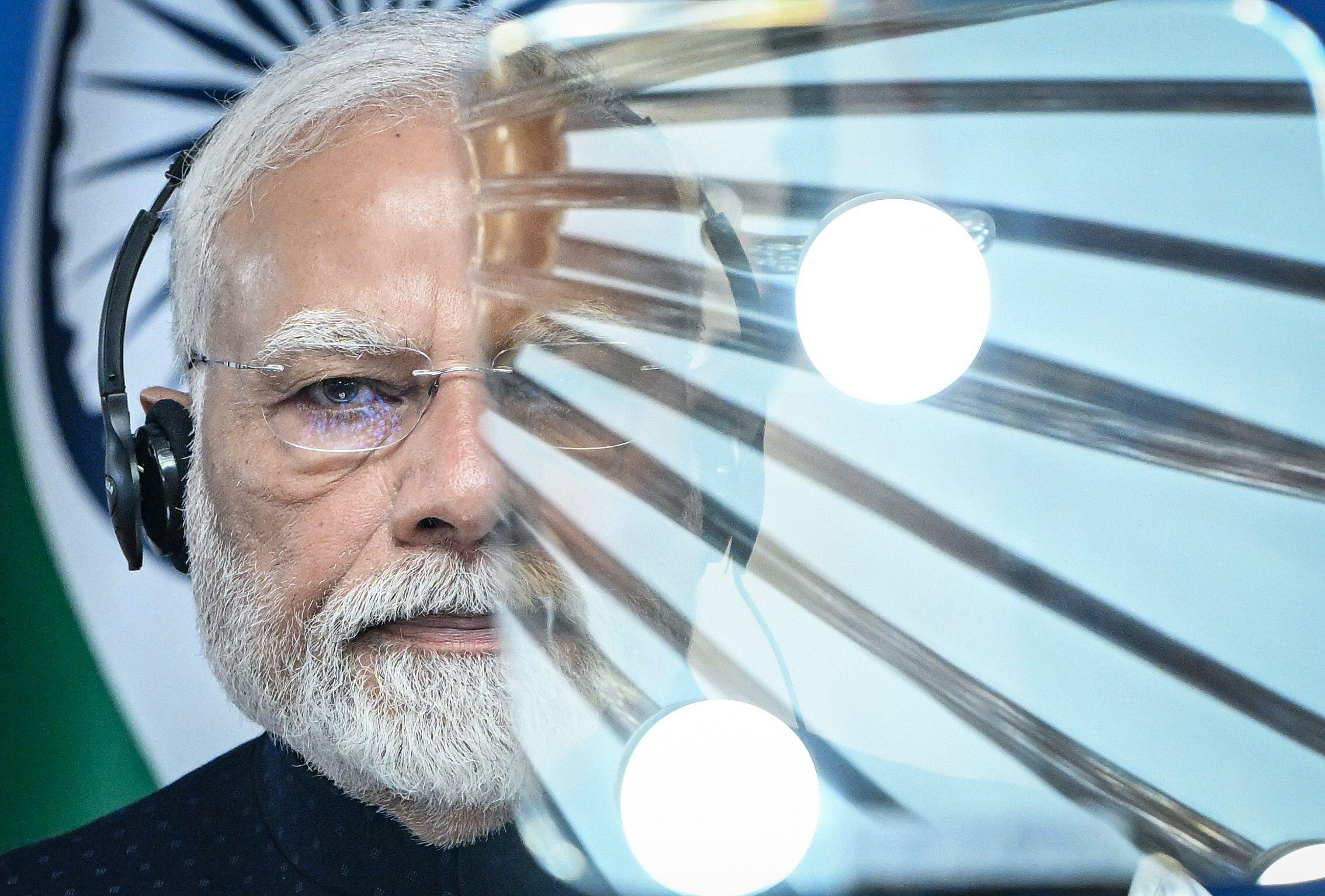
Great to see democracy having an influence. The Modi steamroller has been brake checked. He even accepted the result and hasn't whined about fraud.

Pretty funny that Modi’s party lost its seat in Faizabad (where Modi’s Ayodhya Ram Mandir temple was built) to a Dalit.

(Just listening to an ABC podcast about whether Hindutva is dead.)
 

ISF - Join now!

Every member here is approved by hand. No bots, no spam, just people who care about evidence and honest debate.

Membership is free!

Create your free account

Back
Top Bottom