...to illustrate the point I was trying to make, let's take a tandem plane instead of a biplane. That way the fuselage can be of the same forward area as a monoplane and there's absolutely no rigging between the wings. There's also no interference between the wings.
For discussion purposes, we can assume there's no interference, but as TjW said, there's likely to be quite a bit of it. The rear wing is flying in air that's been disturbed by the front wing, so it's seeing some turbulence and the air will be coming at it from a different angle.
If the forward wing has movable surfaces (flaps, ailerons, spoilers), then the interactions with the rear wing will change dramatically when those controls are used. And if the forward wing doesn't have flaps, then the plane will have a high take-off and landing speed despite all the wing area, which is the worst of both worlds.
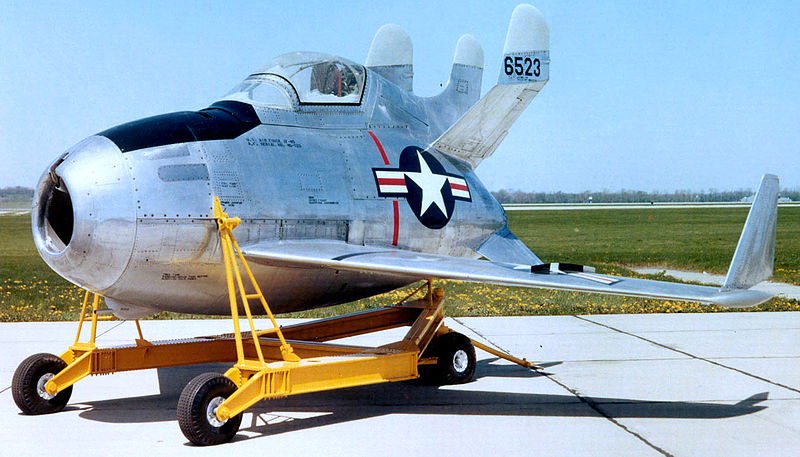
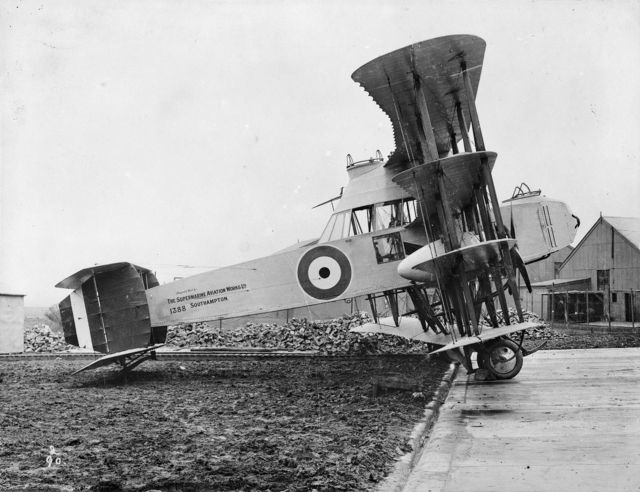
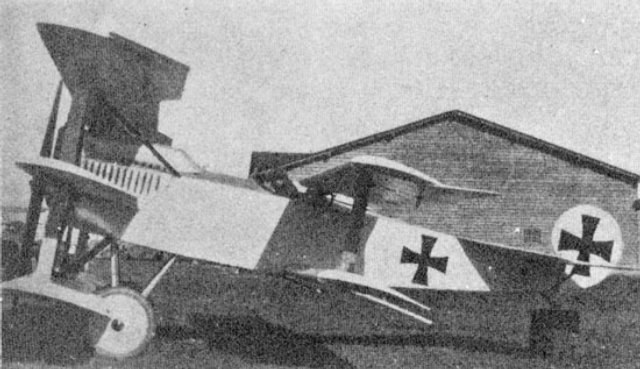
A classic tandem (offhand I know of only 3 examples, and none were successful. Okay, I have a thing for unusual airplanes) doesn't have a separate horizontal stabilizer, so if the craft is to be passively stable, the plane will have to have some decalage between the front and rear wings, which aggravates the induced drag problem.
Oddly, Wikipedia's definition of decalage is much narrower than mine.
Anyway,
Also, biplanes don't necessarily have higher induced drag simply because they have more wingtips. Induced drag is primarily due to wing shape (planform) and CL. If you made monoplane and biplane versions of an airplane, and both planes had the same total wing area and the same wing shapes (the individual wings would have to be smaller on the biplane), they'd have the same induced drag, to first order.
Would the same hold with the tandem plane example? If the wing area is identical, the chord length is the same, camber is the same, airfoil cross-sections, all ceteris paribus, then surely the tandem design will have greater induced drag than the monoplane for the same reason that short stubby wings have more induced drag than long thin ones?
It would certainly have more induced drag for the reason you cited. In my example, I assumed that the wings would
not be stubbier.
But in such a scenario the tandem plane's wings would be much stiffer because they would be shorter.
I'd look at it as "the tandem plane's wings could be made lighter for the required stiffness." Bearing in mind, of course, that the monoplane's wing would have to be substantially stiffer than the tandem's.
This sounds good for high speed flight because it saves on weight and prevents aeroelasticity and control reversal and other nastiness. There would also be a fairly substantial reduction of the plane's frontal area, which again, sounds good for high speed flight.
Why would the frontal area be smaller? I thought we were assuming the same size fuselage.
The additional wetted area won't be that much greater either; just the wing tips.
That was one of the going-in assumptions, but if you actually lay out a configuration, it may be difficult to keep the fuselage from growing quite a bit when you go to the tandem if there's still a horizontal stab.
What am I missing here? Why isn't this configuration better? Interference drag from all the additional wing roots?
Actually, interference drag can be pretty significant, so, yes, that's a real issue. But I think the wing interaction problems are probably worse.
So: Stubby-wing tandem pros:
Lighter wings
Stubby-wing tandem cons:
Wing interaction issues
Control surface restrictions
High induced drag
Fuselage torsional stiffness (I didn't cover it above, but it may make up for the weight savings in the wing)
Longer fuselage (if there's a separate stab) or decalage-related induced drag & larger total wing area.
Obviously, I've touched on a number of issues without really diving into them, and this is already a long post. But it's an interesting subject.
ETA: When I said that I knew of only 3 tandem aircraft, I was talking about full-sized planes. I know of several in the model aircraft world. FWIW, I don't know that any of those have been terribly successful, either. Certainly mine weren't, though I keep meaning to build a third. The
Mystery Tailless is said to be a good flyer.