BenBurch
Gatekeeper of The Left



[qimg]http://www.internationalskeptics.com/forums/imagehosting/1032348d5c554269bf.jpg[/qimg]
Each "precog" was kept in a semi-conscious state, just enough to shut down their Conscious Mind so their Subconscious Mind could function unimpeded, for it is within the Subconscious Mind that all paranormal -- psychic -- activity occurs.
If, might, could, maybe......
Reification of the Possible. What other negatives would you like us to prove?

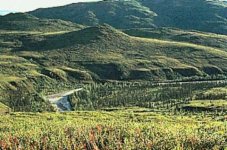
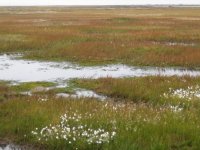
Tundra in the summer;


Orjan Gustafsson of Stockholm University in Sweden, one of the leaders of the expedition, described the scale of the methane emissions in an email exchange sent from the Russian research ship Jacob Smirnitskyi.
"We had a hectic finishing of the sampling programme yesterday and this past night," said Dr Gustafsson. "An extensive area of intense methane release was found. At earlier sites we had found elevated levels of dissolved methane. Yesterday, for the first time, we documented a field where the release was so intense that the methane did not have time to dissolve into the seawater but was rising as methane bubbles to the sea surface. These 'methane chimneys' were documented on echo sounder and with seismic [instruments]."
The preliminary findings of the International Siberian Shelf Study 2008, being prepared for publication by the American Geophysical Union, are being overseen by Igor Semiletov of the Far-Eastern branch of the Russian Academy of Sciences. Since 1994, he has led about 10 expeditions in the Laptev Sea but during the 1990s he did not detect any elevated levels of methane. However, since 2003 he reported a rising number of methane "hotspots", which have now been confirmed using more sensitive instruments on board the Jacob Smirnitskyi.
Also recently documented is methane bubbling up from Canadian lakes.
Researchers have discovered the oldest known ice in North America, and that permafrost may be a significant touchstone when looking at global warming.
Previously it had been thought that permafrost completely melted out of the interior of Yukon and Alaska about 120,000 years ago, when climate was warmer than today," said Duane Froese, an assistant professor in the Department of Earth and Atmospheric Science and lead author of the study.
"What we found is that even within the discontinuous permafrost zone-the area where permafrost is warm and within a few degrees of 0C and shallow, only a few to tens of metres thick-it has survived at some locations for more than 700,000 years." Because of the potential longevity of the permafrost, it tells the story of climate changes over the course of hundreds of thousands of years, which Froese says is immeasurably valuable.
"Based on the incredible antiquity of the ice wedges we documented, we think that permafrost that is more than several metres below the surface is more resilient to climate warming that previously thought," said Froese.

The new research expands that estimate to the rest of the permafrost-covered northern latitudes of Russia, Europe, Greenland and North America. The estimated 1,672 billion metric tons of carbon locked up in the permafrost is more than double the 780 billion tons in the atmosphere today.
On the less good side, estimates for the amount of carbon contained in permafrost near the surface have been significantly increased. Within 3m of the surface there is over 1600 billion tones of carbon, compared to 800 billion tons currently in the atmosphere.
http://www.innovations-report.de/ht..._warming_thawing_permafrost_holds_117569.html
So I guess "we think that permafrost that is more than several metres below the surface is more resilient to climate warming than previously thought" is no great comfort after all.
None. And this is not a normal warming cycle; It will be longer and deeper than any in the past, so I expect that layer to melt too...
I wonder what sort of large terrestrial animal will be dominant at the peak of the warming? My bets are on Order Rodentia, but certainly Order Squamata has dominated in the past and may again.
Considering you had no idea what 'data manipulation' means, it is hardly expected you can fathom the simplest in terms with respect to erroneous temperature measurements and the subsequent adjustments. You were given the links several times, now read them.

The lead author is one Markus Dyck of Nunavut Arctic College, which is a relatively young little school in the Canadian territorial capital of Iqaluit. He teaches environmental studies, but doesn't seem to have much of a record dealing with marine mammals, or polar bears in particular, as a pratising scientist. He is responsible for writing, in a grant proposal for the International Polar Year, that "there is no information available about how, and if, climate change is affecting polar bears in Nunavut." This despite the fact that anyone with access to a university library can find dozens of papers on exactly that. I wrote a report on the subject back in 2005 and had no trouble finding relevant scientific literature.
Lending a hand are the familiar Willie Soon and Sallie Baliunas, a pair of Cambridge astrophysicists who have long demonstrated a hostility to anthropogenic global warming. Their work has been soundly discredited.
Now comes the rebuttal, "Response to Dyck et al. (2007) on polar bears and climate change in western Hudson Bay," in which Ian Stirling, the author of many a study that Dyck couldn't find, Andrew Derocher, William Gough and Karyn Rode, respectable scientists all, search for evidence to support each claim. Not too surprisingly, they conclude, "we found little support for any."
For example, Dyck et al. write that there is no evidence of warming in Hudson Bay for the last 70 years. Stirling et al. produce a lengthy of list of data sources to the contrary. The rest of the paper follows that pattern, right until their closing comments:
In contrast, research conducted since 1997 (the date of collection of the last data reported in Stirling et al., 1999) continues to be consistent with the thesis that climate warming in western Hudson Bay is the major factor causing the sea ice to breakup at progressively earlier dates, resulting in polar bears coming ashore to fast for several months in progressively poorer condition. That in turn has resulted in reduced reproduction and survival of young, subadult, and older (but not prime) adults. As the population began to decline, the hunting quota for Inuit in Nunavut was no longer sustainable so the decline accelerated over time.
Poor polar bears. But I suppose that's what happens when you become a poster child for climate change.
The 2008 season strongly reinforces the thirty-year downward trend in Arctic ice extent. The 2008 September low was 34% below the long-term average from 1979 to 2000 and only 9% greater than the 2007 record (Figure 2). Because the 2008 low was so far below the September average, the negative trend in September extent has been pulled downward, from –10.7 % per decade to –11.7 % per decade
Pipirr brought this up in the Myth thread :
Arctic Sea Ice Down to Second-Lowest Extent; Likely Record-Low Volume
http://nsidc.org/news/press/20081002_seaice_pressrelease.html
The 9% increase in 2008 is relative to 2007, not to the long-term average. There's lots going on here, people, plenty to see,

Extent TrendPipirr brought this up in the Myth thread :
Arctic Sea Ice Down to Second-Lowest Extent; Likely Record-Low Volume
http://nsidc.org/news/press/20081002_seaice_pressrelease.html
The 9% increase in 2008 is relative to 2007, not to the long-term average. There's lots going on here, people, plenty to see,
So what caused it? Do you have evidence or just more hyperbole?

http://www.livescience.com/environment/081006-arctic-storminess.htmlThe Arctic has become more stormy in the past 50 years due to the warming climate, which in turn has quickened the pace of drifting sea ice, a new NASA study finds.
Based on model results, climate scientists had long predicted that a warming climate would increase the frequency and intensity of Arctic storms as ocean waters became progressively warmer.
Now, a team of climate scientists has analyzed 56 years on data of the paths that storms took, as well as annual data on general storm activity, which confirmed an accelerating trend in Arctic storm activity 1950 to 2006.
They also looked at data on ice drift in the Arctic collected during the same 56-year period and found that the pace of sea ice movement along the Arctic Ocean's Transpolar Drift Stream from Siberia to the Atlantic Ocean also accelerated.
Because wind at the ocean surface is known to be the driving force behind the movement of sea ice, the researchers concluded that the increase in Arctic storminess and the sea ice drift speeds are linked. The finding, detailed in the Oct. 3 issue of the journal Geophysical Research Letters, could reinforce the critical role that changes in the Arctic Ocean play in global ocean circulation and climate change.
"Gradually warming waters have driven storm tracks — the ocean paths in the Atlantic and Pacific along which most cyclones travel — northward. We speculate that sea ice serves as the 'middleman' in a scenario where increased storm activity yields increased stirring winds that will speed up the Arctic's transition into a body of turbulently mixing warm and cool layers with greater potential for deep convection that will alter climate further," said study team member Sirpa Hakkinen of NASA's Goddard Space Flight Center in Greenbelt, Md.
None. And this is not a normal warming cycle; It will be longer and deeper than any in the past, so I expect that layer to melt too...
I wonder what sort of large terrestrial animal will be dominant at the peak of the warming? My bets are on Order Rodentia, but certainly Order Squamata has dominated in the past and may again.
You are very model of a modern climate "truther" shill,
You've information oceanic, atmospheric, and whimsical,
You know the dates of freezups, and you deny the temps historical,
From Svalbard to Point Barrow, deny them categorical,
You're passingly acquainted, too, with matters mathematical,
You misunderstand equations, both the simple and quadratical,
About climatic integration You're teeming with a lot o' news,
With many cheerful facts at odds with better-informed views.