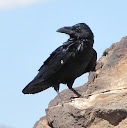
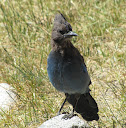
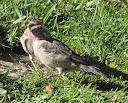
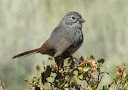
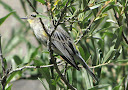
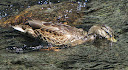
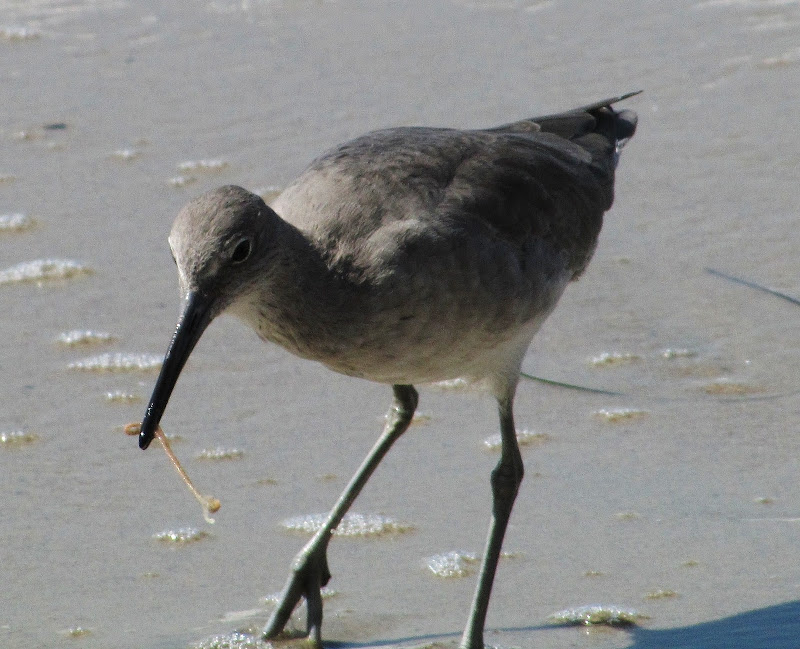
Thanks for the response Kotatsu. I had no idea that feather mites were that small. What is the size range of feather mites? Have you written papers on your mites? I think I'd like to read some more about them. ETA: It now seems likely that the objects on the bird's beak were probably cracked seed shells from a nearby bird feeder
I think most mites on birds are about 0.1-0.5mm, but I'm guessing there might be even smaller ones, as well as perhaps larger ones. Of course, if you include ticks (which are also mites), the upper size range in increased. We found some gigantic turtle ticks in Turkey this summer (now probably at the Grigore Antipa Museum of Natural History in Bucharest), and they would probably ahve measured about 8mm empty, and were well over 1.5cm when filled with blood. Horrible creatures.
I haven't written anything on them, but if you have any specific questions, i could have a look around and send you some articles. I have about 1500 articles on lice, and about as many on other animals in my room here at the university, as well as untold numbers on the computer, so I guess I could find something, at least.
By the way, the most horrible mite I know of from birds is
Knemidokoptes jamaicensis which infests Red Crossbill
Loxia curvirostra in North America. They supposedly burrow into the legs underneath the scales and will, eventually, cause the toes or feet to simply fall off, and there is very little the bird can do to stop this once it starts. Benkman
et al. 2005 suggested that infestation of these mites is actually strong enough to drive evolution of the male beaks away from the optimum for foraging.
---
Benkman, Colquitt, Gould, Fetz, Keenan, Santisteban (2005). Can selection by an ectoparasite drive a population of Red Crossbills from its adaptive peak? Evolution 59, 2025-2032.