Merged DDWFTTW in a “Real” Wind

Status
Not open for further replies.
This is the banal reality of the wonder machine. Deception.
An honest engineer can answer to his claims.

attachment.php
 

Attachments

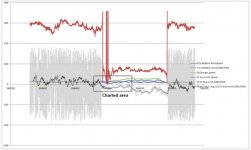
  • yev_2.jpg
    yev_2.jpg
    24.5 KB · Views: 61
Indeed it is - and science is about doing experiments to test theories.
It's about competent and honest scientists supporting their theories.
You do seem to always have a child at hand to answer questions.
 
Last edited:
This is the banal reality of the wonder machine. Deception.
An honest engineer can answer to his claims.

[qimg]http://www.internationalskeptics.com/forums/attachment.php?attachmentid=22256&stc=1&d=1305826916[/qimg]

So how about an answer regarding your claims that the cart is propelled by constantly changing winds?
 
Last edited:
So how about an answer regarding your claims that the cart is propelled by constantly changing winds?

I have already told you that you are discounted.
The aim, and a successful one, is to show NALSA, that the claim cannot be supported by its proposer. Done.
 
Last edited:
a few questions

I for one think that both possibilities are reasonable, maybe even at the same time.

Spork, I just heard another brainteaser to possibly add to your list:

A air-filled sealed box contains a balloon. The box is dropped. Does the balloon change position wrt the box?

Some questions:

1. Is it an heavier than air, NB, or, lighter than air balloon?
2. Is it elastic, i.e. deformable under its own weight?
3. Are you referring to when the box is falling, hits the floor, or both?

Comment:

1. The easiest way to get the answer is to ask Humber and PPG and use the opposite answer. This has more than a 99% chance of being correct.

Windgrins:)
 
Last edited:
He seriously believes that since an airfoil creates lift by changing the air's direction, then the air changing direction on its own creates lift.
 
He seriously believes that since an airfoil creates lift by changing the air's direction, then the air changing direction on its own creates lift.

Steve Smith thinks it can. You have made so many errors, as to rule yourself out.
 
I take it you have no answer then.

I have told you many times, and will not do so again.
It really speaks for you, that you want an explanation for a phenomenon that should not be there, rather than asking Spork why he tested the cart in those winds.
It's done. He can't answer to the submission, nor the vast differences of experiment and theory.
 
Last edited:
Perhaps he, like everyone else, is not actually confused by how autogyros work. They do, of course, have a conventional propeller to provide thrust.

Or perhaps humber is simply lying since nearly every single word he posts is either completely delusional or an outright lie.
 
Go and find ONE source that says an unpowered fan produces thrust, instead of a residual transient air flow, and please stop your spork-like pandering. This is science forum, not a casino and I don't want your money. Off you go! Find that ONE source!

ROFL @ "residual transient air flow". How do you tell the difference, no don't tell me... by jumping up and down right? LOL

Those aren't bruises on his forehead from walking into doors, they are transient haematological percussion incidents.
 
One simple question for Humber and Profpangloss:

As you continually tell us the propellor is not capable of providing enough thrust, exactly what mechanism was used to propel the cart in the Jenkins video and for the NALSA record run? The cart most certainly moved faster than the wind.
So what if it was a few degrees off DDW at times.

So far, there has been no plausible explanation whatsoever from the doubters. The pylon fairings have been mentioned as acting as airfoils in crosswinds: no known airfoil produces a forward lift component; NACA 0012 most certainly does not. Any crosswind will simply produce an overturning force.

So, exactly how did Spork and Co manage to do it if the propellor is discounted?

Not discounted, overcome. It is a failed upwind turbine cart remember.
 
One simple question for Humber and Profpangloss:

As you continually tell us the propellor is not capable of providing enough thrust, exactly what mechanism was used to propel the cart in the Jenkins video and for the NALSA record run? The cart most certainly moved faster than the wind.
So what if it was a few degrees off DDW at times.

So far, there has been no plausible explanation whatsoever from the doubters. The pylon fairings have been mentioned as acting as airfoils in crosswinds: no known airfoil produces a forward lift component;

Just to nitpick this, since I got straightened out on this very thing before. The lift compnent is perpendicular to the free stream, so when the wind is off DDW, the lift component will itself have a forward component.

What never happens for airfoils such as the fairings, is that the resultant force from the lift and drag components combined has a forward component.

So you say. The claim is of ddw, and that is that. The trials are not even close.
The math does not work, and I am not interested in ad-hoc modifications, but the explicit claim of the submission.
 
So you say. The claim is of ddw, and that is that. The trials are not even close.
The math does not work, and I am not interested in ad-hoc modifications, but the explicit claim of the submission.

Just curious Humber, we know what NALSA's definition of ddw is. We know the cart did go ddw according to their definition. We know it didn't go ddw according to your definition, although we don't know what that is yet. What is your definition? If you were in charge of the real wind trials what constraints would you need to see satisfied before you declared the ddw run a success?
 
Just to nitpick this, since I got straightened out on this very thing before. The lift compnent is perpendicular to the free stream, so when the wind is off DDW, the lift component will itself have a forward component.

What never happens for airfoils such as the fairings, is that the resultant force from the lift and drag components combined has a forward component.

I should amend that to note that this is only applicable in a relative headwind.
 
Status
Not open for further replies.

ISF - Join now!

Every member here is approved by hand. No bots, no spam, just people who care about evidence and honest debate.

Membership is free!

Create your free account

Back
Top Bottom