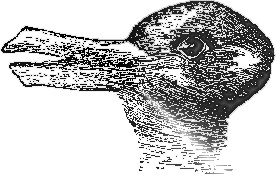
I'm trying to find an article... It was about the statistical basis of "shared experiences" and how they randomly "walk" toward a corroberative base that shares "popular cultural characteristics", i.e. in the 19th century certain commonly misidentified phenomena were called "angels". In the 17th century that identical phenomena may have been called "witches on broomsticks." Today it might be a UFO. And "believers" tout similarities as strength supporting the group claims, while in fact it is because all of the individuals live in a culture that has experienced "Close Encounters", "X-Files", etc...
When I find it I will post it. The article is popular with defense attorneys in calling group eyewitness testimony into question.
Great thread!
Sounds great, and thanks for your interest! This seems to respond to my earlier concern, which is that apparitional research as a whole (collective, deathbed, etc) seems to be rarely acknowledged in the skeptical community.
I am genuinly confused at why CSICOP, Skeptical inquirer and JREF never mention the modern scene of apparitional research. Psi, crytzology, demonic possession, UFO's and even Poltergeists are tackled, but I've yet to read an article or book or anything that explicitly aims to disprove apparitions. Even the Skeptics dictionary mentions nothing about the field. Who started it? What happened to their most prominent researchers? Whats the deal with G.N.M Tyrell or Louisa Rhine (the infamous zener card carrying dr's wife)? Supposedly they had groundbreaking research in apparition research. You can easily find a history of Psi, citing Rhine and Honorton. Is psi research somehow more credible? Sometimes, Ghosts and ghost hunting are mentioned- but they never critique the poll data, trends or other findings of parapsychologists.
Even more strangely, skeptics seem to have a different set of data! For example,
this excellent article from Wiseman seems to completely undermine the findings from the many parapsychological surveys that are briefly mentioned
here. For example, Wisemann claims that:
Houran’s work revealed that reports of full-fledged apparitions are very rare. In fact, they account for only 1 percent or so of sightings; when such figures do turn up, they usually appear at the foot of a bed as people are either waking up or drifting off to sleep. Around a third of Houran’s reports involve rather fleeting visual phenomena, such as quick flashes of light, odd wisps of smoke, or dark shadows that move furtively around the room. Another third involve strange sounds, such as footsteps from an empty room or ghostly whispering. The remaining third are a mixture of miscellaneous sensations, including odd odors of flowers or cigar smoke, sensing a ghostly presence, or feeling a cold shiver down one’s spine.
Looks very different from the optimistic image of the latter article. For one thing, there was absolutley no mention of collective apparitions. He also didn't find anyting of statistical interest, like the supposed "440 times more death coincidences than would be expected by chance" that was supposedly calculated in one survey. Furthermore, wiseman claimed the vast majority of apparitional experiences occurred at night, while the parapsychologists consiered it to be more 70/30. Perhaps most seriously, he also found that only 1% of these experiences were of full figures, while the other survey found that 10% of people "experienced ghosts". What definition did they even use for "ghost"? Personally, I'd trust the findings of a Richard Wisemann over that of a parapsychologist any day. However, that doesn't wet my appetite for understanding. Why there results are different, and why there is virtually no interaction between the two?
Is the lack of interaction simply because apparitional research is a joke? Is it so thoughorly discredited a field that it is no longer respectable to even utter its name or supporters? That bigfoot is mentioned more often than them? If so, when did this discreditation happen?



 You're born , you live a life [hopefully to a ripe age if you are careful ] and you eventually die.....it happens !There is no scientific proof of life after death,Ghosts , Goblins, Specters , Bigfoot , Nessie , etc . People see , and believe what they want , but that doesn't mean it's REAL ..Live a good life !!!!