• Quick note - the problem with Youtube videos not embedding on the forum appears to have been fixed, thanks to ZiprHead. If you do still see problems let me know.

Can pressure be negative?

Then you're bitching about standard terminology. Because you don't understand it.

Actually I was complaining about the way *YOU* explained it, specifically the "infinity and beyond" thing.

No, Michael. I do mean higher than infinite temperature.

Your statement it completely irrational not to mention "metaphysical" (again).

There's nothing "higher than infinity".

Why do you care? And what would either answer actually mean here?

I care because I think you're making the same basic kinds of of mistakes that you make with other issues that involve *REAL* particles and *REAL* things. You folks don't much care for physics so the concept of "higher than infinite temperature" somehow makes sense to you. Go figure.
 
Oh, but I used math. And you can't do math. That, really, is your complaint against me.

No, my complaint about you folks is that you don't do physics, just math. Math is *ALL* you folks seem to comprehend. Physics, particularly empirical physics and particle physics are not your strong suits. That's why you folks believe in things like "negative pressure vacuums" in the first place.
 
I see we have the basis for a new thread, "Can absolute temperature be negative?"
I will make the bold prediction that after another 3000 or so posts, nothing will change.
 
Actually I was complaining about the way *YOU* explained it, specifically the "infinity and beyond" thing.

Because you didn't (and still don't) understand what temperature is, or why the fact that inverse temperature is the fundamental quantity is important. Nor do you display any interest in learning.

You folks don't much care for physics so the concept of "higher than infinite temperature" somehow makes sense to you. Go figure.

You object to infinite temperature because you don't even know what temperature is. Your intuition in the matter misguides you. If you knew what temperature is, then you'd understand that there's nothing strange (though there is something uncommon) about infinite temperature. You can pretend that I don't care for physics, but the fact is that you're the one who is ignorant of physics and cares so little about it that you refuse to learn anything. There are lots of people here who know a lot about physics, and you aren't one of them. Yet never have you tried to actually learn from other people here.

I don't fault you for your ignorance, Michael. But I do fault you for your decision to remain ignorant.
 
*Why* are there so many posts on this OP?? Can "pulling" forces exist? Yes in the atomic scale and yes in the microscopic scale, and yes in the macroscopic scale. Do they apply to Ideal gas theory? No. The ideal gas theory ignores intermolecular forces. It is an idealized point-mass-ball theory. Works great most of the time. If I pull on a tensile test specimen are there tractive forces (non-pushing forces)? Yes, absolutely. They are intermolecular/interionic/interatomic or a mix thereof depending on the material. Is this all semantics about what is, "pressure" (vs. "stress")? Yes. Get over it. ... Nine pages of comments... Open a ******* book.

Edited by Locknar: 
Edited, breach of rule 10; please do not curse in your posts, or mask such words in an attempt to by pass the auto-censor.
 
Last edited by a moderator:
Just out of curiosity Zig, have you read Cosmic Plasma yet?

Just out of curiosity, Michael, have you read an introductory physics textbook yet?

Your attempts to dodge the issues of this thread by derailing it are quite pathetic. No one is fooled.
 
Last edited:
I'm still waiting for MM to acknowledge the fact that systems can contain a net negative energy. A perfect example is the energy associated with a bound system, such as a planet orbiting a star or electron energy levels in a hydrogen atom, etc.

The fact that he doesn't understand this point, yet continues to lecture those here more knowledgeable than he, speaks volumes.
 
I have emboldened every unecessary , childish, pathetic insult you have included in the above sentence. So that's four. And not a shred of quantitative evidence.

Like there is such a thing as an insult that is not "childish and pathetic". If you have to insult in debate, then you're engaging in childish patheticness.
 
It is impossible. It's also unnecessary in order to reach negative temperatures (see below). But if you don't know why it's impossible, then it can seem like it's equivalent to reaching 0 pressure. But it's not equivalent, not at all.


One doesn't need zero atoms to achieve zero pressure. Practically speaking, it's probably easier to achieve zero or even negative absolute pressure with LOTS of atoms - for example, water in a sealed piston. You can tune the pressure from positive to zero to negative by simply pushing or pulling on the piston.


This is actually a perfect example of not knowing the physics: when I tell you that negative temperatures are possible, you assume that this means a temperature BELOW 0 Kelvin. That's not an unreasonable assumption, but it's wrong. Negative temperatures exist above infinite temperature, not below 0 Kelvin. And the reason is that in thermodynamics, temperature is actually less fundamental than inverse temperature. As the energy of a system increases, the inverse temperature decreases. In most systems, the inverse temperature can never actually reach 0, but can only approach it asymptotically. But for some systems, the inverse temperature can pass through zero and go negative. That means there's a discontinuity in temperature: we go to infinite positive temperature, then infinite negative temperature, back to finite negative temperature. So negative temperatures are "hot", not "cold". Note also that even though there's a discontinuity in temperature, there is no discontinuity in inverse temperature, and that's actually the more fundamental property.

Negative temperatures violate most people's conception of what temperature is and what it means, but that's because most people don't really understand it in the first place. And why would you, if you haven't studied it? I certainly didn't have a clue about what negative absolute temperatures were until I took a thermodynamics class, and I don't expect anyone else to.

Anyways, Wikipedia has a page on negative temperatures if you're curious to learn more. They're fairly esoteric since only systems with a maximum possible energy can obtain negative temperatures, and if you place a system which can support negative temperatures in thermal contact with a system which cannot (and that's most systems), equilibrium will always be positive temperature.

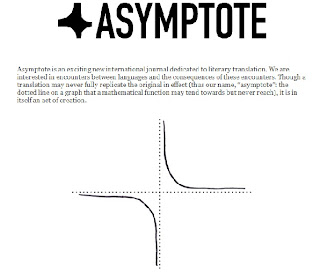
So aside from the semantics you agree with what I said in the first place that absolute 0 is as impossible in space as it is in the lab. Good. I was talking about experiment, not maths, they are not the same thing. I was talking about the existence of nothing being only a mathematical concern. Unless you are saying the transfer from +K to -K is linear, in which case I think that is also not something I've heard of. A sort of non linear asymptote either side of 0 seems to fit the bill, ie something like this with apt scales:

Asymptote.jpg


Thanks for the link.

I learned that the laws of thermodynamics forbid zeros in experiment as strongly as the forbid infinities, if that is wrong I blame the teachers. :p

0 pressure is something else as is thermal equilibrium. It's probably wise to steer clear of 0K.
 
Last edited:
So aside from the semantics you agree with what I said in the first place that absolute 0 is as impossible in space as it is in the lab. Good. I was talking about experiment, not maths, they are not the same thing.

I'm afraid the problem is that they do not realize, nor accept that they are NOT the same thing. They "assume" that if it works on paper, it *must* work that way in the lab too. :) They therefore never bothered to try to build a "vacuum" with a 'negative pressure' to be sure that minus sign was appropriate. It worked on paper.....
 
A sort of non linear asymptote either side of 0 seems to fit the bill, ie something like this with apt scales:

That's exactly what happens. As I said, Beta is the fundamental quantity, not T. And if Beta passes smoothly through zero, then T=1/kBeta will do exactly the sort of thing your graph shows.

I learned that the laws of thermodynamics forbid zeros in experiment as strongly as the forbid infinities, if that is wrong I blame the teachers. :p

It's wrong. SOME zeros and infinities are forbidden, but not all. Beta can (and does) go to zero in actual systems, and hence T goes to infinity in actual systems. That isn't simply a mathematical exercise.

0 pressure is something else as is thermal equilibrium. It's probably wise to steer clear of 0K.

Zero pressure is not in any way problematic. It's easy to achieve, and easy to tune through. Like I said, take a sealed piston filled completely with water, and pull on it. You'll get 0 absolute pressure quite easily. and can even go to negative absolute pressure.
 
Michael, read pages 164 onwards of the book I linked for you.

"The structured vacuum: Thinking about nothing":rolleyes:
 
FYI Squinty, I'm using up a lot of paper so I can take it with me on the plane. It better be good. Some poor tree gave its life for this cause. :)
 
FYI, I'm just kidding about the tree. I just saved the file to my laptop, but I do intend to read it on the plane tomorrow. :)
 
Michael Mozina, will you please address this?

Ahem... :rolleyes:

I'm still waiting for MM to acknowledge the fact that systems can contain a net negative energy. A perfect example is the energy associated with a bound system, such as a planet orbiting a star or electron energy levels in a hydrogen atom, etc.

The fact that he doesn't understand this point, yet continues to lecture those here more knowledgeable than he, speaks volumes.
 
I'm afraid the problem is that they do not realize, nor accept that they are NOT the same thing. They "assume" that if it works on paper, it *must* work that way in the lab too. :) They therefore never bothered to try to build a "vacuum" with a 'negative pressure' to be sure that minus sign was appropriate. It worked on paper.....

Indeed I think we are basically on the same page here.
 

Back
Top Bottom