WGBH
Graduate Poster

- Joined
- Apr 1, 2009
- Messages
- 1,141
The BFFers are doing themselves no favors in the "bunch of wackos" department. QUOTE]
Yet you post there more then I do Professor. Still holding out hope we will see the light?

The BFFers are doing themselves no favors in the "bunch of wackos" department. QUOTE]
Yet you post there more then I do Professor. Still holding out hope we will see the light?
So old Creek is in the videos?
Which one if I may ask?

Not in the Leigh Hart videos. Wow, you guys can't seem to get enough Creek Freak around here.


Yet you post there more then I do Professor. Still holding out hope we will see the light?
Many fence-sitting lurkers tune into those threads everyday.

Great find, WP - thanks. I just shared this link over on the BFF to, you know, point out that the claims of editorial bias against bigfoot papers are 100% supported by the editors of our top journals.
All one has to do is show the paper submitted, the referee's reports, and the editor's letter to the author to back up claims of bias.

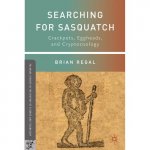
This fresh and entertaining look at the search for Sasquatch concerns more than just the startling and controversial nature of monsters and monster hunting in the late 20th century, but the more important relationship between the professional scientists and amateur naturalists who hunt them—and their place in the history of science. The traditional heroic narrative of monster hunting situates mainstream, academic scientists (the eggheads) as villains rejecting the existence of anomalous primates and cryptozoology as something unworthy of study. It gives a privileged place to untrained, but passionate amateur naturalists (the crackpots) who soldier on by themselves against great odds, and the unwarranted obstinacy of the mainstream to bring knowledge of these creatures to light. Drawing on new, original manuscript sources, Brian Regal shows this model to be inaccurate: many professional scientists eagerly sought anomalous primates, examining their traces and working out theoretical paradigms to explain them. Even though if mainstream scientific thinking held that anomalous primates—Bigfoot, Sasquatch, Yeti—did not and could not exist, these scientists risked their careers and associated themselves with eccentric amateurs because they believed these creature to be a genuine biological reality.
As an historian of science I am particularly interested in the relationship between professional scientists and their amateur counterparts. I write about how the fringe and mainstream interact, co-mingle and argue, whether it is over the creation/evolution debate or American national origins theories.
My current writing is an historical analysis of the lives of mainstream scientists--particularly the controversial paleoanthropologist Grover Krantz (1931-2002)--who believed anomalous primates like the Sasquatch and Yeti were real animals, not just relics of folklore or hoaxes. I have been ransacking the archives and libraries of North America and England using long forgotten letters, correspondence, diaries, and notebooks of scientists who researched humanoid monsters. The results of this research will be published in March of 2011 as Searching for Sasquatch: Crackpots, Eggheads and Cryptozoology by Palgrave-Macmillan.
New book coming out in March on Bigfootery and Science.
Searching for Sasquatch: Crackpots, Eggheads, and Cryptozoology
Author Brian Regal's page at Kean University...