WTC Dust Study Feb 29, 2012 by Dr. James Millette

Having read the 2009 Bentham paper, Dr. Millette knew how to get conclusive results.

How so?

Please explain, according to the Bentham paper, which tests and extraction criteria should be performed on each dust sample to be sure one has indeed found thermitic chips.

Once you've done that, show us exactly where in the paper that it states that each dust sample had:

...1. Chips of interest were extracted from each of the four samples using the red/gray layer and magnetic attraction criteria...

...then show us where in the paper it is stated...

...2. Each chip that was extracted using criteria in 1. above was then put through a resistivity test to make sure they were the right chips and the wrong ones were separated out...

...then show us where in the paper it is stated...

...3. Each and every chip extracted from the four samples using the criteria within 1. and 2. above was put through every other test mentioned in the paper aside from those used in 1. and 2. above.

You are trying say that Millette should have done EVERY SINGLE TEST listed in the Bentham paper on every single chip he had in his possession in order to make sure he had the right chips.

The problem is you aren't holding Harrit to the same standards as you are holding Millette to because you know for a fact it invalidates Harrit's paper.
 
...
What is impossible is that Dr. Millette can be certain that the chips he evaluated were a match for those highlighted in the 2009 Bentham paper conclusions.

MM
Jones and Harrit show dust expanding, thermite does not expand. Jones and Harrit have dust which has different, FOUR DIFFERENT energy levels, none of them match thermite. Jones and Harrit show a DSC of dust which does not match thermite.

Millette can't find thermite in the dust, thermite was not used on 911.
 
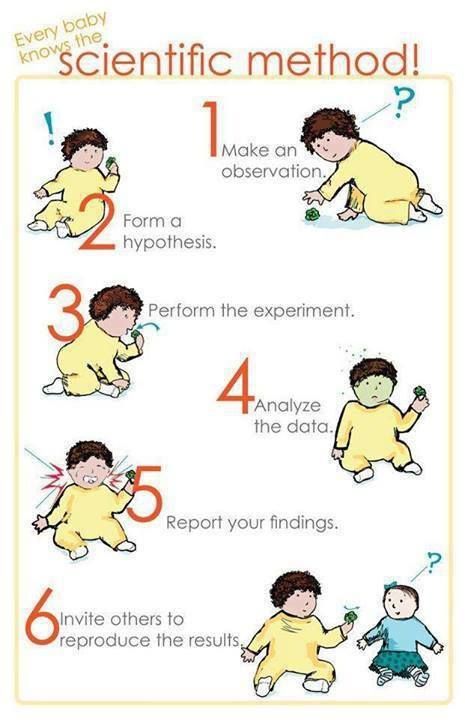
Saw this on facebook today;

935683_606507562703592_1885201487_n_zpsd5d98d63.jpg


Paying particular attention to the final step, maybe someone should send this to Jones/Harrit et al?:D
 
Last edited:
"MM and Senenmut et al, what if regular primer paint on steel were burned in a regular fire and iron-rich microspheres were created?

This is the experiment I have been trying to get done by someone.

Would that have any effect on your belief that the iron microspheres can be produced only by melting steel or iron at 2700+ degrees Farenheit?

Would it cause you to rethink that little bit of evidence?
"
"Only if I felt I could trust whomever is performing the testing.

Dr. Millette appears unlikely to pay to have his 2012 report published, nor does it appear that you can persuade him from his busy-busy schedule to push his oven a few more degrees and then put the resulting chip residue under the microscope."

But senior chemical engineer Mark Basile does seem to be quite trustworthy.

Anyone interested can see his research plans here;

http://nanothermite911.blogspot.de/

If you are sincere in your interest Chris, Mark Basile would seem to be just the scientist for the job.

MM
 
But senior chemical engineer Mark Basile does seem to be quite trustworthy.

Anyone interested can see his research plans here;

http://nanothermite911.blogspot.de/

If you are sincere in your interest Chris, Mark Basile would seem to be just the scientist for the job.

MM

Wasn't he just a Chemical Engineer before? How did he become a Senior, and how does that make him more qualified?
 
"MM and Senenmut et al, what if regular primer paint on steel were burned in a regular fire and iron-rich microspheres were created?

This is the experiment I have been trying to get done by someone.

Would that have any effect on your belief that the iron microspheres can be produced only by melting steel or iron at 2700+ degrtees Farenheit?

Would it cause you to rethink that little bit of evidence?
"
"But senior chemical engineer Mark Basile does seem to be quite trustworthy.

Anyone interested can see his research plans here;

http://nanothermite911.blogspot.de/

If you are sincere in your interest Chris, Mark Basile would seem to be just the scientist for the job."
chrismohr said:
"Hi MM,

Several respectful emails from me to Mark have gone unanswered, so no, he is not the man for the job.

Your answer, that it depends on who does the testing, seemed unnecessary to respond to.

When the results come out, you'll have two choices: accept the data or attack the experimenter.

We'll talk more about this then.
"

I can't get email through to Mark either.

Were you in communication previously with Mark and he then stopped?

If Mark's research plan covers your questions as well as mine, a financial endorsement is all he requires from you.

I've been told that he will be including the long awaited FTIR data.

MM
 
Last edited:
MM, your assumption is completely incorrect. My understanding is that Mark Basile is trying to raise money for another WTC dust experiment. His protocol for that experiment is unclear. In addition, my proposal to a dozen of the top 9/11 Truth researchers to work together on a study to be sure both sides can sign off on the protocol in advance has been left unanswered by Mark and all the other researchers. I'm deeply disappointed.
 
1. Identify chips identical to the supposedly thermitic chips that combusted in the Bentham study.

2. Try to ignite them in an inert atmosphere.

Why would an experimental protocol need to be any more complex than that? If you can't reliably identify the chips then afaics no experiment is satisfactory and Harrit et al have established an unfalsifiable position, whereas if you can then step 2. above is definitive. If they do ignite you might be interested in further tests to establish their composition.
 
Glenn B, Remember that Jim Millette's experiments determined that the chemical composition of the red-grey chips was NOT thermitic. Even if the chips ignite in an inert atmosphere at 430 degrees C, the researchers would have to find another hypothesis to explain this phenomenon "because," as Millette told me personally, "they are not thermite."
 
Glenn B, Remember that Jim Millette's experiments determined that the chemical composition of the red-grey chips was NOT thermitic. Even if the chips ignite in an inert atmosphere at 430 degrees C, the researchers would have to find another hypothesis to explain this phenomenon "because," as Millette told me personally, "they are not thermite."

Quite so, but pursuing the study in a Benthamish way simply opens the door for Truthers to claim "wrong chips" or "not hot enough" or whatever they find plausible and the tail continues to wag the dog.

Obviously Harrit should have performed such a simple, definitive test to start with but, assuming chips of that nature can be readily found, why not cut to the chase and see whether they ignite in an inert atmosphere? If they do then look into why, if they don't then it's game over, no?
 
Quite so, but pursuing the study in a Benthamish way simply opens the door for Truthers to claim "wrong chips" or "not hot enough" or whatever they find plausible and the tail continues to wag the dog.

Obviously Harrit should have performed such a simple, definitive test to start with but, assuming chips of that nature can be readily found, why not cut to the chase and see whether they ignite in an inert atmosphere? If they do then look into why, if they don't then it's game over, no?
It doesn't work that way.

The "right" chips will ignite, the "wrong" ones won't. Any study that finds chips that won't ignite, found the wrong chips. If an independent study doesn't find, them they're not looking hard enough (or they're shills trying to discredit the findings). Harrit et al, already found them, they said so. No need for them to do it again.

Works for "truthers". :)
 
Last edited:
It doesn't work that way.

The "right" chips will ignite, the "wrong" ones won't. Any study that finds chips that won't ignite, found the wrong chips. If an independent study doesn't find, them they're not looking hard enough (or they're shills trying to discredit the findings). Harrit et al, already found them, they said so. No need for them to do it again.

Works for "truthers". :)

Exactly. The Texas Sharpshooter methodology is what they are currently arguing. That is what they will continue to argue. A fundamental misunderstanding of the scientific method.
 
Let me see if I understand this correctly. Harrit and his group publish a paper that concludes:
Based on these observations, we conclude that the red layer of the red/gray chips we have discovered in the WTC dust is active, unreacted thermitic material, incorporating nanotechnology, and is a highly energetic pyrotechnic or explosive material.

Millette comes out with his paper showing that the chips are not thermitic. A couple of the authors of Harrit's paper come out and admit that there are different kinds of red/gray chips which goes against the conclusion of Harrit's paper. Truthers claim Millette has the wrong chips.

When truthers are asked what tests would need to be done in addition to the selection criteria listed Harrit's paper...
The red/gray chips are attracted by a magnet, which facilitates
collection and separation of the chips from the bulk of the dust. A small permanent magnet in its own plastic bag was used to attract and collect the chips from dust samples.
...they first replied "the resisitivity test". This test was said have been performed to further isolate the chips after using the criteria quoted above.

After reading through Harrit's paper it is found that Harrit and his group only tested ONE chip for resistivity values...
Given the small size of the red chip, about 0.5 mm x 0.5 mm, we used two probes and obtained a rough value of approximately 10 ohm-m.
...which totally kills the claim that the resistivity test was used by the authors to further isolate the chips.

Seeing this, the truthers then move on to the claim that "the correct chips should ignite". After reading Harrit's paper it is shown that that Delassio/Breidenbach sample was not tested in a DSC. That blows the ignition test claim out of the water.

Both times it is shown that what the truthers are claiming are definitive tests used to determine which chips are the correct chips, are in fact not even performed on many of the chips listed in the paper.

What I am gathering is that the truthers are wanting two sets of rules. The "Millette" rules state that in addition to removing the chips with a magnet and having red gray layers, they want ALL of those chips to have a resistance test performed on them in addition to igniting in a DSC. This will prove that Millette has the right chips.

Then there are the "Harrit" rules which state that chips can be extracted ONLY by using a magnet and having red gray layers. Then, after extraction, tests can be performed on RANDOM chips and the results can be applied to ALL chips.

Truthers claiming that the resistivity test was used to get the correct chips are invalidating 3 of the 4 chips (a-d) in the paper since only one chip was was tested in this way. Which chip this test was performed on has yet to be determined.

Truthers claiming that the DSC test was used to get the correct chips are invalidating chip b (from the Delassio/Breidenbach sample) because the DSC test was not performed on this sample.

Any attempt to get any answers from any of the authors regarding these contradictions has gone unanswered.

Do I have this correct?
 
What I am gathering is that the truthers are wanting two sets of rules. The "Millette" rules state that in addition to removing the chips with a magnet and having red gray layers, they want ALL of those chips to have a resistance test performed on them in addition to igniting in a DSC. This will prove that Millette has the right chips.

Then there are the "Harrit" rules which state that chips can be extracted ONLY by using a magnet and having red gray layers. Then, after extraction, tests can be performed on RANDOM chips and the results can be applied to ALL chips.

Truthers claiming that the resistivity test was used to get the correct chips are invalidating 3 of the 4 chips (a-d) in the paper since only one chip was was tested in this way. Which chip this test was performed on has yet to be determined.

Truthers claiming that the DSC test was used to get the correct chips are invalidating chip b (from the Delassio/Breidenbach sample) because the DSC test was not performed on this sample.

Any attempt to get any answers from any of the authors regarding these contradictions has gone unanswered.

Do I have this correct?

Yes, afaics. They have created a position that is unfalsifiable as long as they keep their mouths shut. It's for this reason too that MM refuses to answer direct questions on these topics, eventually being obliged to refer you to the authors who ... uh ... are keeping their mouths shut.

It's really only of interest as an exercise in debate technique.
 
This is the closest to a coherent reconstruction of truther thought on this matter that I can find:


There are several kinds of red/gray magnet-attracted chips in the dust. However, if one of these chips ignites when heated and leaves iron rich micro-spheres, that alone is sufficient to prove thermite. Thus, while the Harrit et al paper has false assumptions, foolish methodology, and insufficient data to replicate, it proves there is thermite in the dust. Unfortunately, it does not tell you how to isolate thermite yourself. Thus, the only way to debunk it fully is to show that there are red/gray chips that are not thermite, but that ignite and produce iron rich micro-spheres.


As a crappy analogy, suppose we had a gun range where only we had access to the targets, and we collected the targets after each shooter shot twenty times. After collecting the targets one round, we could have good evidence that someone fired all twenty shots within an inch of each other. But if we never bothered to keep track of who fired at which target, we would not be able to tell who did it without testing all the people there that day again to see who is capable of that (assume they are all liars so we cannot just ask). In the same way Harrit et al found definitive proof of thermite, but failed to keep track of precisely how they found it.


This seems coherent and close to what the Bentham defenders are saying. It also seems foolish.
 
One of the „crucial“ problems with WTC nanotruthers is that they are not capable/are not willing to accept that Jim Millette really proved solely kaolinite (kaolin)as a source of Si and Al signals in the chips corresponding to Bentham chips (a) to (d) (and hence, these chips cannot be thermite of any kind). As for me, I still rely on the Millette’s long experience with forensic analyses of such materials, but it is perhaps good to have some closer look.

So, why is Millette sure that those stacking platelets, with the typical morphology of kaolinite, are really kaolinite?
1) Although it is not explicitly commented by Millette, these platelets (analyzed in the pristine red layers, as well as in layers after two different ashing procedures) have the XEDS signatures matching very well the signatures of kaolinite, see e.g. p. 19....

picture.php


...Fig. 11 in Bentham paper (upper spectrum):

picture.php


and finally McCrone Particle Atlas:

picture.php


2) FTIR of the red layer is in a very good agreement with the FTIR of kaolinite, namely bands at 3619 and 3690 cm-1 perfectly coincide:

picture.php


Here is for comparison FTIR of kaolinite from McCrone Atlas:

picture.php


On the other hand, FTIR of nanoaluminum should show strong, broad bands at ca 3050-3300 cm-1, belonging to aluminum oxide (alumina), since the substantial portion of alleged aluminum in such thin platelets must be inevitably oxidized; see e.g. McCrone Atlas:

picture.php


So far… “alles klar” (dear Oystein;)). But, the next and perhaps the key proofs of kaolinite in Millette’s report are SAED patterns, i.e. patterns from Selected area (electron) diffraction. Such a pattern is e.g. here:

picture.php


Frankly, crystallography has been always a „hard stuff“ to me, so I’m rather lost here:confused:

What I can say anyway?
Fortunately, kaolinite, metallic aluminum and alumina are crystalline materials, therefore they should show distinct SAED patterns. Kaolinite has triclinic crystals, aluminum has cubic crystals and alumina has trigonal crystals (see Wiki), with the different spacing between atoms, therefore (I think) they should show different SAED patterns.

Jim Millette wrote: „The SAED pattern of the kaolin particles (Figure 19) matched the kaolin pattern shown in the McCrone Particle Atlas 8 (Appendix E).The values for the d-spacings determined for the diffraction patterns matched those produced by reference kaolin samples.“ Sadly, this reference SAED pattern of kaolinite is not available in online version of McCrone Atlas. And, I am not able to compare Millette’s patterns with other kaolinite patterns published, since I simply do not understand this stuff (so far:rolleyes:).

Is here any volunteer educated in crystallography, who can elucidate this SAED stuff? (I basically do not care what truthers think, I just like to understand Millette’s report better;))
 
Last edited:
Just for the record... I'm again discussing with Ziggi Zugam, now in Adam Taylor's blog, and Ziggi wonders why we in JREF do not debate that Mark Basile is going to measure some FTIR of his red/gray chips.

He wrote e.g.:
"Basile has identified chips that ignite and convert iron-oxide into molten iron, just like Harrit. They already know how the FTIR looks like because Harrit et al already have an FTIR report, even though it did not get published. But Basile is also getting FTIR data and he WILL publish it.

So my dear Kminek, Basile´s paper will have FTIR data that either proves that Millette has the same chips, or it proves the opposite."


Or:
"After all the JREF poo-pooing about Harrit hiding the FTIR, it is both funny and informative to see the panicked JREF silence to the news that Basile is about to release the FTIR for the correct active chips."


Indeed I responded in a sense that we in JREF have no idea that Basile will measure some FTIR, therefore there is nothing to discuss. And that I really do not record any panic on JREF;)

But, in this regard I can make again some other partial "prediction" how such Basile's FTIR could look. If measured chips would be the same as Bentham chips (a) to (d) and the most of Millette's chips, they should show similar FTIR as was measured by Jim Millette (upper spectrum):

picture.php


If the measured chips would be something else, they can be basically anything, but most probably chips of Tnemec.
Tnemec red primer was based on alkyd binder, and so far we have not brought any data showing FTIR of these complex polymers (with not really well-defined composition/structure). Here are two spectra recorded in papers by these authors:

picture.php


picture.php


Basically, FTIR of alkyd resin show a large broad band at ca 3400 cm-1 corresponding to hydroxyl groups and a distinct band at 1730 cm-1 belonging to carbonyls in ester linkages. Those spectra do not show some characteristic bands of epoxy resin based on Bisphenol A (look at the list for epoxy in this overview), namely bands at ca 1510 and 1610 cm-1, and also bands at ca 830 and 1182 are missing. On the other hand, other bands are apparent, etc...
Therefore, it could comparatively easy to recognize if the FTIR of Basile belongs to alkyd resin (or to epoxy), but Tnemec primer was indeed a complex "composite" with several pigments which can make the evaluation of the Basile's FTIR spectrum not so easy.
 
Last edited:

Back
Top Bottom