• Quick note - the problem with Youtube videos not embedding on the forum appears to have been fixed, thanks to ZiprHead. If you do still see problems let me know.

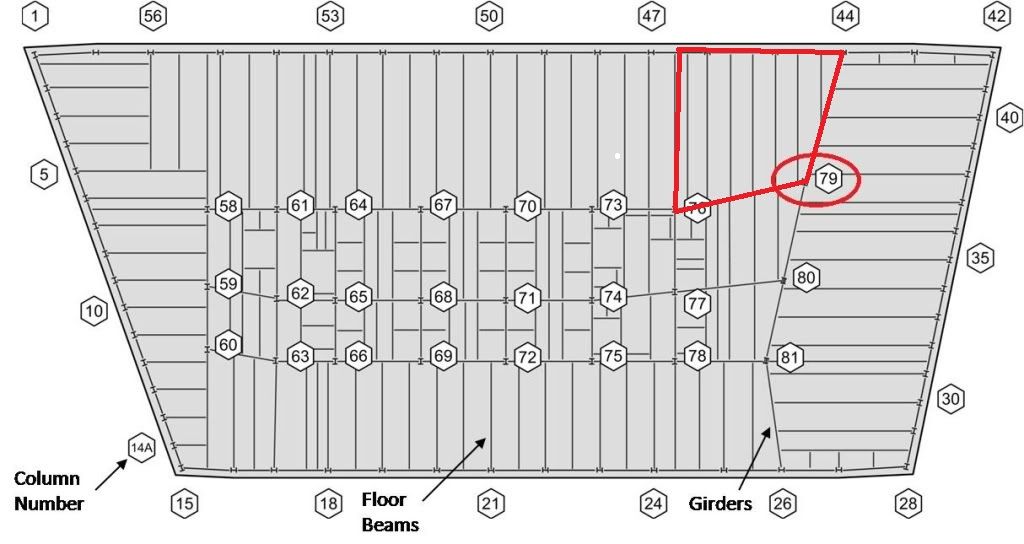
WTC7 and the girder walk-off between column 79 and 44

Status
Not open for further replies.
Do you believe Table 10-1 or the color correctness of the graphic?

That is your problem right there.

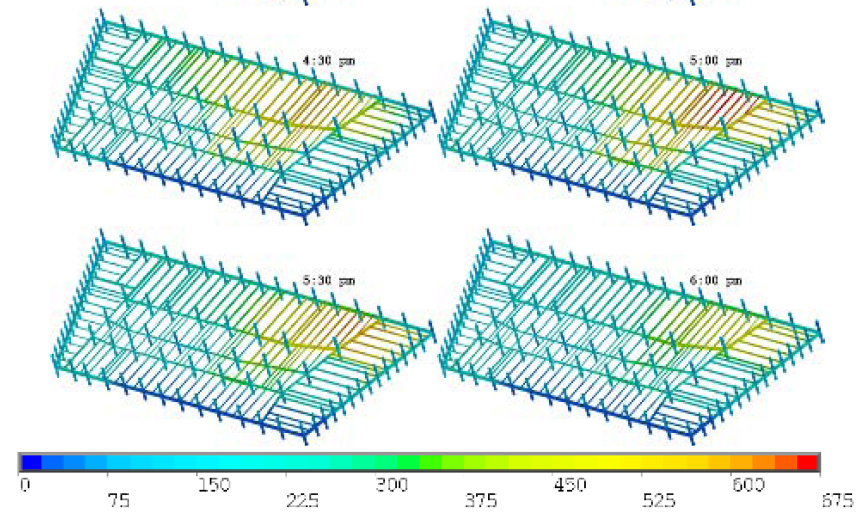
NIST does not define what E, NE, S is. You have to determine what NIST means in using those directional designations by looking at the colored beam temperature diagrams.

You're putting YOUR interpretations onto what THEY mean and it doesn't agree when used in conjunction with the diagrams.

To put it simply, it is unclear what areas are encompassed within NIST's directional designations until you look at the diagrams.
 
Do you believe Table 10-1 or the color correctness of the graphic?

Show me the paragraph which designates what beams are included in each directional designation area that makes you absolutely sure the beam closest to column 79 is NOT in the E designation.

I have shown you with each diagram that you are wrong and you have yet to refute it.
 
Show me the paragraph which designates what beams are included in each directional designation area that makes you absolutely sure the beam closest to column 79 is NOT in the E designation.

Oh wait! You tried to define one of them.
Actually it's your denier blinder. Table 10-1 designates NE, E and SE. Note floor 8.

You tie floor 8 with NE. Well let's have another look:
floor_8_beam_temps.png


Which turns out to be this area:
wtc7_NE_section.jpg
 
Do you believe Table 10-1 or the color correctness of the graphic?

No: the question is, do I believe your personal interpretation of Table 10-1 or the interpretation that would be consistent with the graphic.

Tough. Biased idealogue with no understanding of the issues, or internal consistency? I may have to think about this one.

Dave
 
Point taken, I stand corrected. Thank you.

The beam closest to column 79 was heated to between 640 and 675oC.

At 677oC the beam would expand 5.41" so NIST still comes up short.

beamexpansionspreadshee.jpg


If anyone here can do the math and show these calculations to be wildly incorrect, then post it.

The seat was 1'0" wide so the beam would have to expand 6" [actually 6.39"] to put the web off the seat. Then there's the loss due to sagging and the stiffeners.
 
Last edited:
Point taken, I stand corrected. Thank you.

The beam closest to column 79 was heated to between 640 and 675oC.

At 677oC the beam would expand 5.41" so NIST still comes up short.

[qimg]http://img823.imageshack.us/img823/4001/beamexpansionspreadshee.jpg[/qimg]

I anyone here can do the math and show these calculations to be wildly incorrect, then post it.

The seat was 1'0" wide so the beam would have to expand 6" [actually 6.39"] to put the web off the seat. Then there's the loss due to sagging and the stiffeners.

Using that table, the beam at 600 would have been 4.68". Yet you came you came up with 5.18" using NISTs formula. According to the NIST formula you promoted a few posts ago, 0.000014 x 655 (677-20) x 640 = 5.87". That's about 5 7/8 inches. You're going to argue 1/8"???

;)

What gives Chris? You're all over the place. You aren't selecting pieces of proof based on whether they suite your beliefs or not are you? What happened to using the NIST formula you approved of just a few posts ago?

Another interesting thing. Here is a table contained within the video gerrycan posted some time ago.
expansiongraph.png


For beam K3004, at 626.67, the expansion according to this table is 6.03".

Are you guys going to keep making stuff up until it fits?
 
I anyone here can do the math and show these calculations to be wildly incorrect, then post it.

See post above.

The fact that you and your ilk can't keep you crap straight from one calculation to the next, I think you yourself have proven the math to be "wildly incorrect".

When you settle on one calculation/answer, please come back and discuss.

:)
 
Using that table, the beam at 600 would have been 4.68". Yet you came you came up with 5.18" using NISTs formula. According to the NIST formula you promoted a few posts ago, 0.000014 x 655 (677-20) x 640 = 5.87". That's about 5 7/8 inches.
I did not "promote" or "approve" NIST's simplistic, inaccurate calculation, I just noted that even using NIST's data they came up short.

Another interesting thing. Here is a table contained within the video gerrycan posted some time ago.
http://i238.photobucket.com/albums/ff290/gamolon/expansiongraph.png

For beam K3004, at 626.67, the expansion according to this table is 6.03".
Using NIST's formula that works out to 5.62". gerrycan was not using the proper formula. He was not using the delta T, the ambient coefficient or the average coefficient.

Do you think the formula he used in his latest spreadsheet is correct?

Do you have a formula?
 
See post above.

The fact that you and your ilk can't keep you crap straight from one calculation to the next, I think you yourself have proven the math to be "wildly incorrect".

When you settle on one calculation/answer, please come back and discuss.

:)


One more little note before the next round of C7 tap dancing.
The temperatures just as likely exceeded 675C, not ranging between 640-675 as C7 is no grasping at.

The particular graph I referred to previously was the 'A' test,
the 'B' test (Fig 10-37 on pg 430 shows a far worse condition)
 
Chris,

Before we go on, I have to bring something up with you. In many of your posts, you claim that NIST LIED about the seat based on the fact that as of right now, the drawings we have access to show the seat to be 12" wide instead of what NIST claims to be 11" wide.
You forgetting that NIST lied about the width of the seat and omitted the stiffeners.

Based on your logic above, does this mean that you and gerrycan have been lying to everyone about your evidence you presented prior to admitting you and he were wrong?

Point taken, I stand corrected. Thank you.

gerrycan was not using the proper formula. He was not using the delta T, the ambient coefficient or the average coefficient.
 
Point taken, I stand corrected. Thank you.

The beam closest to column 79 was heated to between 640 and 675oC.

At 677oC the beam would expand 5.41" so NIST still comes up short.

[qimg]http://img823.imageshack.us/img823/4001/beamexpansionspreadshee.jpg[/qimg]

If anyone here can do the math and show these calculations to be wildly incorrect, then post it.

The seat was 1'0" wide so the beam would have to expand 6" [actually 6.39"] to put the web off the seat. Then there's the loss due to sagging and the stiffeners.

Chris,

Can you please answer the following questions I have about the above spreadsheet?

1. How is the Degrees F Coefficient being derived? Is it a formula in itself or is there a table/information somewhere that is being used?
2. How is the Average Coefficient being derived?
3. How is the Ambient Coefficient being used and why?
 
I did not "promote" or "approve" NIST's simplistic, inaccurate calculation, I just noted that even using NIST's data they came up short.

Using NIST's formula that works out to 5.62". gerrycan was not using the proper formula. He was not using the delta T, the ambient coefficient or the average coefficient.

Do you think the formula he used in his latest spreadsheet is correct?

Do you have a formula?

How is NIST's formula inaccurate?

Also, look at Case A for floor 13 on page 412 of NCSTAR 1-9. What "color" was the beam in question in the diagram for 5:00 pm?

Looks like a deep purple to me. Where does that fit in the color legend shown if it only goes to red (675)? 700? 720? Let's say 720. Using NIST's formula:

0.000014 x 700 (720-20) x 640.69 = 6.28".

Now what?
 
Last edited:
How is NIST's formula inaccurate?

Also, look at Case A for floor 13 on page 412 of NCSTAR 1-9. What "color" was the beam in question in the diagram for 5:00 pm?

Looks like a deep purple to me. Where does that fit in the color legend shown if it only goes to red (675)? 700? 720? Let's say 720. Using NIST's forumla:

0.000014 x 700 (720-20) x 640.69 = 6.28".

No what?

Now he's going to go on about the length loss due to sagging.
 
How is NIST's formula inaccurate?

Also, look at Case A for floor 13 on page 412 of NCSTAR 1-9. What "color" was the beam in question in the diagram for 5:00 pm?

Looks like a deep purple to me. Where does that fit in the color legend shown if it only goes to red (675)? 700? 720? Let's say 720. Using NIST's formula:

0.000014 x 700 (720-20) x 640.69 = 6.28".

Now what?


Move the goal posts of course :rolleyes:
He has already signaled his intent by wanting to change the number for the coefficient of thermal expansion, and now throwing out "sag"

He is doing a troofer version of the three card monty.
 
Move the goal posts of course :rolleyes:
He has already signaled his intent by wanting to change the number for the coefficient of thermal expansion, and now throwing out "sag"

He is doing a troofer version of the three card monty.
Just wait when he realises that creep has a very significant effect too, especially at the temperatures he's discussing, which are way above the critical limit (not AC3 or ACM) for construction steel. At 675°C the steel will be annealed to buggery.
 
Just wait when he realises that creep has a very significant effect too, especially at the temperatures he's discussing, which are way above the critical limit (not AC3 or ACM) for construction steel. At 675°C the steel will be annealed to buggery.

Yes, but then he also believes you cannot stretch a steel beam :eek:

I wonder if all the rail road corporations know that it cannot be done?
 
Yes, but then he also believes you cannot stretch a steel beam :eek:

I wonder if all the rail road corporations know that it cannot be done?

Last night I stretched steel to entertain friends.

'round here, we call it "playing guitar"

:cool:
 
Status
Not open for further replies.

Back
Top Bottom