You're welcome, and thanks for digging deeper. I have never worked my way through NIST's Building 7 report, as this is not one of my main interests, but I do follow debates somewhat, and I am glad some people are reading carefully.
Hmm after this latest experience with your missing something, perhaps you ought to be more cautious with words such as "fraudulent"? GIGO is a base problem for all simulations, and can't fully be excluded when sims get as complex as this one. But does that constitute fraud? It's fraud if false statements are made on purpose. I don't think you can prove fraud by just reading the allegedly fraudulent document - any information within that reveals wrong information would almost by definition be evidence against fraud.
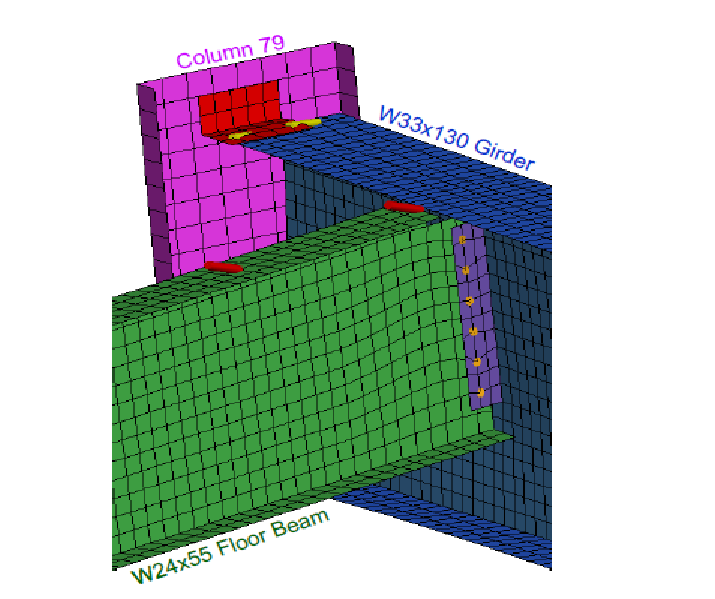
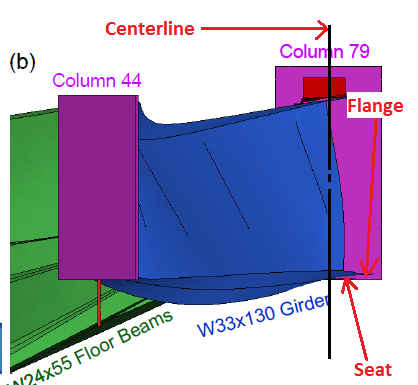
They lied about the width of the seat? How do you know? You think someone sat there, looked up 12 inches, and then said to himself "nyahhh, I am gonna show them suckers" and deleted the 2 and wrote 1 instead to make it 11 inches? Why do you think so? Does it make a difference? Would a seat width of 12 inches made a fundamental difference? If not, why would anybody lie here, instead of err - or perhaps the 12 inches are erroneous, I am not sure that this has been determined in this thread yet.
The details of how they simulated what - I wouldn't call detailed and open information about what they really did "fraud". If I tell you that I took 4 apples from your kitchen, left no money, but cleaned the sink instead, would I be fraudulent because you expected me to take 2 oranges in exchange for drying the dishes? I think "fraud" is really the wrong word here. You could say that you think what they did is wrong or stupid or incompetent or has this and this problem, but since they inform you exactly on the shortcuts they used, there is no fraud. It would be fraud if they said they simulated 20 minutes of 1100° when in fact they applied 4 hours.
I think you would be a lot smarter if you didn't use such derogatory terms to describe your disagreement with methods. You see, perhaps the problem is not their methods, perhaps the problem is your insufficient understanding for the rationale behind those methods. Perhaps you have never used ANSYS or LS-DYNA before to do such simulation? Perhaps 1.5 seconds are plenty in such sims to account for bending of beams? I don't know. Elsewhere, when they build up the entire structure, they apply gravitational loads over a period of several seconds, to allow for normal stress to build up gradually. This is of course far from reality: They did not build WTC7 to completion in zero gravity and then cranked up gravity linearly over a few seconds. Instead, it took months for the gravity loads to build up. Was that fraud, too?