This is a fascinating subject though - the question of how a government reacts to an emergency, and what the military chain of command is for an extremely rare order.
Nevermind the over-the-top allegations of desertion and various conspiracies - no matter what a government does those kinds of theories are going to fly around on the internet and in the pub.
A question that comes to mind is, considering the relatively new Presidency, the lack of experience of GW Bush, and the fact that it was a surprise attack: had anyone in the administration ever considered this kind of order before, and what if anything would they know about such an order?
I've mentioned this before regarding 9/11 - it was an unprecedented attack, period. Never happened before or since. To expect the top leaders to instantly respond as if they'd been briefed, trained and prepared for it is asking far too much, IMO.
Of course, I'm not taking a position that assumes Bush and Cheney planned the attacks, so their hesitation and confusion does not seem nefarious.
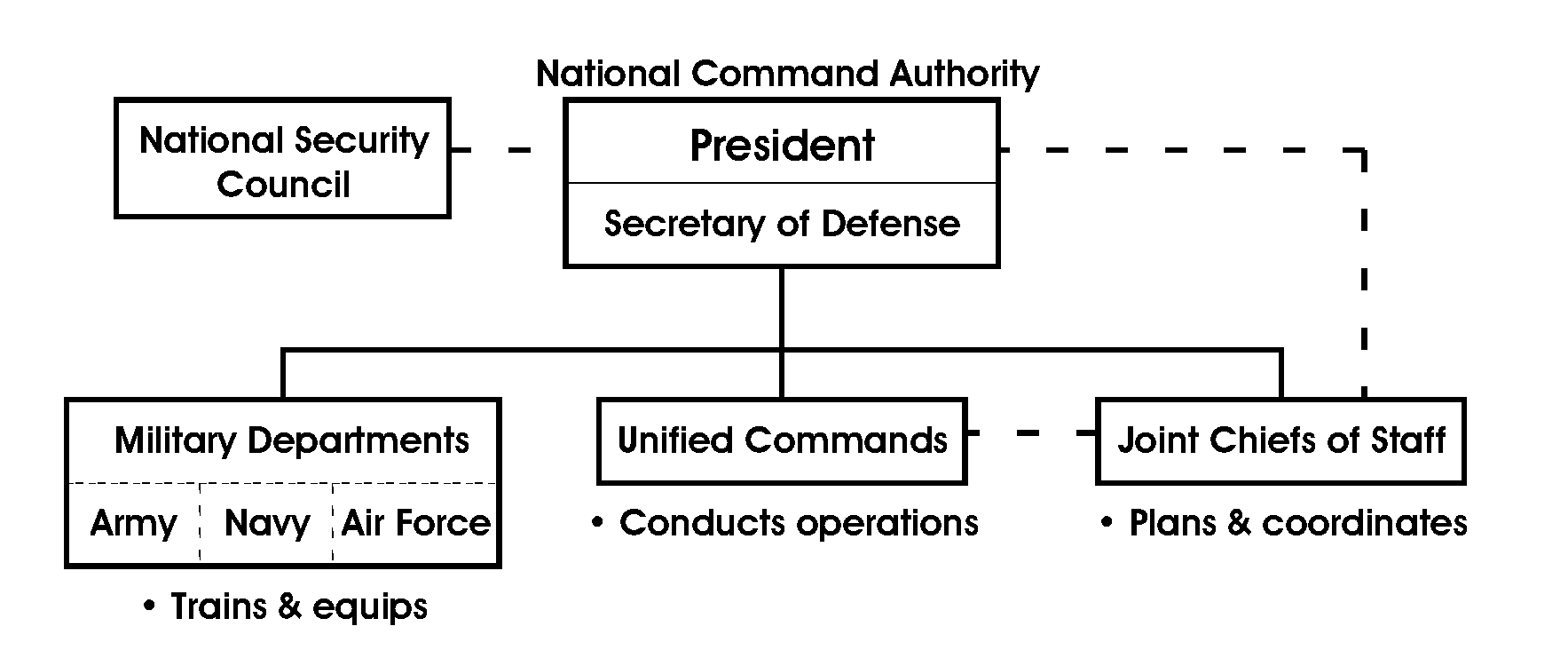
The concept of the NCA, from what I've read, derives directly from the Cold War and the authorization to stop a nuclear attack. For that exact reason - that a comprehensive and quick response to hijacked planes that were to be used as weapons was not part of any strategic response before 9/11 - new policies were implemented after the attacks.
This again demonstrates that the previous policy was just not adequate to cover such a contingency - ie more people, such as the VP, and Chairman of the JCS needed to be included in the authority to shoot down.
9/11 was a tragic event, the military responses on the day were obviously not adequate to prevent even one of the planes from either being hijacked or flown by the hijackers. That has changed. We have learned from the attacks and will respond differently in future, guaranteed.
The finger pointing at Bush, Cheney, or Rumsfeld is a rather mean-spirited and unhelpful, IMO, since there's absolutely no reason to think that the outcome could have been different given the circumstances. Coulda, shoulda, woulda is not going to get the job done.
I'm still looking thru the various administration statements after the attacks - so far, Cheney's claim that Bush responded within minutes of the attacks by ordering aircraft to shoot down stands out as inaccurate, of course. He made the statement on Sept 13, and he may well have had an incorrect idea of the events - is there any reason to think that they would have dissected the entire day already? I doubt it, they had a lot of other things to worry about - a national crisis, in fact.
He's correct that Bush ordered the shoot down, but he was not correct that it was minutes after the second plane hit. He was wrong about that. He is correct that jets were scrambled, but not about the exact orders they had.
I'll give him the benefit of the doubt and simply say that he got important details wrong.
That still doesn't make him a traitor or even a liar per se.
Here's a list of the 'chain of command' that I got from one researcher:
President of the United States
Vice President of the United States
Speaker of the House of Representatives
President Pro Tempore of the Senate
Secretary of State
Secretary of the Treasury
Secretary of Defense
Attorney General