Inflation: WHEN? HOW MUCH?

HA!

Read it and WEEP! Weep for your country and its little lies that mean nothing to the people living in it.

http://finance.yahoo.com/news/No-In...9.html?x=0&sec=topStories&pos=1&asset=&ccode=

I love it when economic nut-cases don't even read the full articles they cite, the full articles that prove them wrong:

To be sure, shoppers won't be paying more for everything as the upcoming holiday season is expected to show price discounts for goods such as clothing and technology. But for everyday consumer staples like food and energy, the news is not good.

So, once again we learn that when we ignore all the prices that are falling, the rest of the prices are going up or staying the same.
 
So, once again we learn that when we ignore all the prices that are falling, the rest of the prices are going up or staying the same.

Yes, we already went over that. The mother unfortunately can't afford tortillas, but in her favor, a Lamborghini costs $40,000 less.
 
Inflation in September was 1.14%....

HYPERINFLATION!!!!

well, I am glad that the middle and upper consumer classes don't notice the inflation. As the stories linked noted, it is the lower classes that are noticing it, because food and gas is going up quickly. So Americans will be able to afford big screen televisions, just not bananas.
 
Yes, we already went over that. The mother unfortunately can't afford tortillas, but in her favor, a Lamborghini costs $40,000 less.

Did you read the quote? How do you lump clothes in with Lamborghinis? Do you live in a nudist colony?
 
Yes, we already went over that. The mother unfortunately can't afford tortillas, but in her favor, a Lamborghini costs $40,000 less.

If a mother really needed food to feed her children... why tortillas?

Anyway, I'm not a whiz at economics so I'll refrain from voicing my opinions.
Heres a slightly interesting article: Linky
 
Yes, we already went over that. The mother unfortunately can't afford tortillas, but in her favor, a Lamborghini costs $40,000 less.

Why doesn't she spend the money she's saving on rent and clothing, then?

Luxury cars aren't the only thing that's gone down. In fact, luxury cars make an infinitesimal part of the CPI goods basket. The single biggest component, in fact, is rent, which is way down.....
 
Did you read the quote? How do you lump clothes in with Lamborghinis? Do you live in a nudist colony?

Clothes are a luxury. Buying AE and AF is a luxury. I am sure Goodwill and Value Village clothes prices are about steady.
 
The new CPI has just been released:

http://www.bls.gov/news.release/cpi.nr0.htm

The Consumer Price Index for All Urban Consumers (CPI-U) increased
0.2 percent in October on a seasonally adjusted basis, the U.S.
Bureau of Labor Statistics reported today. Over the last 12 months,
the all items index increased 1.2 percent before seasonal adjustment.
. . .
Over the last 12 months, the index for all items less food and energy
has risen 0.6 percent, the smallest 12-month increase in the history
of the index
, which dates to 1957.
 
:eek:

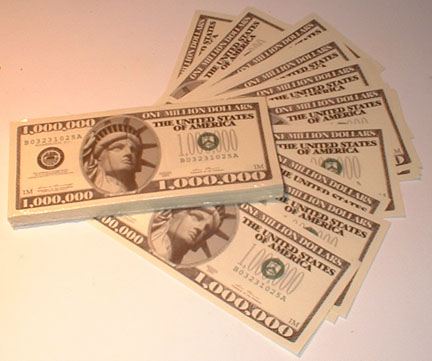
Americans, this is your Whopper & Coke money next year:

crisp.jpg
 
Clothes are a luxury. Buying AE and AF is a luxury. I am sure Goodwill and Value Village clothes prices are about steady.

Goodwill in our area has raised it's prices on clothes and shoes. Books are still the same as well as toys. Value Village, which used to be more expensive then Goodwill, is now cheaper because they have not raised their prices yet.
 
Squeezing wages keeps inflation bottled up

Profits are up, but not wages or jobs because The Man is keeping all the extra profits.

In 2010, the first full year of growth after the recession, U.S. output increased 3.7%, the Bureau of Labor Statistics reported Thursday. To produce all those extra goods and services, American workers put in just 0.1% more hours on the clock. Productivity increased 3.6%
. . .
Wages rose 2%, but most of that was inflated away. After adjusting for higher prices, real compensation rose just 0.3%.
. . .
What does this have to do with inflation? Everything. Businesses’ costs are the main driver of inflation, and labor is the main cost of doing business.
. . .
[T]o get sustained inflation, almost all prices have to rise, especially wages. Paying higher wages in turn forces all businesses to raise their prices, and those higher prices stick because the workers now have the extra income they need to afford the higher prices. That’s the wage-push inflationary cycle.

Think about it this way: Every business would like to raise its prices, but most businesses are constrained by what their customers will pay. What customers will pay is constrained by how much money they have and whether they can be satisfied by buying from the guy down the street.

Look how closely correlated labor costs (wages) are with core CPI:
 

Attachments

  • MW-AI503_labor__20110203174808_MD.jpg
    MW-AI503_labor__20110203174808_MD.jpg
    20.1 KB · Views: 82
Yoo-hoo! Inflation hawks!

U.S. 10-Year Note Yield Drops Below 2%

Benchmark 10-year yields declined 57 basis points last month, the most since a 71 basis-point drop in December 2008, touching a record low of 1.97 percent on Aug. 18. Two-year notes have hovered at almost the record low 0.1568 percent after the Fed pledged Aug. 9 to keep the fed funds rates in a zero to 0.25 range until at least mid-2013.

The rally comes as bond investors have reduced their expectations for inflation as breakeven rates on Treasury Inflation-Protected Securities, or TIPS, are hovering near the lowest since October 2010. The breakeven inflation rate, calculated from yield differences on 10-year Treasury notes and inflation-indexed U.S. government bonds of similar maturity, has fallen to 2.04 percent from a high this year of 2.65 percent reached on April 11.
 
well, I am glad that the middle and upper consumer classes don't notice the inflation. As the stories linked noted, it is the lower classes that are noticing it, because food and gas is going up quickly. So Americans will be able to afford big screen televisions, just not bananas.

I recently saw Bananas for sale at the store for 49 cent/lb. I'm pretty sure that's still affordable.
 
Krugman is referring back to an old article of his on why supply side economics keep rambling along.
http://www.slate.com/id/1910/

So why does the supply-side idea keep on resurfacing? Probably because of two key attributes that it shares with certain other doctrines, like belief in the gold standard: It appeals to the prejudices of extremely rich men, and it offers self-esteem to the intellectually insecure.
 

Back
Top Bottom