• Quick note - the problem with Youtube videos not embedding on the forum appears to have been fixed, thanks to ZiprHead. If you do still see problems let me know.

Merged Is ufology a pseudoscience?

So is philosophy a science too?


I am not attempting to justify a belief in anything that is unknown to science or has never been proven to exist either. UFOs clearly exist. My contention is that the evidence shows that there are UFO cases that defy plausible mundane explanation.
Your contention has been shown to be incorrect. That you continue to assert it shows your dishonesty. I've shown that your version of a process of elimination is fatally flawed.

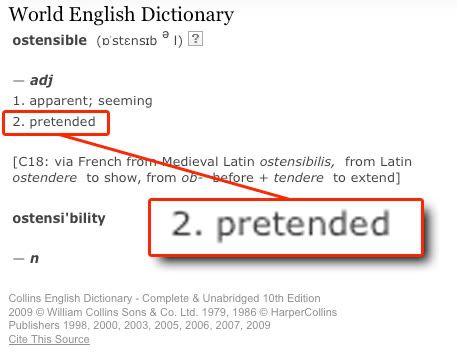
That being said, one can also justify a belief that ET exists based on the evidence of ostensible “nuts and bolts” craft. Intelligent manoeuvres and associated beings and the fact that it is probable in the vastness of the universe that ET does exist and that science does not preclude that existence - indeed, it suggests strongly that ET should exit out there somewhere… it is just that we do not have the direct evidence to support that belief. It can however be justified if one is so inclined.
No, only creduloids can justify a belief that ET is visiting the earth. We have no evidence to support that belief. That you choose to interpret ambiguous evidence as your favorite woo is your uncritical thinking again.

I think you have slightly misconstrued what “pseudoscientific” means. It means that someone claims to have adhered to the scientific method and principles when they have not. Science can – and has - produced false and misleading evidence.
But UFOlogy has produced no evidence for aliens visiting earth, ever.

No, the mere proposal of hypotheses (claims) does not make something pseudoscientific either. To claim to have tested those hypotheses using scientific methodologies and principles to produce the evidence they present, if they have not done so, is pseudoscientific.
No, your unfounded conclusion that UFOs are pseudoaliens is pseudoscientific.

Again, you misconstrue what pseudoscientific means. A claim without evidence is merely an unfounded assertion. Nothing more, nothing less.
Since you aren't a scientist, you can't really be faulted for not understanding the scientific process but you should certainly know what pseudoscientific means since you are a pseudoscientist.

It depends on what you mean by that phrase “unknown to science”. My guess is that you mean “not proved” by science – for paranormal phenomena are “known” to science – it is just that they have not had concerted, sustained, peer-reviewed programs of research directed toward them.
No, aliens visiting the earth and flying around in saucers are unknown to science. If you have evidence otherwise, you should have been sharing that instead of your anecdotes. You don't, because it's pseudoscience.

Science has claimed many things to exist that have not been “proved” (gravitons – to take a topical issue - for example).
Therefore pseudoaliens. Nope, it's still pseudoscience.

UFOlogy is not a pseudoscience because it has never claimed to be a science.
UFOlogy is a pseudoscience even if you don't claim it to be science. It really isn't a difficult concept.

Find me the evidence of ufologists who claim that ufology is a science then.
Why?

As I have explained a number of times now – the application of scientific methodologies does not make a science – history for example.
UFOlogy is pseudoscience having done nothing for the last 70 years.

That is your faith-based opinion and of course you are entitled to it, but it does not demonstrate ufology to be pseudoscience.
No, UFOlogy is pseudoscience because it is a faith-based belief in UFOs as pseudoaliens.

Science “makes extraordinary claims about the workings of the material world” (and often against what are accepted to be valid, accepted ideas about how the material world works) – the whole idea of the universe is absolutely preposterous – yet here we are…
As Sagan so rightly said, extraordinary claims require extraordinary evidence. Not anecdotes. UFOlogy is pseudoscience.

Touchy, touchy – yet it is still not a valid argument to show ufology is pseudoscience.
You've provided all the argument needed to show that UFOlogy is pseudoscience practiced by pseudoscientists.

The mere statement of unfounded claims does not somehow magically confer veracity on them. Claims made without evidence can be dismissed without evidence.
So stop doing it.

I am not defending those things against the charge of pseudoscience. I have not studied the evidence for or against those things so I am in no position to draw any such conclusions. I am however defending ufology against the charge.
And, you're incorrect.
 
All pseudosciences have their own versions of "evidence" that don't stand up to critical scrutiny. Ufology is no exception.


That is your opinion and you are of course entitled to it. But your mere say so does not make it so.


No matter how DOCishly you attempt to trivialise this observation, Rramjet, it's not just an opinion. You might get away with calling a consensus - just - but what it is, and the one thing that you'll never be able to waffle your way out of, is reality.
 
That being said, one can also justify a belief that ET exists based on the evidence of ostensible “nuts and bolts” craft.

Pretended.jpg


ETA: Source

bash.gif
 
Last edited:
So is philosophy a science too?


Philosophy is, like History, a Humanity.

According to Wikipedia:

The humanities are academic disciplines that study the human condition, using methods that are primarily analytical, critical, or speculative, as distinguished from the mainly empirical approaches of the natural sciences.

The humanities include ancient and modern languages, literature, history, philosophy, religion, and visual and performing arts such as music and theatre. The humanities that are also regarded as social sciences include technology, anthropology, area studies, communication studies, cultural studies, law and linguistics.


Ufology is not a Humanity. It is pseudoscience.


I am not attempting to justify a belief in anything that is unknown to science or has never been proven to exist either. UFOs clearly exist. My contention is that the evidence shows that there are UFO cases that defy plausible mundane explanation.


Formal fallacy; converse error.

Your offhand denial of the broad range of possible "mundane" explanations (starting with the obvious, "people often report things that are wrong") and consequent unqualified jump to paranormal explanations, is a logical error commonly committed by practitioners of pseudoscience.

Science does not do that; the Humanities do not do that.

Religion and Theology might do that, but they don't try to force-fit scientific methodology into the endeavor to validate their supernatural, or "paranormal" beliefs. Instead, they profess their faith in the supernatural, and justify their beliefs on the relative merits of that standpoint.


That being said, one can also justify a belief that ET exists based on the evidence of ostensible “nuts and bolts” craft. Intelligent manoeuvres and associated beings


Improper grammar there. That period ought to have been a comma.

You persist in repeating these lies that such material evidence exists, when it absolutely does not.

This is not simply a matter of being wrong about something. You have been corrected many times on this matter, yet you persist in repeating the lies. YOU ARE A LIAR.


...and the fact that it is probable in the vastness of the universe that ET does exist and that science does not preclude that existence - indeed, it suggests strongly that ET should exit out there somewhere…


This is an opinion, not a fact.

Using that opinion as a basis to build a case around unsupported evidence is an example of confirmation bias.

Confirmation bias is a natural human tendency, and that is why science has such strict, methodical rules for measured observation, the formation of hypotheses, the collection of evidence, the structuring of experiments, peer review, independent testing, etc.

When you make categorical statements about the nature of the material Universe, you are entering the realm of science. When you shirk scientific methodology in establishing such statements, you are practicing pseudoscience.


it is just that we do not have the direct evidence to support that belief.


Now, you admit that you lied in your statement above, to wit:

...one can also justify a belief that ET exists based on the evidence of ostensible “nuts and bolts” craft. Intelligent manoeuvres and associated beings


There is no direct evidence to support any of those things, only a bunch of stories, many of which are also lies. Please quit lying.

Of course, I'm guessing your extraordinary lack of cognitive dissonance and/or basic honesty will lead you to rationalize these two contradictory assertions in the familiar manner of any liar too dumb to realize when he's been caught in his own lie.


I think you have slightly misconstrued what “pseudoscientific” means. It means that someone claims to have adhered to the scientific method and principles when they have not.


Equivocation; redefinition.

You're absolutely wrong. All they have to do is make unproven assertions about the material world in an authoritative way, and justifying those claims through unscientific "research" and "evidence."

Go ahead, squirm all you want. Like a Chinese finger trap, the more you struggle, the tighter the bonds become! The more dishonest angles you use to try and weasel out of the definition of pseudoscience, the clearer it becomes that ufology can't fit any other designation but pseudoscience.


Science can – and has - produced false and misleading evidence.


Non sequitur; irrelevant conclusion.


Again, you misconstrue what pseudoscientific means. A claim without evidence is merely an unfounded assertion. Nothing more, nothing less.


A "paranormal" claim, made on the basis of ostensible "research," that defies established scientific knowledge, is pseudoscience.


It depends on what you mean by that phrase “unknown to science”. My guess is that you mean “not proved” by science – for paranormal phenomena are “known” to science – it is just that they have not had concerted, sustained, peer-reviewed programs of research directed toward them.


Again, you mince words. You know exactly what the idiom "known to science" means. It means "established by science to be consistent with how the physical universe works." The reason science is not studying it is because scientists are smart enough to realize there's nothing there to study.


Science has claimed many things to exist that have not been “proved” (gravitons – to take a topical issue - for example).


Gravitons are theoretical. They're not yet accepted as scientific fact. Now before you start seeing this as a loophole to start claiming that flying saucers and ET are also theoretical, there's a whole lot more material evidence to support the existence of gravitons than there is for ET or flying saucers, which are based entirely on stories.

 
Last edited:
If I might say, John, I'm learning a great deal from your posts, particularly in the understanding of the various formal and informal logical fallacies.

Thank you.

:)


You're very welcome!

It certainly helps in identifying exactly where different modes of thinking go wrong, and maybe even getting a handle on some of the underlying psychology. It's also helped me a lot in keeping my own bad practices in check.

If you want to learn more, here's a good place to start: http://www.fallacyfiles.org/taxonomy.html
 
If I might say, John, I'm learning a great deal from your posts, particularly in the understanding of the various formal and informal logical fallacies.

Thank you.

:)

I'd like to second that John. I too am enjoying your valuable contribution.
Not least because your efforts with the words frees me and Akhenaten up to do more picture gags. :)
 
I have to admit I didn't understand much of your long-winded definitions.

How about these definitions:

Truth: that which corresponds to reality; that which is objectively real.

Proof: irrefutable objective evidence that something is true.

See, if your understanding of "truth" is so ambiguous that you can't even define it without getting into all sorts of irrelevant talk about "contexts," that indicates to me that either you are confused about what is real and what isn't, or else you have some serious problems with honesty. A third option might be that you were trying to tailor your answer in such a way that I wouldn't have any basis to criticize, but that too would be dishonest.

When you talk about the "pursuit of the truth," what do you actually mean? Pursue it only within some contexts, and not others?

See, the whole purpose of critical thinking is to discern the truth by means of specific practices that have proven reliable at weeding out falsehoods and inconsistencies. That's why science is based on it. Science is the practice of discerning reality little by little through logic, trial and error, and independent verification by others. If you're trying to find out the truth about some physical matter, science is the best methodology we have to date.

Rejecting science in favor of fantastic stories and wild speculation is not going to get you closer to the truth; it's rather like being lost in the woods and neglecting your compass in favor of dowsing your way out with a tree branch.


The definition of Truth in the quote above is too limited and does not apply to many situations. Mine does. Why? Because I've thought it through and don't have such a simplistic view.

The definition of proof above is similarly limited and innacurate. For starters, almost anything is refutable ( in a generic sense ) except for example that UFOs exist. It is irrefutable that UFOs exist because "irrefutable" means "impossible to disprove". Even if you add in the concept of "objective evidence", you have to put that into come context. Objective means several things, as does evidence, which is very nebulous.

Scientific proof is about as close as we can get to "proof", but even it isn't always ultimate "proof". Even scientists recognize this fact.

j.r.
 
Last edited:
Rramjet said:
(1)multiple eye witness, (2)the radar, the (3)film and photographic and the (4)physical trace evidence

1. Would that be like the group of people who watched a distant object, through 1940's binoculars sitting in a rocky boat on a river on a hazy day in may? Those people who then drew a blimp to describe their observation?

2. Clearly no mundane object could ever be caught on radar so I guess these ones must be "alien" then.

3. Is this the space debris you're referring to?

4. Now, this must surely be the human hair, the known fungus or the dented car. Could you clarify which one you believe is "alien"?
 
The definition of Truth in the quote above is too limited and does not apply to many situations. Mine does. Why? Because I've thought it through and don't have such a simplistic view.


Tell us about a situation where truth doesn't correspond to objective reality.


The definition of proof above is similarly limited and innacurate. For starters, almost anything is refutable. Scientific proof is about as close as we can get to "proof", but even it isn't always ultimate "proof". Even scientists recognize this fact.

j.r.


I might dispute the 'almost anything', at least for practical purposes, but whatever, if something is refutable, then it isn't proven. Fine. That doesn't mean that a definition of proof as irrefutable objective evidence is limited and inaccurate.

It simply means the number of things that can be proven is limited, which of course it is.
 
The definition of Truth in the quote above is too limited and does not apply to many situations. Mine does. Why? Because I've thought it through and don't have such a simplistic view.


"Too limited"? "Simplistic view"?!?

How complicated can the truth possibly be?

It's only complicated if you're a liar or a schizo. If your concept of "truth" is all relative to context, then your statement of purpose—"pursuit of the truth"—is pointless and disingenuous. This indicates to me that you're fundamentally dishonest, or otherwise reality-impaired.

Do you deny that there's a single objective reality that is shared among all objects and beings in the universe?


The definition of proof above is similarly limited and innacurate. For starters, almost anything is refutable. Scientific proof is about as close as we can get to "proof", but even it isn't always ultimate "proof". Even scientists recognize this fact.


"Proof" is a word that doesn't belong in the sciences. Proof implies 100% certainty—something unfalsifiable—a condition which science does not acknowledge. Religion, not science, deals in absolutes.

"Proof" is used in the fields of mathematics and symbolic logic to mean a reasoned confirmation of a statement using a logical framework of rules. But "proof" doesn't really apply to the physical sciences because the technologies of observation, measurement and theory are always advancing.
 
Last edited:
So we've redefined:
Critical Thinking
Pseudo Science
Unidentified Flying Object
Truth and
Proof

Looks like we're in for a redefinition of 'Objective' and 'Evidence' next.
 
Tell us about a situation where truth doesn't correspond to objective reality.


To be precise, the request above is ill conceived. Truth and reality are two seaparate issues. Therefore truth itself doesn't correspond to objective reality or any other reality.

Truth is about a said premise. For example, it is true that in Canada, 100 cents equals 1 dollar.

So I'm presuming that what you really mean to ask is what situation could there be for a premise to be true outside the context of objective reality. In this case the answer would be a subjective situation, as described in my initial definition. To provide another example, if you have any imagination, you could close your eyes and see a small pink elephant inside a brown room with hardwood floors. And when you see that small pink elephant in that brown room with hardwood floors, that small pink elephant is truly there in the imaginary room. After all, if it weren't there in the imaginary room we would have to say that it isn't true that it is there in the imaginary room.

There are both objective and subjective truths.


I might dispute the 'almost anything', at least for practical purposes, but whatever, if something is refutable, then it isn't proven. Fine. That doesn't mean that a definition of proof as irrefutable objective evidence is limited and inaccurate.

It simply means the number of things that can be proven is limited, which of course it is.


Uh ... actually the definition in your quote is fine in a really loose, generic non-scientific, subjective way for people who are lazy thinkers. Otherwise it's very very weak with the flaws described in my initial quote ( maybe revisit it - I think I was still editing when you replied ).

j.r.
 
Last edited:
Moved to here, at Cuddles behest:

ufologist said:
Oh ... that bit you were following is from another thread and GeeMack will smack me down again for trying to derail the topic if I start in on it. Not that I don't want to answer, and he'll probably just smack me down for not answering anyway, so I'll explain it anyway and try to keep it short. The issue was in reference to a UFO sighting I had. Direct experience represents firsthand knowledge. So basically I know as opposed to hearing it secondhand or in some other anecdotal form such as a report. I know the same way you know you are reading this right now.
Direct experience represents direct experience. Your interpretation of that (UFO) experience, put through the cultural filters embedded in your mind, which you subsequently relay to a third party, becomes anecdotal evidence.

Do you see the difference?

ETA: accepting that I can interpret symbols as language is not the same thing as believing that UFOs are alien spaceships. Perhaps the final part of your post belongs in the ECREE thread?
 
Last edited:
To be precise, the request above is ill conceived. Truth and reality are two seaparate issues. Therefore truth itself doesn't correspond to objective reality or any other reality.

Truth is about a said premise. For example, it is true that in Canada, 100 cents equals 1 dollar.

So I'm presuming that what you really mean to ask is what situation could there be for a premise to be true outside the context of objective reality. In this case the answer would be a subjective situation, as described in my initial definition. To provide another example, if you have any imagination, you could close your eyes and see a small pink elephant inside a brown room with hardwood floors. And when you see that small pink elephant in that brown room with hardwood floors, that small pink elephant is truly there in the imaginary room. After all, if it weren't there in the imaginary room we would have to say that it isn't true that it is there in the imaginary room.
It is certainly true that you have an imaginary elephant in your head.
Now what say you about the elephant in the room

ETA: Isn't the English language a wonderful weapo.... errrr I mean tool.
 
Last edited:
So we've redefined:
Critical Thinking
Pseudo Science
Unidentified Flying Object
Truth and
Proof

Looks like we're in for a redefinition of 'Objective' and 'Evidence' next.


Well look no further. "Objective" has been splayed open and spit upon. The argument that there is critical thinking involved in "ufology" has almost reached the bottom of the abyss of dishonesty...

To be precise, the request above is ill conceived. Truth and reality are two seaparate issues. Therefore truth itself doesn't correspond to objective reality or any other reality.
 
Tell us about a situation where truth doesn't correspond to objective reality.


To be precise, the request above is ill conceived. Truth and reality are two seaparate issues. Therefore truth itself doesn't correspond to objective reality or any other reality.

<:words:>


"I can't think of one" would have been easier to type.


I might dispute the 'almost anything', at least for practical purposes, but whatever, if something is refutable, then it isn't proven. Fine. That doesn't mean that a definition of proof as irrefutable objective evidence is limited and inaccurate.

It simply means the number of things that can be proven is limited, which of course it is.


Uh ... actually the definition in your quote is fine in a really loose, generic non-scientific, subjective way for people who are lazy thinkers.

<snip>


Well, this is a discussion about ufolology, so you can't expect too much. If we weren't up to our antennae in pseudoscience I'd simply point out that proofs are for mathematics alone and leave it at that.

But since we're here anyway, in what important, non-nitpicky, un-redefiny way does irrefutable objective evidence differ from proof?
 
The definition of Truth in the quote above is too limited and does not apply to many situations. Mine does. Why? Because I've thought it through and don't have such a simplistic view.
The definition of proof above is similarly limited and innacurate. For starters, almost anything is refutable ( in a generic sense ) except for example that UFOs exist. It is irrefutable that UFOs exist because "irrefutable" means "impossible to disprove". Even if you add in the concept of "objective evidence", you have to put that into come context. Objective means several things, as does evidence, which is very nebulous.

Scientific proof is about as close as we can get to "proof", but even it isn't always ultimate "proof". Even scientists recognize this fact.

j.r.

WOW! That statement makes not only this thread but the whole forum redundant.
 

Back
Top Bottom