johanfprins
Graduate Poster

- Joined
- Dec 1, 2010
- Messages
- 1,015
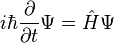
We have not been talking about sums of eigen-state solutions, but about coherent solutions, each of which must have a specific frequency: The wave we are talking about is a single eigenstate moving around a circle.I linked to animations of solutions of the SE that show that clearly. You ignored them. Generally, nearly any solution that is the sum of at least two energy eigenstates has that property.
I have never seen an animation of a coherent wave (i.e. a wave with a specific frequency) which is moving. And by the way I could not access the webpages you quoted. But that does not matter since you are again misleading this forum by making claims which are irrelevant to what we are discussing. The following is a further example:Complete and utter nonsense. See either of the animations, open any QM text, or simply superpose some free particle stationary solutions. Here's an explicit analytic example in 1D:
This is a wave packet that only forms within a conductor. It forms by the superposition of delocalised stranding waves when a change in boundary conditions require them to form: For example when there are temperature fluctuations or when applyin an electric-field so that a current is flowing. Each of the standing waves which superpose is on its own "an electron"; or else they will not superpose. You cannot superpose "empty waves"; waves which are on their own not each an electron.[latex]$\psi(x,t) = \int dk e^{i(kx-\omega t) -k^2 + i p_0 x}$[/latex], from which one obtains
[latex]$|\psi(x,t)|^2=\pi \frac{e^{-\frac{(x-2 p_0 t)^2}{2 \left(1+t^2\right)}} }{\sqrt{1+t^2}}$[/latex].
It is wrongly claimed in text books that such a wave packet can form spontaneously within free space from delocalised waves of which only ONE is an electron. This is BS. When waves superpose to form a wave-packet each of the waves that superpose must be an electron. Thus to form a wave packet in free space you will have to have an infinite number of electrons and a reason why they will want to superpose: Within a conductor the reason is that an electric-field is applied to institute an electric current.
It is not a moving coherent wavewhich has a single frequency and parallel wave-fronts. So it has NOTHING to do with what we have been discussing.That is a moving wave packet with momentum p0, and it solves the free-particle Schrodinger equation.
 .