• Quick note - the problem with Youtube videos not embedding on the forum appears to have been fixed, thanks to ZiprHead. If you do still see problems let me know.

Deeper than primes

Status
Not open for further replies.
No. There is no such thing as "the smallest point" excepting the one in the south-east corner of the Cemetery of Geometric Souls & Spirits on Olympus Mons, Mars.
I am not talking about the smallest point.

I am talking about "point" as being the smallest possible element.
 
Let us close this subject as follows:

In terms of finite collections, where only the members of S and the members of P(S) are considered |S| < |P(S)|.

Great! Progress at last. Doron admits he was completely wrong for at least the finite case.

This is not the case if S is an infinite set, or the range of possible mappings between the general form {a,b,c,d,...} and the general form {{},{a},{b},{c},{d},...,{a,b,c,d,...}} is considered.

Cantor proved |S| < |P(S)| for infinite sets, too, and you haven't refuted Cantor. In fact, all you've done is misconstrued the standard proof into some sort of bogus generator function.
 
The Man, any collection of more than one element, is the result of Locality/Non-locality co-existence.

Neighbourhood is clearly based on Locality/Non-locality co-existence and not vice versa.

So you just can’t or you simply won’t answer the questions asked?

This would be that “Locality/Non-locality co-existence” where you insist that they are separate and independent but where you claim that you just can’t “research” them, well, independently? How unfortunate for you.

Furthermore, if relation is considered as non-locality and element as locality, then "=" is the non-local aspect and "A" is the local aspect of "A=A" expression.

Furthermore? Just more of the same nonsense you’ve repeated before isn’t going any further.

In two post we have your “Locality/Non-locality co-existence” and your ‘relation/element interaction’, are you sure you don’t want to throw in a ‘Parallel/Serial thinking’ claim in there somewhere as well?


They are not the same exactly because one case of set S is ordered and the other case of set S is not ordered.

Once again Doron they are both simply ordered differently, if you think not then show how the orderings are the same.

They are the same only if order has no significance.

Again then define your ‘succession’ without ordering.


Dido doesn’t mean what you apparently want it to either, so ditto on your dido.


http://dictionary.reference.com/browse/dido


Now we discover that you can't get that the "box" is your experience.

I’m not the one who made claims about being in a box too long, Doron, so whatever “experience” you are referring to, it certainly wasn’t mine.

You simply do not understand the result of the proposition "there is nothing between A and B", and this misunderstanding is some problem of your boxes reasoning.

You simply don’t understand that it is your "there is nothing between A and B" “proposition” so any problems as a “result” are still simply just yours.

Since you are using only context-dependent reasoning, and can't get cross-contexts reasoning, the traumatic “box” experiences is entirely yours.

Again I asserted no claims about being in a box too long, your claims, your experiences, your trauma as well as your drama Doron.

Yet your boxes reasoning can't comprehend it.


So far your boxes context-dependent reasoning reflects its own self contradictory nonsense, when it is used to comprehend cross-contexts reasoning.


Again, your boxes reasoning can't comprehend it.

Again stop simply trying to posit aspects of your own failed reasoning onto others.

Please show where I claim that smaller and smallest are not in co-existence.


Again, please show where I claim that smaller and smallest are not in co-existence.

First show that anyone here has asserted you made such a claim, then you can ask them to support their assertion. Stop asking me or anyone else here to support assertions we have never made but that you would simply like to ascribe to us.


In one case 1 as the considered member, and in the other case there is no member at all.

In both cases there is an interval with no difference and you have yet to show your “interval” for the many differences already noted before. We all understand that you simply want to equate an interval with a difference but once again neither specifically requires the other.

Without the interval A and B are actually one and only one thing. You still get interval only in terms of metric space, as some kind of space gap between A and B.

I never made any claims about a “metric space” in relation to the letters A and B. So again stop simply trying to posit your own assertions onto others.

Again, please show where I claim that smaller and smallest are not in co-existence.

Again, first show that anyone here has asserted you made such a claim, then you can ask them to support their assertion. Stop asking me or anyone else here to support assertions we have never made but that you would simply like to ascribe to us.


I read and replied to that post in its entirety. Again you have been informed many times that I will not read nor reply to your surreptitious edits. If it is not important enough to you to be worth you noting what you have changed then it certainly isn’t worth anyone reading or replying.
 
I am not talking about the smallest point.

I am talking about "point" as being the smallest possible element.
And you are the only one who talks like that. Lines can be longer or shorter, areas larger or smaller, 3-dim objects, like females, can be more voluptuous or anorexic; but points are dimensionless, so they can't be compared to other "elements" that way.

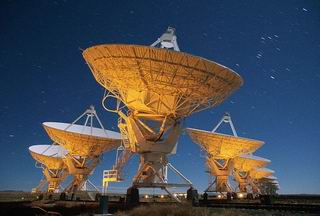
seti_farm.jpg


The SETI has miles of tapes of conversations carried between the intelligent worlds of the universe, but there has been no mentioning of point being the smallest element. But Biblical points do have dimensions:

Then the devil took him to the holy city and had him stand on the highest point of the temple.
Matthew 4:5

Then the devil said onto Jesus...

Might as well jump. Jump !
Might as well jump.
Go ahead, jump. Jump !
Go ahead, jump.


And so Jesus jumped but was saved from striking his foot against the ground by a flock of vintage Marshall amps sent to his aerial rescue by the LORD Himself.
 
Last edited:
Great! Progress at last. Doron admits he was completely wrong for at least the finite case.
It is a progress that is closed under your boxes thinking style, or in other words, no progress.


Cantor proved |S| < |P(S)| for infinite sets, too, and you haven't refuted Cantor. In fact, all you've done is misconstrued the standard proof into some sort of bogus generator function.
Your box thinking style can't comprehend http://www.internationalskeptics.com/forums/showpost.php?p=7138512&postcount=15278.

You can add progress to the concepts that you don't understand.
 
And you are the only one who talks like that. Lines can be longer or shorter, areas larger or smaller, 3-dim objects, like females, can be more voluptuous or anorexic; but points are dimensionless, so they can't be compared to other "elements" that way.

[qimg]http://www.tonyrogers.com/news/images/seti_farm.jpg[/qimg]

The SETI has miles of tapes of conversations carried between the intelligent worlds of the universe, but there has been no mentioning of point being the smallest element. But Biblical points do have dimensions:

Then the devil took him to the holy city and had him stand on the highest point of the temple.
Matthew 4:5

Then the devil said onto Jesus...

Might as well jump. Jump !
Might as well jump.
Go ahead, jump. Jump !
Go ahead, jump.


And so Jesus jumped but was saved from striking his foot against the ground by a flock of vintage Marshall amps sent to his aerial rescue by the LORD Himself.

Doron isn't alone, there are many people who would agree with him.

Has it not occured to you that mathematics is an abstract representation of the world around us.
It represents the three dimensional things we see and touch around us. It does this very well, which has many technical applications.

However this modeling is only interpreting the surface of reality. It does not and cannot interpret the mystery of existence itself or how these 3D objects actually occupy 3D space, or what 3D space is.

It is blind to these considerations.
 
So you just can’t or you simply won’t answer the questions asked?
No, you simply can't understand the answers exactly because you are using wrong reasoning.

This would be that “Locality/Non-locality co-existence” where you insist that they are separate and independent but where you claim that you just can’t “research” them, well, independently? How unfortunate for you.
Under co-existence they save their ids with respect to each other.

It seems that you can't grasp this.

In two post we have your “Locality/Non-locality co-existence” and your ‘relation/element interaction’, are you sure you don’t want to throw in a ‘Parallel/Serial thinking’ claim in there somewhere as well?
More examples of your generalizations problem, so?

Once again Doron they are both simply ordered differently, if you think not then show how the orderings are the same.
No. One is ordered and the other is not ordered because it is arbitrary.

Again then define your ‘succession’ without ordering.
Simply the next element, where no particular order is considered.

I’m not the one who made claims about being in a box too long, Doron, so whatever “experience” you are referring to, it certainly wasn’t mine.
Actually you can't, because you are not aware of you as being closed in a box, and this non-awareness is exactly the reason of why you can't comprehend OM, which uses also cross-contexts (cross-boxes, id you will) reasoning.

You simply don’t understand that it is your "there is nothing between A and B" “proposition” so any problems as a “result” are still simply just yours.
I am fully aware of the weakness of you boxes thinking style, so?

Again stop simply trying to posit aspects of your own failed reasoning onto others.
You are boring and wrong.

First show that anyone here has asserted you made such a claim, then you can ask them to support their assertion. Stop asking me or anyone else here to support assertions we have never made but that you would simply like to ascribe to us.
It was done by you by using the following question:
Really, please show any one of those articles that claimed that “smaller and the smallest” could not ‘co-exist’?

In both cases there is an interval with no difference
It can't be simply because difference is a particular case of the general concept interval, which is not the wrong use of this important concept as it is done by your boxes thinking style.

I never made any claims about a “metric space” in relation to the letters A and B. So again stop simply trying to posit your own assertions onto others.
You did it by wrongly understand the meaning of the proposition "there is nothing between A and B".

I read and replied to that post in its entirety. Again you have been informed many times that I will not read nor reply to your surreptitious edits. If it is not important enough to you to be worth you noting what you have changed then it certainly isn’t worth anyone reading or replying.
It is not important enough to you to get out of your boxes thinking style, and this is really your main problem.

You can add "the end of" to the concepts that you can't comprehend.
 
Last edited:
Then the devil said onto Jesus...

Might as well jump. Jump !
Might as well jump.
Go ahead, jump. Jump !
Go ahead, jump.


And so Jesus jumped but was saved from striking his foot against the ground by a flock of vintage Marshall amps sent to his aerial rescue by the LORD Himself.


Caleb rocks out 2 teh big beat

Yeah!
 
Do you admit that you can't comprehend that point is the smallest possible element?
I thought that the "smallest possible element" of your hyper-construction of realities is the famous 0.000...1 object -- the distance between 1 and 0.999... Now you are saying that there is something yet smaller, but you don't supply the means of comparison. Moses at least produced some stones when the folks around him went no comprende on his claims.

We must look at it mathematically/scientifically -- we need to find the smallest element in the realm of mathematics through magnification. There is a set in C you can use for the search and this one in particular zooms in through X 2915 magnification. (Stop at 1:53 to see the Julia set passing by. :) )

 
I thought that the "smallest possible element" of your hyper-construction of realities is the famous 0.000...1 object -- the distance between 1 and 0.999... Now you are saying that there is something yet smaller, but you don't supply the means of comparison.

0 is the smallest possible element.

0.000...1[base n>1] is a general form of smaller.
 
Last edited:
No, you simply can't understand the answers exactly because you are using wrong reasoning.

I understand your answers Doron, specificly that they were simply and deliberately not related to the questions asked and your “reasoning” is quite obvious.

Under co-existence they save their ids with respect to each other.

It seems that you can't grasp this.

“save their ids with respect to each other”? That still doesn’t change the fact that you explicitly assert that you have no basis for your claim that they are separate just within you own assertion.


It seems that you still can't grasp this

More examples of your generalizations problem, so?

Your “generalizations” thus your problems Doron.

No. One is ordered and the other is not ordered because it is arbitrary.

An arbitrary ordering doesn’t mean that it is not ordered it just means that the ordering is, well, arbitrary. Again if you don’t think the orderings are different then show how they are exactly the same.

Simply the next element, where no particular order is considered.

Again “the next element” is an aspect of ordering even without some “particular order” being considered.

So again define your “succession” without ordering.


Actually you can't, because you are not aware of you as being closed in a box, and this non-awareness is exactly the reason of why you can't comprehend OM, which uses also cross-contexts (cross-boxes, id you will) reasoning.

Oh, so now you just want to claim that I just “can’t” make the claims you just want to ascribe to me. So not only are you asserting those claims you just want to ascribe to me aren’t in fact mine you are emphatically asserting that they can not be mine. Do you ever get tired of just contradicting yourself Doron. Now that we know that you assert such claims can’t be mine then we know that you are intentionally lying when you try to ascribe such claims to me.

I am fully aware of the weakness of you boxes thinking style, so?

It’s just your “boxes thinking style” ascription so any “weakness” you derive from it remains entirely yours.

You are boring and wrong.

You are ridiculously self-contradictory.

It was done by you by using the following question:

That question makes no such claim as you asserted. So it must be just another of your own claims that you just want to ascribe to others. Stop lying to yourself, Doron, and just rying to lie to us.


It can't be simply because difference is a particular case of the general concept interval, which is not the wrong use of this important concept as it is done by your boxes thinking style.

Both [1,1] and (1,1) are intervals with no difference (also don’t forget what you deliberately truncated off of what you quoted)“…and you have yet to show your “interval” for the many differences already noted before”, which again simply demonstrates that you are specifically and generally just wrong as usual.

You did it by wrongly understand the meaning of the proposition "there is nothing between A and B".

No Doron I quite specificly never made any claims about a “metric space” in relation to the letters A and B (which is specifically why they were letters and not variables) Stop lying Doron, if not to yourself then at least stop trying to lie to us.

It is not important enough to you to get out of your boxes thinking style, and this is really your main problem.

Again its just your “boxes thinking style” ascriptions, so its just your problem, agian.


You can add "the end of" to the concepts that you can't comprehend.

I have been quite clear that I simply will not enable your juvenile behavior of surreptitiously editing your posts. Whatever you find incomprehensible about that is simply your problem that you can correct at anytime you choose to.
 
0 is the smallest possible element.

0.000...1[base n>1] is a general form of smaller.
Aha. So there are 5 apples in the basket. After the kids eat them according to the general form 5, 4, 3, 2, 1, and 5 - 5 = 0, the zero apple is the smallest apple left in the basket.

Do I understand that correctly?
 
EDIT:

“save their ids with respect to each other”? That still doesn’t change the fact that you explicitly assert that you have no basis for your claim that they are separate just within you own assertion.
The Man you are using a reasoning that has no ability to deal with things that save their ids with respect to each other under co-existence.

As a result you are unable to understand the non-local id of a thing that exists at more than one location, and the local id of a thing that exists at no more than one location, under their co-existence.

An arbitrary ordering doesn’t mean that it is not ordered it just means that the ordering is, well, arbitrary. Again if you don’t think the orderings are different then show how they are exactly the same.

Again “the next element” is an aspect of ordering even without some “particular order” being considered.

So again define your “succession” without ordering.
You simply use the word "order" even if there is no order, so even if one follows your reasoning, the next element of a given collection is not necessarily determined by any particular order exactly as the cardinality of some infinite set is not impacted by the order of its members (cardinality is not ordinality and vice versa).

By understanding the arbitrariness of the next member of some infinite set and the fact that multiplicity is the result of the co-existence of the local with the non-local, we have the needed logical basis to conclude that any given amount of local elements can't completely cover a non-local element under the co-existence, and any given amount of non-local elements can completely reducible into local elements.

The non-transformation of the local and the non-local into each other under their co-existence, guarantees the existence of multiplicity in the first place, and prevents the existence of the final non-local or local element in any given infinite collection (or in other words, the completeness of any given infinite collection, where the permanent existence of the next non-local or local elements, is an inherent property of its existence).

As for non-locality and locality, let's demonstrate again their ids under co-existence by using the minimal needed elements, which are points and line-segments:

A line segment X is located at endpoint A AND at endpoint B.

Let endpoint B be a limit of X, such that X is at B AND at any arbitrary closer point C to B, which is located along X AND it is between endpoint A and endpoint B.

No matter how close is C to B, C is not B only if X is irreducible to B OR C.

No point along X, whether it is endpoint A endpoint B or arbitrary point C, is at more than one location along X.

The co-existence of line segment X, endpoint A, endpoint B and arbitrary point C (C is taken as a placeholder of any point between endpoint A and endpoint B, along X) under a one framework, guarantees the existence of the Real line.

 
Last edited:
Aha. So there are 5 apples in the basket. After the kids eat them according to the general form 5, 4, 3, 2, 1, and 5 - 5 = 0, the zero apple is the smallest apple left in the basket.

Do I understand that correctly?

5,2,1,4,3 are the apples.

________ is the basket.

5,2,1,4,3 is 5 apples in the basket.

5 - 5 = 0 is an empty basket, in this case.
 
Last edited:
Originally Posted by epix
Aha. So there are 5 apples in the basket. After the kids eat them according to the general form 5, 4, 3, 2, 1, and 5 - 5 = 0, the zero apple is the smallest apple left in the basket.

Do I understand that correctly?


1,2,3,4,5 are the apples.

________ is the basket.

1,2,3,4,5 is 5 apples in the basket.

5 - 5 = 0 is an empty basket, in this case.
But if the basket contained 5 apples, then it must have been larger than any individual apple/element and therefore cannot be the smallest element in the configuration, as you claimed that zero is.

I don't know; I think I don't have the knack for advanced mathematics . . .
 
EDIT:
Let endpoint B be a limit of X, such that X is at B AND at any arbitrary closer point C to B, which is located along X AND it is between endpoint A and endpoint B.
If B is the limit of X, then X cannot be at B -- unless your definition of the limit greatly differs from the established one.

Here is your 1 - 0.999... = 0.000...1 = Dwarf in an outfit made of the limit:

[lim k → ∞] 1/10k => 0.000...1 (k in Z+)
 
But if the basket contained 5 apples, then it must have been larger than any individual apple/element and therefore cannot be the smallest element in the configuration, as you claimed that zero is.

I don't know; I think I don't have the knack for advanced mathematics . . .
epix, 0, in this case, is the amount of the elements in the basket and not the size of the basket.

You do not distinguish between size and amount.
 
Last edited:
Status
Not open for further replies.

Back
Top Bottom