Merged Molten metal observations

Isn't all this happening in the middle of a fire? Didn't NIST claim temperatures in the range of 800 to 1000º?? It's not like we have to raise the metal from room temperature. You're claim that specific heat is significant undermines NIST's temperature observations.

That would be mole.

copper 3CuO(s) + 2Al(s), ΔH = -1203.8 kJ/mol

that reaction (per mole) produces enough energy to raise one kilo of iron 2616º

The specific heat of iron is:

0.46 (kJ/kg K)

The fusion heat is

247.29 kJ/kg

That's about 540 times larger.

So specific heat is not as significant as you want to portray it. Yes there is a high temperatu required. But there are many heat sources available already and the area is hot. It is not as terrible as you want us to believe.
I advised you to go get a unit of chemical engineering, but it seems you skipped the chemistry class too. Did you use the Balsamo method of making up stuff and coming up with the 11.2g solution?

Proved you have no clue again. Specific heat is significant, and the fact you can't do the math is not a surprise.

Please explain mol again. The themite 911 truth made up is Fe based, you failed to realize that? Do you have any clue what you are defending with pure nonsense?
 
Last edited:
Proved you have no clue again. Specific heat is significant, and the fact you can't do the math is not a surprise.

Please explain mol again. The themite 911 truth made up is Fe based, you failed to realize that? Do you have any clue what you are defending with pure nonsense?

Let's try it with the Fe one, given you're so interested

Fe2O3(s) + 2Al(s) has ΔH = -851.5 kJ/mol

Lets take the 851 kJ produced by the reaction of one mole, subtract the 247.29 kJ required for fusion of 1Kg:

604 kJ are left

604/.46 = 1300º

So there is enough energy in one mole to heat and melt one kilo of steel. That's from a starting temperature of 200º, which is reasonable given the blazing fire. Now if we base ourselves on the temperatures claimed by NIST well we need less and less energy to heat to the melting point.
 
Let's try it with the Fe one, given you're so interested

Fe2O3(s) + 2Al(s) has ΔH = -851.5 kJ/mol

Lets take the 851 kJ produced by the reaction of one mole, subtract the 247.29 kJ required for fusion of 1Kg:

604 kJ are left

604/.46 = 1300º

So there is enough energy in one mole to heat and melt one kilo of steel. That's from a starting temperature of 200º, which is reasonable given the blazing fire. Now if we base ourselves on the temperatures claimed by NIST well we need less and less energy to heat to the melting point.

Number salad
How do you prove only thermXte could have corroded that beam like that?
 
Isn't all this happening in the middle of a fire? Didn't NIST claim temperatures in the range of 800 to 1000º?? It's not like we have to raise the metal from room temperature. You're claim that specific heat is significant undermines NIST's temperature observations.
No, it goes more like this: Your reliance upon NIST's estimates for the temperature of the fire, combined with your casual assumption that the temperature of the fire approximates the temperature of the steel, undermines your claims about the ability of thermite to melt the steel.

The specific heat of iron is:

0.46 (kJ/kg K)

The fusion heat is

247.29 kJ/kg

That's about 540 times larger.
To get from 800º C (the low end of the temperature range you're assuming) to the melting point of steel, you'd have to multiply the specific heat by about 540 K, making the specific heat just as important as the heat of fusion even under your assumptions.

Even under your assumptions, it would take about 500 kJ/kg to melt the steel. As Harrit etc noted, the theoretical maximum for thermite is about 4000 kJ/kg, so the amount of thermite you'd need to melt the steel is at least 1/8 the mass of the steel you're pretending to melt.

That's before we take into account the fact that your estimates are for the temperature of the fire, not the temperature of the steel. The WTC towers would have collapsed long before the temperature of the structural steel could reach 800º, because steel loses about 80% of its yield strength by 600º.

Bottom line: According to your own numbers, using a quantity of thermite that's well over 10% of the mass of structural steel, the buildings would have collapsed before the steel's temperature could have risen to the point at which (according to your own calculations and argument quoted above) the thermite would have been effective.


Why was zero iron fused to the steel from the WTC? No evidence of thermite being used on 911. Thermite scam is a delusion Jones made up.
 
Last edited:
Java, their basic premise that fires, jet fuel/kerosene or office could be hot enough and of one location long enough weaken huge steel beams that would immediately conduct/disperse the heat throughout the entire length of itself(the beam) is insane.

Their subsequent premise that damage, weakening of steel beams, to a very limited area of the buildings could cause a building destroy itself by global collapse is even more insane. More insane because they have been grandiosely dubbed as gravity collapses which had heretofore been the domain of collapsed stars and the birth of the universe.

http://en.wikipedia.org/wiki/Gravitational_collapse


I thought I'd show everyone how hot a flame must be to cut steel. White/blue hot.


http://www.youtube.com/watch?v=yM0Q-SpPsGg
 
... Their subsequent premise that damage, weakening of steel beams, to a very limited area of the buildings could cause a building destroy itself by global collapse is even more insane. More insane because they have been grandiosely dubbed as gravity collapses which had heretofore been the domain of collapsed stars and the birth of the universe.
...
You make up nonsense because you fail to comprehend structural engineering, fire science, and physics. You make it up as you go, or did you get all your 911 information from 911 truth?

Looks like Robertson, the chief structural engineer of the WTC towers thinks your claims are based on nonsense, delusions.
http://www.nae.edu/Publications/The...ecurity/ReflectionsontheWorldTradeCenter.aspx


Where is your evidence for melted steel? Why can't you grasp 19 terrorists did 911? Are you the bigot who said Arabs can't kill big Americans?


Java, their basic premise that fires, jet fuel/kerosene or office could be hot enough and of one location long enough weaken huge steel beams that would immediately conduct/disperse the heat throughout the entire length of itself(the beam) is insane.

Their subsequent premise that damage, weakening of steel beams, to a very limited area of the buildings could cause a building destroy itself by global collapse is even more insane. More insane because they have been grandiosely dubbed as gravity collapses which had heretofore been the domain of collapsed stars and the birth of the universe.
This is good stuff. Wow. Lots of physics, and math.
Steel is too strong to be weakened by ordinary office fires, the standard 911 truth lie.

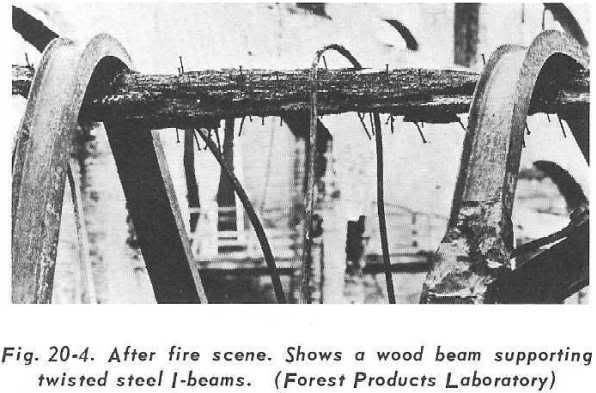
woodsteelfire.jpg

For 911 truth steel is too strong to be weakened by fire. Don't look...
 
Last edited:
Java, their basic premise that fires, jet fuel/kerosene or office could be hot enough and of one location long enough weaken huge steel beams that would immediately conduct/disperse the heat throughout the entire length of itself(the beam) is insane.

Their subsequent premise that damage, weakening of steel beams, to a very limited area of the buildings could cause a building destroy itself by global collapse is even more insane. More insane because they have been grandiosely dubbed as gravity collapses which had heretofore been the domain of collapsed stars and the birth of the universe.

http://en.wikipedia.org/wiki/Gravitational_collapse


So you don't think fire weakens steel?


I thought I'd show everyone how hot a flame must be to cut steel. White/blue hot.


http://www.youtube.com/watch?v=yM0Q-SpPsGg


Awesome but irrelevant no steel was cut, now could you tell us at what temperature does steel start to lose it's strength?
 
Java, their basic premise that fires, jet fuel/kerosene or office could be hot enough and of one location long enough weaken huge steel beams that would immediately conduct/disperse the heat throughout the entire length of itself(the beam) is insane....
The only thing insane is the structure of your strawman. Which "huge steel beams" do you refer to? Have you no clue as to which structural members needed to be heated to failure?
...Their subsequent premise that damage, weakening of steel beams, to a very limited area of the buildings could cause a building destroy itself by global collapse is even more insane...
Your subject is global collapse. Who has claimed that heating of "steel beams" was a significant factor in global collapse? The most significant factor in global collapse was the vulnerability of the tube in tube design. End of story.
.. More insane because they have been grandiosely dubbed as gravity collapses which had heretofore been the domain of collapsed stars and the birth of the universe....
Ridiculous. Gravity has been around for a long time. And buildings have collapsed in that time. Whether you accept it or not gravity was involved.
...I thought I'd show everyone how hot a flame must be to cut steel. White/blue hot....
...Wow! So what?
 
Not that his knowledge of chemistry had been in question. For example...


What the above tells us is that Java Man
  • doesn't realize that, for this particular calculation, the specific heat is several times more important than the heat of fusion,
  • probably doesn't know how to spell the unit abbreviated by mol, and
  • doesn't know how to convert the units abbreviated by mol into kilograms.
Oh man that is priceless. Infact iirc a truther did do the calculations, there's a paper somwhere - I've quoted it before because the calculations are correct.

This one isn't the original but the calculations are included. Ignore all the rubbish and just look at page 8, fig 3 and page 10 for calculations - remember this is theoretical and not real world so there will be heat losses and not all reactants will react etc. http://www.journalof911studies.com/volume/200704/JLobdillThermiteChemistryWTC.pdf Max is 2Kg of steel melted per Kg of thermite, however, that is never going to be reached - see graph. In the real world a 1:1 ratio is more likely.
 
Last edited:
Thermate can supply sulfur. Which was the question being asked. That's in the chemical composition of thermate.

2 Questions:

  1. A thermate charge, especially a NANO-thermate charge, would burn off in seconds, or less. Would that be sufficient time for the sulfur to diffuse intergranuarly and cause the kind of slow corrosion that was seen?
  2. How does this square with Harrit's observation that the thermitic materials they supposedly found contains NO sulfur?
 
:pigsfly

You make up nonsense because you fail to comprehend structural engineering, fire science, and physics. You make it up as you go, or did you get all your 911 information from 911 truth?

Looks like Robertson, the chief structural engineer of the WTC towers thinks your claims are based on nonsense, delusions.
http://www.nae.edu/Publications/The...ecurity/ReflectionsontheWorldTradeCenter.aspx


Where is your evidence for melted steel? Why can't you grasp 19 terrorists did 911? Are you the bigot who said Arabs can't kill big Americans?


This is good stuff. Wow. Lots of physics, and math.
Steel is too strong to be weakened by ordinary office fires, the standard 911 truth lie.

[qimg]http://i286.photobucket.com/albums/ll116/tjkb/woodsteelfire.jpg[/qimg]
For 911 truth steel is too strong to be weakened by fire. Don't look...

I knew that guy when he was doing telephone books.
 
That's before we take into account the fact that your estimates are for the temperature of the fire, not the temperature of the steel. The WTC towers would have collapsed long before the temperature of the structural steel could reach 800º, because steel loses about 80% of its yield strength by 600º.

That is in disagreement with NIST:

"In no instance did NIST report that steel in the WTC towers melted due to the fires. The melting point of steel is about 1,500 degrees Celsius (2,800 degrees Fahrenheit). Normal building fires and hydrocarbon (e.g., jet fuel) fires generate temperatures up to about 1,100 degrees Celsius (2,000 degrees Fahrenheit). NIST reported maximum upper layer air temperatures of about 1,000 degrees Celsius (1,800 degrees Fahrenheit) in the WTC towers (for example, see NCSTAR 1, Figure 6-36).

However, when bare steel reaches temperatures of 1,000 degrees Celsius, it softens and its strength reduces to roughly 10 percent of its room temperature value. Steel that is unprotected (e.g., if the fireproofing is dislodged) can reach the air temperature within the time period that the fires burned within the towers. Thus, yielding and buckling of the steel members (floor trusses, beams, and both core and exterior columns) with missing fireproofing were expected under the fire intensity and duration determined by NIST for the WTC towers.

"

They seem to claim that unprotected steel could very easily reach 1000º (room temperature). So who is correct? You or NIST? Please clarify.
 
2 Questions:

  1. How does this square with Harrit's observation that the thermitic materials they supposedly found contains NO sulfur?

Simply put, to ask that question you have to admit that Harrit's thermitic material was found. Do you accept that?
 
It is also very likely, though I don't have absolute proof, that the Emergency Operations Center in Building 7 would have used battery backup systems in quantity.

Respectfully,
Myriad

Absolutely it did. I was in the EOC one afternoon, doing an inspection, or something, and recall seeing a closet about the size of my living room, full of UPS supplies.

I will research it a little more, and see if I can come up with some exacts. I know one of the people who worked in the EOC back then, so I will drop him a line.

Cheers!
 
Not even close kid. But hey, keep going. It's funny watching you brushing your teeth with butt cream, only to insist it's toothpaste.

Funny ending statement. If only the first sentence were true. Unfortunately for you it isn't. Cuts are quite similar.
 

Back
Top Bottom