• Security incident: ISF was recently accessed by intruders. Please change your password, and change it anywhere else you used it. Read more

Merged DDWFTTW in a “Real” Wind

Status
Not open for further replies.
Scared to, eh?

Scared to watch the video? No. Lying. He's watched that video 100 times through. He simply can't find a chink in it to go after. Pretty odd I admit since he's generally quite comfortable making **** up.

You would have to attach a magic wind feather on each of the carts and claim that it's needed to achieve DDWFTTW. Randi would have to debunk this by explaining that DDWFTTW constitutes ordinary physics and works without the magic wind feather.

Now that's brilliant!
 
Wasn't Charles Platt the guy that made the ridiculous propeller that looked like it was made out of a bunch of popsicle sticks glued together? If so, he's definitely an idiot.
Yes, Charles Platt is the author of this article:
http://www.make-digital.com/make/vol11/?pg=60&pm=2&u1=friend#pg60

Even if his prop was better it would still not work, because he had the wrong gearing. When he twisted the belt to have a positive advance ratio, the cart went upwind, so the advance ratio was above 1 (CASE E in the table below). Twisting the belt the other way gave him a negative advance ratio (CASE A), which goes downwind, but slower than wind. To achieve DDWFTTW the advance ratio must be between 0 and 1 (CASE C).

2gv0kew.png


Platt simply didn't (and still doesn't) understand how DDWFTTW is supposed to work:

Fig. 1 On page 62 is a vector diagram of a boat tacking upwind, instead of downwind on a broad reach which is the equivalent of the blades in DDWFTTW.

Fig. 2 On page 62 shows Platt's silly idea of DDWFTTW: Use CASE A below wind-speed, and then above wind-speed switch to CASE OVERUNITY : A turbine moving DDWFTTW accelerates air forward and increases the true wind, instead of extracting energy from it.

Platt just cannot get into his head that this is not a turbine.
 
Gosh. If only someone had posted a video showing how a propeller can also be a sail.

Well, you are learning!
That's right. It is a sailboat, that does not travel ddw, and exploits the wind gradient several meters above the ground. A mixture of the conventional and poor experimental control.
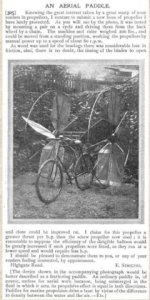
But the idea of using a prop as a sail is far from new. You have been championing old wine in a new bottle. There are prop/turbine boats too.
Some built. None worked, but a sail, is of course quite practical.

attachment.php
 

Attachments

  • sailboats.jpg
    sailboats.jpg
    17.3 KB · Views: 80
Evasion noted.

So do you refuse to watch (or to admit watching) a sub-1-minute video which explains the mechanical similarity between a tacking yacht and a propeller?

Shall we explain to you what it shows so that you can tell us what's wrong with it? Or would you refuse to read that? :D

All that has been talked to death. Nothing to see. Really don't care.

The topic is a cart in the wind, and the trial and its result. It's bogus,
 
Scared to watch the video? No. Lying. He's watched that video 100 times through. He simply can't find a chink in it to go after. Pretty odd I admit since he's generally quite comfortable making **** up.


Now that's brilliant!

Speaking of making things up. You posted pictures of yourself, where you faked your ID at Georgia Tech.

You claim to have two technical degrees. I find that implausible, especially with that background, and lack of any technical skill.
You always leave it to others to handle any technical points, only dropping by to throw tinsel.

Can you prove that you do have the qualifications you claim?

And once again, can you explain the also dubious differences between your data and NALSA's data?

I am concerned that with this new upwind cart, you will take up more of time of the academics and institutes that you use to promote yourself
You have already wasted the time and resources of SJSU and NASA on the downwind cart.
 
Last edited:
All that has been talked to death. Nothing to see. Really don't care.

The topic is a cart in the wind, and the trial and its result. It's bogus,

Not to me, it hasn't. If you've talked it to death it would appear that you have seen this video before as Spork says. Its relevance is direct and obvious. Can you find any logical fault with its content or not?
 
Well, you are learning!
That's right. It is a sailboat, that does not travel ddw, and exploits the wind gradient several meters above the ground. A mixture of the conventional and poor experimental control.
But the idea of using a prop as a sail is far from new. You have been championing old wine in a new bottle. There are prop/turbine boats too.
Some built. None worked, but a sail, is of course quite practical.

http://www.internationalskeptics.com/forums/attachment.php?attachmentid=21450&stc=1&d=1300576996
Orsjl.jpg
 
Last edited:
Not to me, it hasn't. If you've talked it to death it would appear that you have seen this video before as Spork says. Its relevance is direct and obvious. Can you find any logical fault with its content or not?

I pay no attention to Spork's cartoons.

It will be one of the dozen explanations he has stolen and adopted. The previous analogy of two tethered ice-boats and tacking prop, came directly from Andy Ruina, circa 1980. The cart is a modified copy of a model prop- boat, circa 1975.

There is no connection between Spork's claims and Bauer's or Drela's; both are quite different. That is also the case with Mac Guanna. The nexus being that they both think ddwfttw is possible, but depart on how.

He got the latest idea from Steve Smith of NASA. Spork denied knowing him, but Smith eventually admitted to me they met through a common interest in flying.

The idea has already been tried. 1882 is the earliest recorded attempt.

But, you have not successfully explained the ratchet. That is quite important.
The glitzy animations are a ruse to hide the banality and absurdity of the idea.

Like this:
attachment.php

attachment.php

attachment.php


According to Spork, you should be able to pedal these bikes to wind speed, take your feet off the pedals and accelerate away. There are perhaps 20 other bikes of this type.

The retort has been that they are not "geared to the wheel", ( though some are) and that is why they won't work.
But, that is easily remedied isn't it? So the matter of the ratchet and the role of the gears is of interest.

However, those bikes do rather put the whole matter into perspective. A backyard amusement inflated into something of merit, by sheer weight of hyperbole and deception. So, the trials are also important to the claim.

Some time ago, another crank, Greg Watson, built a simple "over-unity" gimmick. Harmless enough, but the final result was investment by the Australian Government in a solar energy claim that resulted in a $53 million fraud. Spork has mentioned using his ideas for power generation, and the upwind cart is the next step.
 

Attachments

  • propbike23.jpg
    propbike23.jpg
    35.5 KB · Views: 82
  • propbike25.jpg
    propbike25.jpg
    35.9 KB · Views: 81
  • propbike27.jpg
    propbike27.jpg
    27.5 KB · Views: 80
<evasion>
But, you have not successfully explained the ratchet. That is quite important.
<words>

I have explained the ratchet. If I lacked success it was because you were not paying attention. Let me try again:

The ratchet operates like the freewheel on a bicycle. It allows the propeller to continue to turn if the cart slows or stops suddenly.

Do you see now?

The wheels drive the prop, but if the wheels stop, the prop is not obliged to stop too. Get it?

In normal operation, with the wheels driving the prop, the ratchet does not operate. Just as when a cyclist is riding along, their freewheel does not operate.

No big secret. Nothing sinister. Not a trick. Not even put there to demonstrate anything. Just a practicality.

Do you grasp it now?

OK. Good. Now - about this video showing the mechanical similarity between a tacking yacht travelling downwind faster than the wind and a propeller: have you been able to find any fault with it? (I presume not, judging by the way you're twisting and wriggling.)
 
I have explained the ratchet. If I lacked success it was because you were not paying attention. Let me try again:
The ratchet operates like the freewheel on a bicycle. It allows the propeller to continue to turn if the cart slows or stops suddenly.
That is irrelevant. The prop cannot drive the wheel because CW rotation disengages it. CCW rotation opposes the wheel. Are you saying you think those bikes would accelerate above wind speed on their own? Really?

Do you see now?
The wheels drive the prop, but if the wheels stop, the prop is not obliged to stop too. Get it?
What I "get" is special pleading to avoid the socially unacceptable claim of PM.

In normal operation, with the wheels driving the prop, the ratchet does not operate. Just as when a cyclist is riding along, their freewheel does not operate.
Then you are claiming that the ground drives the cart and not the wind.
I doubt that will be accepted. Again, circumlocution is used to avoid the stigma of a Medieval idea.

No big secret. Nothing sinister. Not a trick. Not even put there to demonstrate anything. Just a practicality.
But the ratchet denies that the wind can apply any force to the wheel.
If the wind blows the rotor faster than the cart is traveling, it disengages.
That means the wheel must accelerate on its own. That is voodoo.

Do you grasp it now?
Not at the straws, no.

OK. Good. Now - about this video showing the mechanical similarity between a tacking yacht travelling downwind faster than the wind and a propeller: have you been able to find any fault with it? (I presume not, judging by the way you're twisting and wriggling.)

It is nonsense. Faux metaphysics. You have the opportunity to show that the electrical model works, which it must do, despite the analogies.

Anyone can lay claim to "concepts" but the cart is a machine, and must work at the mechanical level. These images suggest that the level of skill and knowledge in that area is wanting.

attachment.php


These breakages were explained as being the results of the cart having "the torque of a Corvette". In the range of 600 lb-ft. About 800N-m.

At the ground, that is about 2000N. The chart says a net force of 32N. That is a huge disparity and on bicycle tyres on dirt. Yet, all the articles on this cart repeated that obviously ludicrous claim. That goes to the technical authority of the chosen magazines, and why peer-previewed or professional journals are avoided.

The idea of extracting energy from "slowing down the headwind" came from Smith. He described it to me. He also proposed that analysis of that model, would say if it worked or not. That is, his idea is an untested hypothesis. Now you can test it, using the method proposed by its originator, and not some random tool with a graphics programme.

Spork is avoiding the formal Aeolus Races for his upwind cart, because that will expose the scam. NALSA are a yacht club, and not University-backed engineers.
 

Attachments

  • P3060016.JPG
    P3060016.JPG
    21.5 KB · Views: 0
  • video_bungles.jpg
    video_bungles.jpg
    29.7 KB · Views: 85
That is irrelevant. The prop cannot drive the wheel because CW rotation disengages it. CCW rotation opposes the wheel. Are you saying you think those bikes would accelerate above wind speed on their own? Really?
No, because the props are connected to the pedals, not the wheels. Keep on misrepresenting reality, no-one buys it.


What I "get" is special pleading to avoid the socially unacceptable claim of PM.
If that's the case then your comprehension really sucks.


But the ratchet denies that the wind can apply any force to the wheel.
If the wind blows the rotor faster than the cart is traveling, it disengages.
That means the wheel must accelerate on its own. That is voodoo.

Seriously, are you this difficult to get an idea across to? The wind does not turn the rotor, it pushes it forward. The wheel turns the rotor.

It is nonsense. Faux metaphysics. You have the opportunity to show that the electrical model works, which it must do, despite the analogies.
The electrical version does work. Your objection is based on a misconception that the prop drives the wheels, this is never, ever, ever true.
Anyone can lay claim to "concepts" but the cart is a machine, and must work at the mechanical level. These images suggest that the level of skill and knowledge in that area is wanting.

[qimg]http://www.internationalskeptics.com/forums/attachment.php?attachmentid=21457&stc=1&d=1300583202[/qimg]
No they illustrate what happens when someone forgets to reset one of the the ratchets on the drive axle after towing the cart back upwind. It should be pointed out that there was no ratchet on the prop shaft for that run, which would have prevented the damage. Which is why they made sure to include one the next time, and the beefed up all of them.

These breakages were explained as being the results of the cart having "the torque of a Corvette". In the range of 600 lb-ft. About 800N-m.

At the ground, that is about 2000N. The chart says a net force of 32N. That is a huge disparity and on bicycle tyres on dirt. Yet, all the articles on this cart repeated that obviously ludicrous claim. That goes to the technical authority of the chosen magazines, and why peer-previewed or professional journals are avoided.
You do know the difference between net force and actual force right?...... of course you don't

The idea of extracting energy from "slowing down the headwind" came from Smith.
That idea could only come from you, no-one else has ever made that claim.
 
No, because the props are connected to the pedals, not the wheels. Keep on misrepresenting reality, no-one buys it.
If that's the case then your comprehension really sucks.
Well, this one is. There are 4 others, but this on has text, and is more charming.
attachment.php


And I did say that the connection to the wheel for those bikes that didn't have wheel drive, would not be difficult to solve. Let's assume the bike is pedaled to > WS ,but without a link to the wheel. Please show how then engaging the prop to the wheel, would allow the cart to accelerate, and why one without such a connection, wouldn't. Put down that Strat, and get to real work.

Seriously, are you this difficult to get an idea across to?
Yes. As obdurate as the hardest obsidian. Not easily worked by tools.

The wind does not turn the rotor, it pushes it forward. The wheel turns the rotor.
The headwind is no different from than experienced by a roadie's van on the way to a gig. That headwind produces an opposing force called "drag". Spork has that same aero-drag as an opposing force, but now you want to tell me that when it hits the prop rather than the chassis, it drives the cart by pushing it forwards?

The electrical version does work. Your objection is based on a misconception that the prop drives the wheels, this is never, ever, ever true.
Nope. The motor at the prop will reduce the current from the generator at the wheel, if any force is applied to aid the prop's rotation.
If that is true, and it is, the only way the motor current can rise, is if the generator current rises, but that will only happen if the prop becomes a larger mechanical load for the motor. That leaves the wheel alone as the source of power. The wind can never add to the power generated at the wheel by any means. The ratchet is not important, but cranks have a way of changing their stories as matters progress. The ratchet simply cuts off one means of evasion, rather than being a problem. It fails ratchet or not.

No they illustrate what happens when someone forgets to reset one of the the ratchets on the drive axle after towing the cart back upwind. It should be pointed out that there was no ratchet on the prop shaft for that run, which would have prevented the damage. Which is why they made sure to include one the next time, and the beefed up all of them.
Are you paid to be an apologist for The Chief?
It fell apart on the dyno.
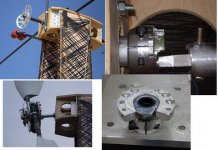
The causes are large transient loads produced by the flexing of the tower, the cantilevered prop shaft, and stress concentration within the ratchet housing.
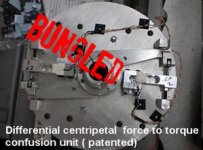
If the promised force gauges had been delivered, then the cause could be isolated, but those instruments were Bungled and never worked.

You do know the difference between net force and actual force right?...... of course you don't
Good one Ace. The drag would then be 2000-32 = 1968N.

The submission report example gives:
(Fnet = 68N)
Frr = 57N
Fdrag = 1.6N

Fnet ( "Corvette") = 2000- 57- 1.6 = 1941.4N

Do you think a bicycle tyre on dirt would sustain such force? No need to even think about it...no.

a =f/m = `1941N/295kg = 6.5ms-2
Reality: 0.1m/s-2
I put that to the "TAD team" and they didn't want to say anything.

That idea could only come from you, no-one else has ever made that claim.
It is part an parcel of the explanation, and the basis of the calculation shredded by Prang over at Rational Skeptic.
Smith's explanation included both extraction by slowing down the air, and the "distance through the air" gambit. I have the email, but much, including the motor current test, was in the email he sent to, and posted by Spork.
It's what goes around comes around time. Spork got my email address from Smith and posted it, but now he has to deny his own expert if he is to defend his position.

 

Attachments

  • propbike_1882.jpg
    propbike_1882.jpg
    27 KB · Views: 1
  • aerial paddle.jpg
    aerial paddle.jpg
    28.2 KB · Views: 77
Big problem for the good ship Sporky.
In his NALSA submission Spork has a wheel driving a generator, which drives a motor at the prop. Unless he (you,of course) can show that the wind can add power to that, then you are proposing that the motor could be connected to another wheel, and run the cart.
 
Big problem for the good ship Sporky.
In his NALSA submission Spork has a wheel driving a generator, which drives a motor at the prop. Unless he (you,of course) can show that the wind can add power to that, then you are proposing that the motor could be connected to another wheel, and run the cart.

Well, that's easily done. For those who haven't seen the NALSA submission, it's here:

http://www.nalsa.org/BlackBirdDDWSR/NALSA Submision report.pdf

Look at the generator argument in that report. You'll see "Thus we’ll tow the vehicle up to a speed of 20 mph in a 15 mph tail-wind and then let it loose. In this situation the vehicle will experience a relative head-wind of 5 mph."

If there is no wind, this is replaced by "Thus we’ll tow the vehicle up to a speed of 20 mph in a 0 mph wind and then let it loose. In this situation the vehicle will experience a relative head-wind of 20 mph." Anyone who's interested and has a basic knowledge of physics can work out what this changes for the rest of the argument.
 
Well, that's easily done. For those who haven't seen the NALSA submission, it's here:
http://www.nalsa.org/BlackBirdDDWSR/NALSA Submision report.pdf

Look at the generator argument in that report. You'll see "Thus we’ll tow the vehicle up to a speed of 20 mph in a 15 mph tail-wind and then let it loose. In this situation the vehicle will experience a relative head-wind of 5 mph."

If there is no wind, this is replaced by "Thus we’ll tow the vehicle up to a speed of 20 mph in a 0 mph wind and then let it loose. In this situation the vehicle will experience a relative head-wind of 20 mph." Anyone who's interested and has a basic knowledge of physics can work out what this changes for the rest of the argument.

Submission refart.pdf

Err...no. The motor knows only of force and angular velocity. There is no need to consult the wind. All the calculation can be done from the current, voltage and angular velocity. The gearing is fixed, so the AV is just a ratio. Simple. The mass of the cart can be modeled as a capacitor, and the wheel and drag losses as voltage-dependent resistances. That sort of thing.

The NASA dude says:
A quick thought on what additional measurements might be made to help persuade naysayers: Is there sufficient skepticism in the assertion that the propeller is pulling and the wheels are dragging, that some well-placed force measurements might be convincing?

I asked for that, but they Bungled it.
attachment.php


Probably the simpler thing would be to build one with electric generator at the wheels and motor at the prop, and show what direction the current is flowing
No need to test it. It fails in principle; unless Super Mario has the calculations to contradict that.

Even simpler is to just examine the drive chain while it is running, and see which side of the drive gears the chain is tight on. When you pedal a bike, the top leg of the chain is tight -- if the wheel of a bike is forcing the pedals to turn, the bottom leg of the chain is tight. On the DWFTTW cart, this simple test makes it easy to see that the wheels are indeed driving the prop.
Again, I suggest a simple mechanical flag, or lamp, that would allow that to be seen without any complexity. The chain wangs around because the design is bad. They did not like the idea of bringing the chain down the middle of the tower to prevent that.

And he says this. All mentioned before his email:

One other possibility is worth discussing — that it could be the time-variation of the wind direction, rather than simply the fact that the wind is not DDW. There are examples of similar effects in nature that would give some reason to consider this. For example, what is called “dynamic soaring” -- the maneuvering in a wind gradient field (regions where there is a consistent pattern of different wind speed) that allows birds (and gliders) to soar by extracting energy out of the wind gradient field.

I have mentioned the turning wind, and that it changes at a rate of 1degree/second, and then the cart takes off. The gradient too.

One other observation on the wind data — I am not familiar with the instrumentation used to measure the wind speed in the plots that are presented. The high frequency ( 5hz) oscillations in the wind direction look to me to be partly due to an artifact of the instrumentation.


I am. For one thing, the sampling frequency is too low. Hence the 5Hz artifact.

Several possible ways that this would happen occur to me, but each is dependent on assumptions of how the measurements were made, so until I know that, I would not elaborate further on those effects.

Yes, a lot of assumptions and unreported means, such as filtering, and of course, the raw data. So many, but do I need to elaborate?
 

Attachments

  • bungled3.jpg
    bungled3.jpg
    15.6 KB · Views: 72
JB said:
As is the norm for you, that is not true. This is a full time NASA aero engineer who has nothing whatsoever to do with our project (or any DDWFTTW project) and was reached with no help from us nor our knowledge.
He told me he met Spork through flying. MF

Spork said:
I see that RP has now received a very well crafted response from a NASA engineer with 31 years experience as an aero research engineer. He also has a PhD in Aero from Stanford, and extensive (decades) of experience with sailing and sailplanes.
He explained that humber has it all wrong, and that the mechanism behind DDWFTTW is "obvious".

How's that working out for you, Spork?
 
Then you are claiming that the ground drives the cart and not the wind.

That depends on your frame of reference. The power to drive the cart comes from the relative movement of the air and the ground. Choose any FOR you like.

I presume all this padding is an attempt to put as much space as possible between you and the video of the yacht & propeller for which you have no answer.

If the yacht works, then the propoeller works. You know it. We all know it.
 
Status
Not open for further replies.

ISF - Join now!

Every member here is approved by hand. No bots, no spam, just people who care about evidence and honest debate.

Membership is free!

Create your free account

Back
Top Bottom