No, because the props are connected to the pedals, not the wheels. Keep on misrepresenting reality, no-one buys it.
If that's the case then your comprehension really sucks.
Well, this one is. There are 4 others, but this on has text, and is more charming.
And I did say that the connection to the wheel for those bikes that
didn't have wheel drive, would not be difficult to solve. Let's assume the bike is pedaled to > WS ,but without a link to the wheel. Please show how then engaging the prop to the wheel, would allow the cart to accelerate, and why one without such a connection, wouldn't. Put down that Strat, and get to real work.
Seriously, are you this difficult to get an idea across to?
Yes. As obdurate as the hardest obsidian. Not easily worked by tools.
The wind does not turn the rotor, it pushes it forward. The wheel turns the rotor.
The headwind is no different from than experienced by a roadie's van on the way to a gig. That headwind produces an opposing force called "drag". Spork has that same aero-drag as an opposing force, but now you want to tell me that when it hits the prop rather than the chassis, it drives the cart by
pushing it forwards?
The electrical version does work. Your objection is based on a misconception that the prop drives the wheels, this is never, ever, ever true.
Nope. The motor at the prop will reduce the current from the generator at the wheel, if any force is applied to aid the prop's rotation.
If that is true, and it is, the only way the motor current can rise, is if the generator current rises, but that will only happen if the prop becomes a larger mechanical load for the motor. That leaves the wheel alone as the source of power. The wind can never add to the power generated at the wheel by any means. The ratchet is not important, but cranks have a way of changing their stories as matters progress. The ratchet simply cuts off one means of evasion, rather than being a problem. It fails ratchet or not.
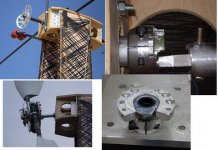
No they illustrate what happens when someone forgets to reset one of the the ratchets on the drive axle after towing the cart back upwind. It should be pointed out that there was no ratchet on the prop shaft for that run, which would have prevented the damage. Which is why they made sure to include one the next time, and the beefed up all of them.
Are you paid to be an apologist for The Chief?
It fell apart on the
dyno.
The causes are large transient loads produced by the flexing of the tower, the cantilevered prop shaft, and stress concentration within the ratchet housing.
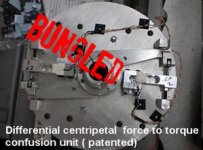
If the promised force gauges had been delivered, then the cause could be isolated, but those instruments were
Bungled and never worked.
You do know the difference between net force and actual force right?...... of course you don't
Good one Ace. The drag would then be 2000-32 = 1968N.
The submission report example gives:
(Fnet = 68N)
Frr = 57N
Fdrag = 1.6N
Fnet ( "Corvette") = 2000- 57- 1.6 = 1941.4N
Do you think a bicycle tyre on dirt would sustain such force? No need to even think about it...no.
a =f/m = `1941N/295kg = 6.5ms-2
Reality: 0.1m/s-2
I put that to the "TAD team" and they didn't want to say anything.
That idea could only come from you, no-one else has ever made that claim.
It is part an parcel of the explanation, and the basis of the calculation shredded by Prang over at Rational Skeptic.
Smith's explanation included both extraction by slowing down the air, and the "distance through the air" gambit. I have the email, but much, including the motor current test, was in the email he sent to, and posted by Spork.
It's what goes around comes around time. Spork got my email address from Smith and posted it, but now he has to deny his own expert if he is to defend his position.