• Quick note - the problem with Youtube videos not embedding on the forum appears to have been fixed, thanks to ZiprHead. If you do still see problems let me know.

Plasma Cosmology - Woo or not

Sol, you're Googling for things without understanding them. You looked up "spherical capacitor". We were talking about the free-space capacitance of an isolated sphere.

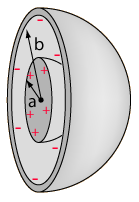
The only capacitance which could ever discharge from the surface is the isolated-sphere capacitance---that's why we used it, because we care about doing the right physics, which you seem not to. A two-shell capacitor can discharge (in principle) from the inner shell to the outer shell---which might damage the mantle, not the surface where you want to make a crater. In any case, you would have noted that the difference between your equation and my equation is actually numerically very small if you knew what any of the terms meant.

Finally, (A) the fact that lunar regolith is made of glass has no bearing on what Mercury is made of; (B) the fact the glass is an insulator does not mean that rock is as well---witness, for example, granite (terrible insulator) vs quartz (great insulator) despite the fact that granite is largely quartz; and (C) dielectric constant is not the same thing as conductivity.

A two-shell capacitor can discharge (in principle) from the inner shell to the outer shell---which might damage the mantle, not the surface where you want to make a crater.

Ahaaa now you're getting it, that's is an earthquake! :jaw-dropp

maybe you've read this

Main phenomenological features of ionospheric precursors of strong earthquakes
Authors:
Pulinets, S. A.; Legen'ka, A. D.; Gaivoronskaya, T. V.; Depuev, V. Kh.

And


Quasielectrostatic Model of Atmosphere-Thermosphere-Ionosphere Coupling


Pulinets, S. A.; Boyarchuk, K. A.; Hegai, V. V.; Kim, V. P.; Lomonosov, A. M.


Abstract
Multiple experimental evidences obtained recently convincingly show the strong influence of near ground atmospheric processes (volcano eruptions, sand storms, radioactive air pollution, earthquakes etc.) on the upper layers of thermosphere and ionosphere. The correspondent model explains the observed phenomena by the quasi-electrostatic field effects. The model consist of three parts: 1-electric field generation model, 2-electric field penetration at thermosphere-ionosphere heights, and 3-effects of electric field in the thermosphere-ionosphere. In the first part a model of ion kinetics in a near-ground layer of troposphere is considered. It explains the appearance of strong vertical electric field up to several kV/m. Second part with the help of existing model of atmosphere conductivity vertical distribution makes calculations of penetrated electric field at the heights from 90 up to 1000 km. It explains the horizontal electric field ~ 1 mV/m at the ionospheric heights as a result of original vertical electric field ~ 1 kV/m at the ground surface. The third part demonstrates the effects of electron concentration modification over the vertical electric field source. Self-consistence of the model is demonstrated by correspondence of the calculated parameters to the measured experimentally

You'll click fairly soon I'd say. :)

PS any seismic activity on our Moon? ;) :) Mmmmmm.....
 
Last edited:
I know that there is a VERY good paper on "Induction in solar system bodies" is going to be published. However, as I am still refereeing it, it cannot be made public.

Now I just have to strike all those parts where the authors claim to have currents and charges, because everyone knows these don't exist in mainstream astrophysics. That will, luckily, reduce the paper from about 40 pages to about 4!
 
Ben M wrote
The only capacitance which could ever discharge from the surface is the isolated-sphere capacitance---that's why we used it, because we care about doing the right physics, which you seem not to. A two-shell capacitor can discharge (in principle) from the inner shell to the outer shell---which might damage the mantle, not the surface where you want to make a crater. In any case, you would have noted that the difference between your equation and my equation is actually numerically very small if you knew what any of the terms meant.

why no mention of charge on the surface of your isolated-sphere?

Have you ever made a simple film canister capacitor and touched the outside plate after charging it? ZAP!!!

Have you ever made a spherical capacitor, charged it, then discharged it?

like the one below

csph.gif


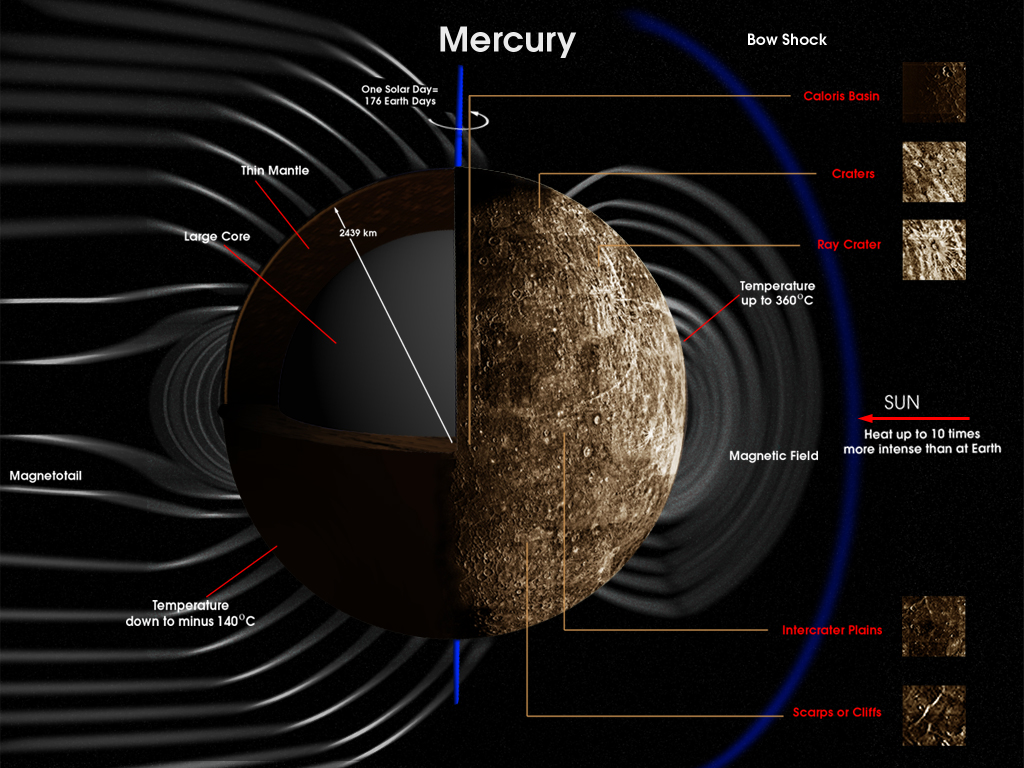
and Mercury

Mercury_mag.jpg
credit ESA
 
Last edited:
I know that there is a VERY good paper on "Induction in solar system bodies" is going to be published. However, as I am still refereeing it, it cannot be made public.

Now I just have to strike all those parts where the authors claim to have currents and charges, because everyone knows these don't exist in mainstream astrophysics. That will, luckily, reduce the paper from about 40 pages to about 4!

Ahh sarcasm, i like it!

The mainstream is starting to get the hang of it though, just give them a little more time and .....

Induction in solar system bodies, is a well covered topic is it?
 
Last edited:
Tusenfem,

I read your paper The Permanent and Inductive Magnetic Moments of Ganymede and it come's in handy for sure!!

When there is no toilet paper left :)

Full of assumption, approximations, generalization et cetera

Oh and your right lots of fancy looking maths, so it must be right and I'm sure you can make your maths do just about anything you wnat it too

To parse from your paper

We start by considering whether our analysis provides conclusive
evidence that Ganymede’s field is the sum of a permanent
magnetic moment plus and an inductive moment. We remain
cautious about such a conclusion as the data are also well fitted
by the eight-parameter dipole plus quadrupole model
plus...plus... :rolleyes:
 
Last edited:
Which would also mean the Hermean regolith would act as a good dialectic separating the very large highly conductive iron core from the time-varying magnetic fields in the magnetopause that drapes around the planet. So it would be in good agreement with [qimg]http://upload.wikimedia.org/math/b/b/b/bbb9935b60f547572b99de9968bc3674.png[/qimg]

I would certainly hope so, this is a frakking Maxwell equation. If it would not be in agreement we would be in deep .....
 
Tusenfem,

I read your paper The Permanent and Inductive Magnetic Moments of Ganymede and it come's in handy for sure!!

When there is no toilet paper left

Full of assumption, approximations, generalization et cetera

Oh and your right lots of fancy looking maths, so it must be right and I'm sure you can make your maths do just about anything you wnat it too

To parse from your paper

Glad you liked it, Sollyboy!
I am not surprised you don't appreciate the subtleties in that paper.
 
Thanks RC, but I think you will find your are grossly incorrect in this instance.

Electric discharge is one of many competing causes for this (and all) idiosyncratic craters observed in our solar system.
Still unable to read Sol88.
I did not do the calculation.
The math is right and shows the impossiblity of electric discharge being a cause for this (or any) idiosyncratic crater observed in our solar system.

Question, what data did you use to calculate Mercury's capacitance? And which equation was it applied too, from the LINK you supplied?
I did not use any data since I did not do the calculation. It is in the link so read it (search for a word you may have ssen before: mercury).
 
Dude wrong equation! Try this one
The capacitance for spherical or cylindrical conductors can be obtained by evaluating the voltage difference between the conductors for a given charge on each. By applying Gauss' law to an charged conducting sphere, the electric field outside it is found to be
How dumb!

Have you really gone off the deep end and seriously claiming that Mercury is a pair of spherical conductors? Next you are going to claim that Earth is a hollow sphere!
 
Glad you liked it, Sollyboy!
I am not surprised you don't appreciate the subtleties in that paper.

No that was unfair of me and I retract my statement, you can only do what you've been taught I guess.

Still it's fairly comprehensive, withing the framework of standard space physics!
 
How dumb!

Have you really gone off the deep end and seriously claiming that Mercury is a pair of spherical conductors? Next you are going to claim that Earth is a hollow sphere!

Do you mean two separate spherical conductors, RC? as in pair of spherical conductors
 
Originally Posted by Sol88 View Post
Which would also mean the Hermean regolith would act as a good dialectic separating the very large highly conductive iron core from the time-varying magnetic fields in the magnetopause that drapes around the planet. So it would be in good agreement with http://upload.wikimedia.org/math/b/b...9968bc3674.png
I would certainly hope so, this is a frakking Maxwell equation. If it would not be in agreement we would be in deep .....

Should that comment be wrapped in quotes

[:sarcasm:]I would certainly hope so, this is a frakking Maxwell equation. If it would not be in agreement we would be in deep .....[:sarcasm:] ?

Or are we agreeing on something here?
 
Last edited:
No that was unfair of me and I retract my statement, you can only do what you've been taught I guess.

Still it's fairly comprehensive, withing the framework of standard space physics!

Oh you're so sweet! Now please, give me the EU perspective on the magnetic field of Ganymede. Can't wait to hear that. I am sure everything will be totally different than what we claim in our paper.

Glad you used it as toilet paper, than at least my paper is getting some piece of ass.

Should that comment be wrapped in quotes

[:sarcasm:]I would certainly hope so, this is a frakking Maxwell equation. If it would not be in agreement we would be in deep .....[:sarcasm:] ?

Or are we agreeing on something here?

No, should not be in quotes, it's just the truth, not sarcasm.

I am not sure if we agree. If you mean that electromagnetism is described by Maxwell's equations then we might be agreeing on someting.
 
ok for clarity can this statement be taken as correct
Which would also mean the Hermean regolith would act as a good dialectic separating the very large highly conductive iron core from the time-varying magnetic fields in the magnetopause that drapes around the planet.
?

in other words could Mercury be described as a spherical capacitor, being charged by some funky EM effects from the solar wind?
 
Last edited:
your paper sounds a lot like whats going on at Mercury, which is analogous to the Sun and it's planets!

they are (Saturn & Jupiter) in much respects the Sun for their moon systems!

to parse from your paper
We consider the latter possibility
because Ganymede could, in principle, respond inductively
to time variations of the external magnetic field present
at its location in the jovian magnetosphere. Temporal variations
arise because Jupiter’s tilted dipole moment changes its orientation
as the planet rotates. Ganymede’s internal structure appears
to include a metallic core, a rocky mantle, and an icy outer
layer, a model inferred from measurements of the gravitational
moments (Anderson et al. 1996) and magnetic data (Schubert
et al. 1996, McKinnon 1997). An inductive response could be
present if the icy layer contains electrically conducting paths as,
for example, in regions of partial or complete melt of sufficient
thickness.

Europa & Callisto do, but why don't they possesses a substantial permanent magnetic moment (Khurana et al. 1998, Kivelson et al. 1999)?

Also sounds like you do not have the complete data set to confirm either which way exactly whats going on! just like in Mercury's case!

Characterizing the internal fields of the moons of Jupiter with
a high degree of accuracy is complicated by the fact that only
a small portion of data from a flyby is acquired at altitudes
low enough for the signature of internal sources to dominate
other sources of magnetic field (see Table I). In addition, field
perturbations arising from strong currents that develop within the
plasma of Jupiter’s magnetosphere in the region of interaction
with the moons are important near closest approach and must
be separately established.

So fair to say it's best guess then?

pure EU!
 
your paper sounds a lot like whats going on at Mercury, which is analogous to the Sun and it's planets!

You would be mistaken there, because the Jovian field is rather constant, the Ganymedian field is much stronger relative to the Jovian field as compared to Mercury, Ganymede's fields is always opposite to Jupiter's field.

they are (Saturn & Jupiter) in much respects the Sun for their moon systems!

disturbingly, in some way you make a bit of sense here

Europa & Callisto do, but why don't they possesses a substantial permanent magnetic moment (Khurana et al. 1998, Kivelson et al. 1999)?

Europa has an ocean, it is not clear whether Callisto has one too, the needed conductivity for Callisto could be reached with slush.
Callisto is not differentiated, and thus cannot create a dynamo in its non-existent metal core.
Europa is differentiated, however, models show that the heat flux through Europa may not be enough to make the core convective enough and cool down and thus will not create dynamo action. The upper limite for Europa's internal magnetic field is at 25 nT at the equator at the moment.

Also sounds like you do not have the complete data set to confirm either which way exactly whats going on! just like in Mercury's case!

There are only a limited amount of flybys of Ganymede and not all are useful to calculate the magnetic field (internal and induced), which makes it rather difficult to come to a conclusion. The field, as you may have read, can be explained BOTH by dipole and quadrupole OR dipole and induced field, with equal RMS error.

For Mercury we will soon have lots more data with Messenger going in orbit and BepiColombo following soon. For Ganymede we have to wait till EJSM will be launched in 2019 (hopefully) and then another 7 years or so.

So fair to say it's best guess then?

An educated guess, whilst looking at Europa and knowing that the heat flux through Ganymede is stronger (and thus the internal magnetic field) and thus melting of the ice would not pose a problem.

However, we do say that there are two possibilities, both of which agree with the data and only because of what I wrote above and the fact that a induced field has less free parameters than a quadrupole field, makes us prefer the ocean solution.


If you think so, please explain.
 

Back
Top Bottom