bill,
It wasn't very nice to the good people over here to bring Bob out of the sock drawer.
The reason it doesn't seem like a lot to you is that you don't appreciate the implications of the moment of inertia for a 14" square box column and a 37' long beam.
It wasn't very nice to the good people over here to bring Bob out of the sock drawer.
Well done Teddy. Just a few remarks though. 5.3'' of beflection in a 37 foot long beam does not seem like a whole hell of a lot to me.
The reason it doesn't seem like a lot to you is that you don't appreciate the implications of the moment of inertia for a 14" square box column and a 37' long beam.
How much of that 4.900 in/lbs PE would actually be converted into linear motion that would carry the entire beam away at 54 mph and how far would it travel horizontally ?.
"in/lb" is NOT a unit of energy, bill. It's 4900 in-lb. I know that seems inconsequential to you ... <eyes roll>
Conservation of energy does not tell you how much WOULD be converted into linear motion. It simply puts an UPPER BOUND on how much COULD be converted into linear motion.
The velocity any particular beam might attain by this method would depend on the fine details of how much energy it lost while "disassembling" from it attachments.
You'll also note that this upper bound is a direct consequence of the assumptions built into the calculation.
A uniformly arced beam instead of a cantilever could store twice as much PE. A beam that was arced until it reached its ultimate stress instead of its yield stress could perhaps store an additional 30%. A beam that was bent until it went fully plastic on both sides of the neutral axis could store twice as much as this, again. Each of these condition are iNDEPENDANT multipliers, so that the max of all those factors would be 2 x 1.3 x 2 = 5.2 x greater than the number I gave. This amount of stored energy could return 2.3 times as much linear velocity.
The last two stress conditions would leave the beam seriously bowed when it came to rest, tho. So I don't think that this condition was ever realized.
Do you mean one end fixed at the bottom ?
You must not have noticed the part about me starting with a cantilever assumption.
tk


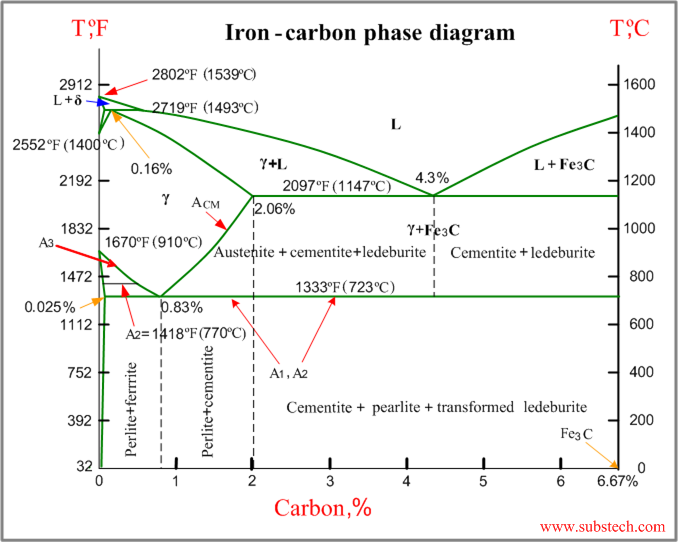
 Pure Iron melts at 1539°C.