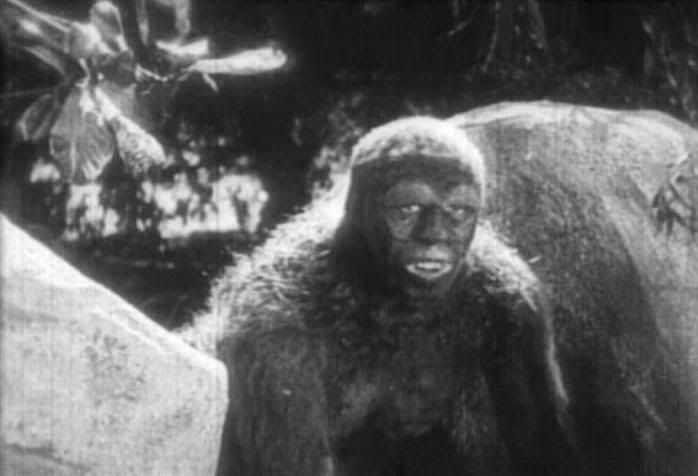
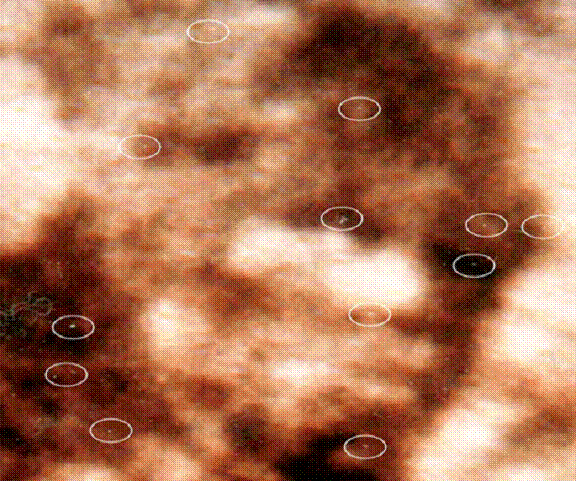
I am assuming this is the passage you are talking about?
Using Trig., a distance of 130 feet, +/- 5 feet, for a subject height of 6 feet gives a tolerance range of +/- 3.35inches.
This means that a subject that is 72 inches tall, and viewed at 1500 inches in distance, but calculated or compared with something at a distance of 1560 inches will be actually 68.65 inches tall... but if it were 1620 inches, then it would be 75.35.
A plus or minus 5 foot distance equals about a 3" difference in apparent height. I can almost garantee that the measurements made at the film site of the photographers position and that of the subject for any given frame is as accurate as that. 5'9" to 6'3".
The funny thing is I can not find this as a refutation of Daeglings work. If I recall correctly, you stated this disproved Daegling's trigonometry but Daegling does not perform this calculation as far as I can tell. He talks about percentage differences based on how subjects appear based on if the standard is moved in and out of plane. Daegling states that if the standard for measurement is moved 3 feet away from the plane of the subject seen at 80 feet, the object appears (when measured on the image and not by performing a calculation) 4% larger/smaller. In the little computing exercise, the 130 foot +/- 5 value gave a change of 5% which is not much different than the MEASURED (and not calculated) difference of 4% for 80 +/- 3 feet.
If you want to get technical about it,
arc tan 6/80 = 4.29 deg (rounded)
arc tan 6/77 = 4.45 deg (rounded)
The apparent angular change is 4.45/4.29 = 1.037 => 3.7% If you want to argue about 3/10ths of a percent, feel free to do so but he was working on measurements and not calculations. I am sure lens distortion and minor measurement errors can account for the differences.
What I am trying to figure out is the statement:
I can almost garantee that the measurements made at the film site of the photographers position and that of the subject for any given frame is as accurate as that.
Since Patterson did not measure where he was and it is not clear where Aunt Bunny was located, how can we "almost guarantee" such a measurement was accurate to within 5 feet?
I've given my sources on his errors in calculation (also see Meldrum's book). Since both are trying to show the figure in the PGF is within human range, they're rather important errors to make.
Actually, you haven't. I asked for the range of error on the IM index and you shrank away from the request. Now you present this trig exercise as some sort of refutation of what Daegling wrote. From what I can see, it does not.
Back to the fact of the matter, Krantz stated the subject was something like 6'6" tall. If we use the range of error in the little trig exercise you linked, the subject could have been 6'3" tall or 6'9" tall. In either case, the subject height is well within normal human standards. So I am trying to figure out what your point is.
You need to do your homework. He had articles published in an anthropological journal (I'm not sure of the name so I won't say 'til I find it), which is lightly reviewed, but by no means a bigfoot publication.
And the articles were titled what? What was the point of the article? Did he just say, I have proof of bigfoot or did it involve how he was trying to resolve the PGF issue with measurements? There is a difference.
If you're trying to imply no one's tried to publish you're wrong there too. Meldrum, Fish and Meldrum/Swindler all wrote for publication. Meldrum has had papers accepted for presentation by the AAPA Pacific Division.
Same thing here. What were the articles titles and what were they about? These articles could be about anything but do they water down their opinions in these papers.
Feel free to send me links or the actual tlitles and sources if you want me to read them.
Yes, we know. Tell the no-kill groups they're just going to have to bring in a body.
Oh come on. The failure of all the expeditions to get anything that is substantial says a lot. A body would be great, a live bigfoot would be better, a skeleton would be nice. I might even accept a CLEAR video of bigfoot taking an apple from a bait trap. Sorry, his buttprint just doesn't cut it.
If the sightings are just stories, someone needs to do a study to find out why so many people see an animal that doesn't exist.
Why do so many people report UFOs? Why did people report seeing elves and fairies? One needs to examine the human psyche for why people report things that are not there or why people see things they want to see when they actually saw something else. Some are liars, some are delusional, some see or hear things they don't understand or never saw before and then exaggerate or misreport the event. Eyewitness testimony has an error associated with it that can not be resolved. As a result, science has a low opinion of eyewitness testimony. Something more substantial is needed to back it up. So far, nothing significant has been presented.