Thermal
August Member

That's what I meant. After a certain point, those puppies ain't for benefitting the public, either.It’s the “hyperscalers” that are the problem, not the “old fashioned” datacentres.

That's what I meant. After a certain point, those puppies ain't for benefitting the public, either.It’s the “hyperscalers” that are the problem, not the “old fashioned” datacentres.

It’s the “hyperscalers” that are the problem, not the “old fashioned” datacentres.

The old-fashioned mom-and-pop data centers! I fondly remember them. Rockers on the porch while you wait for your data to be done, root beer barrel candies for the kiddies. Each bit and byte carefully hand-crafted. Back when data was for regular folks! Pride in craftmanship, real artisanry. *nostalgic hawk screech*It’s the “hyperscalers” that are the problem, not the “old fashioned” datacentres.


Progressives: Capitalists depend on the state to make their business work.I wouldn't care about data centers being built if the resources and pollution were entirely covered by the company.

The concerns are well founded, if not exaggerated. I believe much of the disdain is transference. People hate AI, therefore they hate data centers. I don't think DC's should get tax breaks any more than any other business. I don't think they depend on the state to make their businesses work, nor should they. DC's should also have to be good neighbors and not pollute the environment. They need regulations. If that ends up costing customers more, then so be it.I wouldn't care about data centers being built if the resources and pollution were entirely covered by the company. They need a ton of energy? Then build the additional power and infrastructure needed to run it. They need cooling? Then figure out how to do it without depleting a water supply or contaminating it with bacteria or raising the temperature of the surrounding area several degrees.
Speaking of pollution, I don't believe the noise pollution has been raised yet. If they want to build data centers then they need to make it so people don't have to constantly hear a high pitch whine.
Now as to what portion of all these new data centers are guilty of these issues I can't say but you can find reports on it and video of the reactions by city councils when their constituents show up to complain so it seems that there are genuine concerns.


 www.cnbc.com
Altman suggested a stake of that size in early discussions with the Trump administration, as part of a broader arrangement under which Washington would hold 5% of each of the leading U.S. AI developers via a government vehicle, according to the report.
The proposed arrangement envisions other U.S. AI companies, such as Anthropic, Google and Meta, ceding similar stakes to the government through a sovereign wealth fund vehicle, the FT said. It is not clear whether any of these groups would agree to OpenAI’s proposal.
Listen, they need these data centers for AI to replace the serfs before the mass exterminations. If they wait til afterward who will build the data centers? The slaves? Those are for agricultural use only, outside the Forbidden Zone. Sometimes I wonder if you're even paying attention to the wise plans of the overlords!plus, the people. elon musk, sam altman, alex karp, peter thiel, larry ellison, these guys are garbage people driving all this for all the wrong reasons. just listen to some of their interviews, they talk about it openly
Capitalists: We are completely independent and make money all on our ownProgressives: Capitalists depend on the state to make their business work.
Also progressives: Datacenters are fine, but why does the state have to eat some of the externalities?
I think whether they are exaggerated is yet to be determined. AI and DC hate are certainly intertwined and while I agree there is a lot to hate about AI, I'm also annoyed at how often people generalize and paint AI like it's only an evil terrible thing that shouldn't exist at all. AI is a tool and like any tool can be created and used ethically, or unethically. I try not to use AI very often because of the immense resource costs and other ethical issues, but I have found that it can be really useful for creative endeavors, efficiency with certain tasks, and accuracy with search results.The concerns are well founded, if not exaggerated. I believe much of the disdain is transference. People hate AI, therefore they hate data centers. I don't think DC's should get tax breaks any more than any other business. I don't think they depend on the state to make their businesses work, nor should they. DC's should also have to be good neighbors and not pollute the environment. They need regulations. If that ends up costing customers more, then so be it.
Assuming actual emissions equal 10% of the permitted level as of December 2024 as a reference case, our estimates indicate that backup generators could contribute to approximately 14,000 asthma symptom cases and 13–19 premature deaths each year, among other health impacts. These impacts correspond to an estimated annual public health burden of $220–300 million across the U.S.....In particular, populated counties located downwind of power plants supplying electricity to data centers tend to experience higher health costs, reflecting the transport of air pollutants across regions. The cumulative distribution function (CDF) in Fig. 9b highlights that while many counties incur relatively low health costs, a small fraction of counties bear substantially higher impacts.
We while the air pollution emissions from individual data centers is minor, the collective impact from the 100+ such facilities in the Northern Virginia region is significant. Notably, the cumulative emissions exposure in certain neighborhoods near clusters of data centers is already comparable to, and sometimes exceeds, the neighborhood-level emissions exposure from the Dominion Possum Point power station and other notable facilities in the region.

 ceds.org
Increased production of green house gases increases risk of heat waves and brown outs. Increased risk of forest fires with increased risk of particulate pollution with increased respiratory disease and deaths. Perhaps with a loss of two years in US life expectancy.Higher demand, and therefore higher prices, are expected to keep more fossil fuels, particularly coal and natural gas, on the grid for more time. In the case of gas, the increased demand is likely to result in more investment.
“It looks like we have a setback in our climate and decarbonization trajectory here, as we build a lot of new gas plants and some pipeline capacity and drill more. It looks like our emissions are going to go up for a while and old coal plants are being retained on the system,
Grid Strategies has recently projected that electricity demand in 2030 could grow massively over the next several years, with 55 percent of the demand increase coming from data centers.
Hertz-Shargel agreed that a data center boom could increase the nation’s planet-warming emissions, particularly through the expansion of gas plants.

The Transmission Efficiency VariableThe power it takes to send results also changes based on how the customer connects:
[1] (https://carbon-badge.com/en/blog/swdm-v4-explained/)
Fiber Optic & Wi-Fi: Highly energy-efficient, requiring minimal power per megabyte.Mobile Networks (4G/5G): Can use up to 2.5 times more energy than fixed fiber broadband because sending data over cellular radio waves requires continuously powered base stations.

Those projections say VA and TX will each face the equivalent increase of the entire electricity demand of the UK, just to feed new datacenters.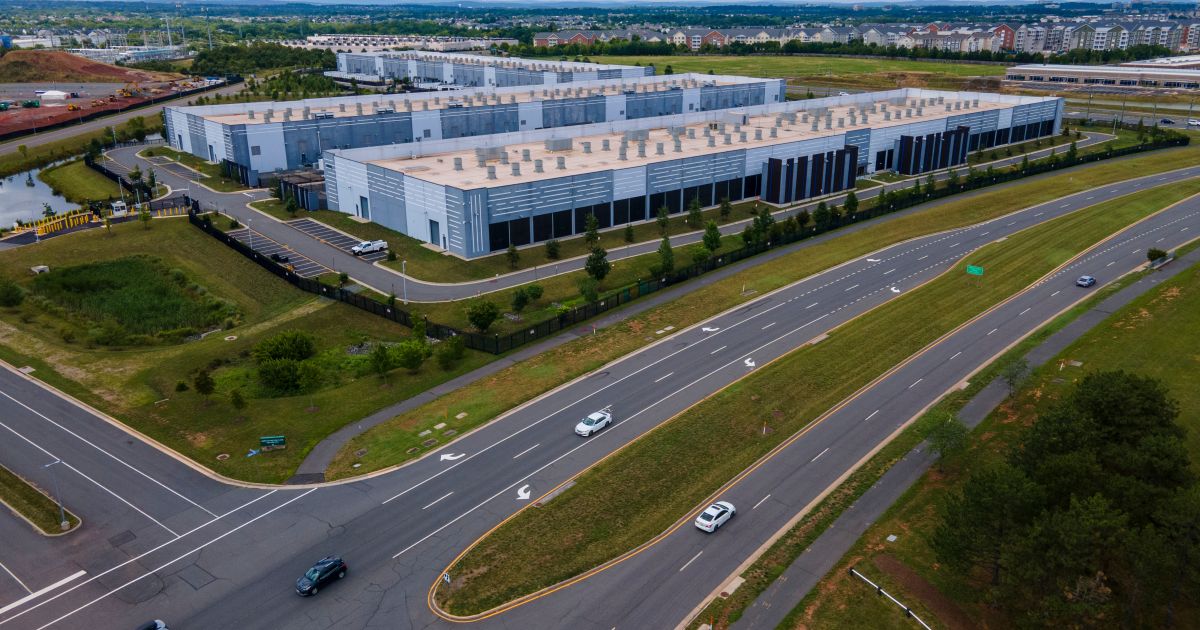
AI, Data Centers, and the U.S. Electric Grid: A Watershed Moment
www.belfercenter.org
well simply put, it’s a significant increase in demand on the grid. not sure what the reasoning is behind increasing load has no effect on the cost. i agree there’s some other factors increasing costs as well tho
virginia
texas grid

The parts I highlighted are contradicted by the reference cited within your quotation of what Google told you.Something about the data I don't get: what part of the electricity goes into the calculations and then how does that compare to the power for sending the results to the customers? Finland is putting in 4 Google centers. It's far from all but Sweden and Norwegian Lapland. Does this make sense? I did ask...er-...Google. It claims 40-50% into calculations .
It gave me some data:
The Transmission Efficiency VariableThe power it takes to send results also changes based on how the customer connects:
[1] (https://carbon-badge.com/en/blog/swdm-v4-explained/)
Fiber Optic & Wi-Fi: Highly energy-efficient, requiring minimal power per megabyte.Mobile Networks (4G/5G): Can use up to 2.5 times more energy than fixed fiber broadband because sending data over cellular radio waves requires continuously powered base stations.
So all those people googling on phones are the scum of the earth.
Cooling towers can produce significant noise pollution.Water usage of a data center depends on the design. I believe the cooling tower design is largely unpopular by data center builders anymore.

My manager enthusiastically uses AI to transcribe meetings. As of yet there hasn't been a single meeting that anybody wanted or needed a transcript of.Using AI to transcribe meetings just puts a secretary out of a job.
