• Security incident: ISF was recently accessed by intruders. Please change your password, and change it anywhere else you used it. Read more

Data Centers-- water and power

thaiboxerken

Penultimate Amazing
Joined
Sep 17, 2001
Messages
35,084
It seems that the latest hot-button protest and anger issues are aimed at data centers these days. Many politicians are leading the way to place moratoriums on their builds and there is a ton of anti-datacenter sentiment out there. Much of it appears to be based on misinformation and ignorance. Some of it is due to some bad behaviors of certain datacenters, which gives a bad rep to the entire industry. My opinion is that not all datacenters are the same, and many companies try very hard to be environmentally safe and good neighbors for two reasons reputation and cost savings (efficiency.)
One claim is that data centers are polluting the water. It doesn't seem to make sense to me. I think a common misconception is that water is being cycled through the servers and then dumped into the water table or drains, which makes absolutely no sense. Computers don't like water. Even liquid-cooled servers are using water that goes through pipes/tubes and coils that never touch the microchips. Those water pathways do not add polution at all. Such servers use closed-loop water systems that only discharge water if they are damaged.
For general cooling, many data centers that use water are cyling water through chiller loops that evaporate the water. They are using a lot of water, based on the server loads. Some data centers use evaporative coolers as well. Neither of those processes pollute the water. I could be wrong, if so, someone can set me straight on that pollution part of it.
In general, data centers are trending towards a zero-water usage cooling strategy. They use air-cooled chillers, which are closed loop systems. They rely on outside air to disperse heat that is carried from the heat source to condenser coils that are big heat sinks exposed to the outside. It's much like a standard AC system, except the refrigerant cools water, instead of air. Again, they only discharge water if they are damaged.
Data centers biggest usage of water is from hotel loads, like any other business, which is bathrooms and kitchens. Sometimes landscaping, which in some localities, they are required to upkeep due to local ordinances. As a whole, the industry in some cities and localities, is less than 2 to 4% of water used by total commercial industries.

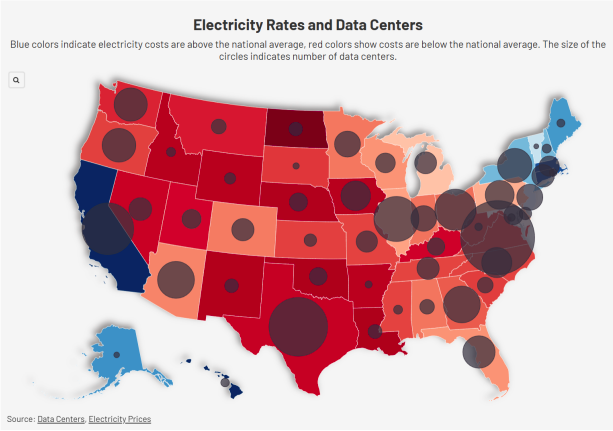
Another claim is that they are using so much electricity that it is driving costs up. I would like to see data that this is true. People who claim this have yet to provide it, they simply make the correlation that, since data centers use so much electricity, it is driving energy costs up. This could be true, I'm just not very convinced. I believe that energy costs rising is more a function of The Regime's idiotic war on Iran, and their war on renewables. Electrical costs are going up everywhere, not just where the data centers are.

I believe much of the disdain for data centers is transferrence from the distrust of AI and the big social media companies. I share the disdain for many of these as well. AI should be regulated. Social media needs some regulation as well. Both can, and have, been used for nefarious purposes.
Data centers support many different industries and companies, not just AI and social media. Banks, non-profits, stores and many more entities use and rely on datacenters for their logistic and business needs. Data centers are the backbone of internet. I'm sure this forum exists on a few servers in a datacenter or two. Growth of datacenters isn't just because of AI, it is also because of growing economies. These moratoriums may drive up the cost of doing business. I'm not sure. I don't think it'll stop datacenter growth, it'll slow it down and force some of them to go to other, friendlier jurisdictions.

Another claim is that datacenters do not employ many people. This is misleading. Many datacenters do only, directly, employ a handful of people. However, customers of datacenters are employers and often have employees working in those datacenters. There are many electricians, hvac technicians, cleaning crews and landscaping companies that are utilized by datacenters, which are more jobs in the locality. Logistical outfits often ship to and from datacenters, which is more business. These are small, economic infrastructures that bring money to the places where datacenters are.

Some claims are that datacenters get tax breaks and/or don't pay taxes. That they are, effectively, subsidized by the communities to exist. Maybe this is true for some giants, like Amazon or Meta, but many datacenters aren't big enough to impose these breaks on the local governments. Some local governments have tax breaks for any business to build in their industrial sectors, which does attract datacenters, but also attracts other industries. However, these local goverments do collect taxes, even if they do give some breaks. While property/and or energy taxes may be reduced to attract companies, these same companies pay taxes on inventory. Datacenters bring in millions do their localities because of this. So, the tax-break argument doesn't bother me at all due to this.

Anyway. I wanted to see what opinions there are about this in this forum. Most people in here form decisions based on facts, not what influencers are saying on social media. I would also like to be informed if/where I'm wrong.

For full disclosure, I work for a datacenter and can say, the place I work at is one that uses best practices to maximize efficiency and use zero water.

 
Another claim is that they are using so much electricity that it is driving costs up. I would like to see data that this is true. People who claim this have yet to provide it, they simply make the correlation that, since data centers use so much electricity, it is driving energy costs up. This could be true, I'm just not very convinced. I believe that energy costs rising is more a function of The Regime's idiotic war on Iran, and their war on renewables. Electrical costs are going up everywhere, not just where the data centers are.


well simply put, it’s a significant increase in demand on the grid. not sure what the reasoning is behind increasing load has no effect on the cost. i agree there’s some other factors increasing costs as well tho

virginia

Data center growth in Virginia will add thousands of megawatts of nearly constant demand over the next few years, thereby compressing planning timelines and raising new questions around who should bear the costs of system improvements. Dominion’s20 2024 resource plan projects nearly 27 GW of new generation by 2039, including 21 GW of renewable energy (i.e., solar, wind, and nuclear small modular reactors [SMRs]) and 5.9 GW of gas.21 Simultaneously, Virginia’s energy rates are increasing. In February 2025, Dominion proposed its first base-rate increase since 1992, adding about $8.51 per month in 2026 and $2.00 per month in 2027 for a typical household.22

Furthermore, rapid demand growth has led PJM, Virginia’s regional transmission organization, to review how it both defines firm service and manages reliability obligations. The region’s wholesale design depends on a balance between competitive generation, long-term capacity procurement, and regulated local service. This dynamic is strained by data center expansion, as a single, fast-growing class of customers with unique load profiles present system needs that differ from those around which PJM was built. Data centers use large, steady electricity loads with limited ability to reduce (or ramp down) their power usage; simultaneously, their energy demand can fluctuate according to equipment usage and job complexity. This pattern differs from the more gradual, weather-sensitive load patterns. Overall, Virginia is under pressure to embrace new rates, financing, and reliability tools to allocate risks to the drivers of this new demand: data centers.

texas grid

Over the past several years, Texas data center investments have been attracted by the state’s competitive electricity prices, business-friendly policies (including state sales and use tax exemptions on servers, cooling equipment, backup energy, and other hardware), and rapid interconnection speeds. As a result, the Dallas-Fort Worth area has emerged one of the largest data center markets in the United States and is continuing to witness massive build out. The Electric Reliability Council of Texas (ERCOT)26 projects that peak summer power demand could approach 145 GW by 2031, up from 85 GW in 2024; this represents a significant acceleration relative to the gradual 1-2% annual growth in demand experienced over the past two decades. Over half of this new demand (about 32 GW) is projected to come from data centers (including cryptocurrency miners).27 Unlike past gradual and dispersed growth, the current demand surge is rapid, lumpy, and increasingly clustered around specific localities, leading to increased concerns around demand-supply mismatch, insufficient energy reserve margins, and transmission congestion.28

By mid-2024, state lawmakers grew increasingly alarmed by emerging energy risks, particularly with regards to: (1) fairness in cost recovery, with concerns that data center’s speculative or duplicative29interconnection requests could shift upgrade costs onto smaller customers; (2) behind-the-meter (BTM) co-location that might pull existing grid-facing generation behind a private fence, reducing available capacity in the system under30 tight conditions; and (3) managing resource adequacy and emergency operations if large loads remained uncurtailed31 during an emergency.

Another claim is that datacenters do not employ many people. This is misleading. Many datacenters do only, directly, employ a handful of people. However, customers of datacenters are employers and often have employees working in those datacenters. There are many electricians, hvac technicians, cleaning crews and landscaping companies that are utilized by datacenters, which are more jobs in the locality. Logistical outfits often ship to and from datacenters, which is more business. These are small, economic infrastructures that bring money to the places where datacenters are.

i think for the size of the campus and infrastructure investment, the jobs numbers are pretty low. this is the same argument they made for foxconn, which is now becoming a data center itself at 10% of the jobs originally promised to the state


I believe much of the disdain for data centers is transferrence from the distrust of AI and the big social media companies. I share the disdain for many of these as well. AI should be regulated. Social media needs some regulation as well. Both can, and have, been used for nefarious purposes.
Data centers support many different industries and companies, not just AI and social media. Banks, non-profits, stores and many more entities use and rely on datacenters for their logistic and business needs. Data centers are the backbone of internet. I'm sure this forum exists on a few servers in a datacenter or two. Growth of datacenters isn't just because of AI, it is also because of growing economies. These moratoriums may drive up the cost of doing business. I'm not sure. I don't think it'll stop datacenter growth, it'll slow it down and force some of them to go to other, friendlier jurisdictions.

i agree, but part of it is the narrative the tech companies pushed to nab all this investment in the first place. you see what ai has done to social media, you see these guys pushing the job killer narrative, and you see these guys telling you the chinese are going to take over the world unless we give them all the money no questions asked.

and these are the biggest companies in the history of humanity running 80% profit margins saying we can’t afford to build this out without your money, tax breaks, while bringing very little to the local community besides higher utility costs and some potential health risks.
 
I would push back on this "bring very little back to the local community." It bring economic gains in the form of jobs, maybe not what some may claim, but they are there. They also bring in tax revenue. Not to mention, the huge, temporary gains during construction. Also, many of these datacenters are not subsidized with tax dollars to build, or if they are, is offset by property/inventory taxes gained.

I don't like the way some of these tech guys are promoting datacenters. However, they do bring value to the economy, both local and national. The nonsense that the chinese are going to take over the world is something that many industries have, and still do. That noise should definitely stop.

Companies that claim they'll bring is ridiculous amount of jobs should be held to account. Foxconn's 13K job estimate was clearly a lie told to get support. However, that Foxconn plant is a manufacturing plant, not a datacenter. I can't see how a factory could employ 13K jobs anyway.

Here is another opinion about energy prices and data centers:
 
I would push back on this "bring very little back to the local community." It bring economic gains in the form of jobs, maybe not what some may claim, but they are there. They also bring in tax revenue. Not to mention, the huge, temporary gains during construction. Also, many of these datacenters are not subsidized with tax dollars to build, or if they are, is offset by property/inventory taxes gained.

I don't like the way some of these tech guys are promoting datacenters. However, they do bring value to the economy, both local and national. The nonsense that the chinese are going to take over the world is something that many industries have, and still do. That noise should definitely stop.

Companies that claim they'll bring is ridiculous amount of jobs should be held to account. Foxconn's 13K job estimate was clearly a lie told to get support. However, that Foxconn plant is a manufacturing plant, not a datacenter. I can't see how a factory could employ 13K jobs anyway.

Here is another opinion about energy prices and data centers:
You're quoting a Koch owned nazism apologetics group there.

The benefits of data centres are massively overstatedand their harms massively understated.
 
I think data centers have taken the place of nuclear power for the sky is falling crowd.
You mean nuclear power, the thing that can have horrible longlasting deadly consequences for thousands and thousands of people if it's not implemented exactly right, and maintained with utmost care by competent people dedicated to safety and public service, and thus requires immense scrutiny during every stage of planning and operation, and intense government oversight with extremely harsh penalties for violations of strict operating codes? Yeah, I think you may be on to something there.
 
You mean nuclear power, the thing that can have horrible longlasting deadly consequences for thousands and thousands of people if it's not implemented exactly right, and maintained with utmost care by competent people dedicated to safety and public service, and thus requires immense scrutiny during every stage of planning and operation, and intense government oversight with extremely harsh penalties for violations of strict operating codes? Yeah, I think you may be on to something there.
There it is.
 
Cloud computing is the new steam power: Enables a massive scaling-up of industrial and commercial processes, to the general benefit of all, but with some serious trade-offs that are often overlooked or downplayed. The commoditization of server farms really is that important.

This is not to say that running vast stacks of ultra-high-end processors, all-out, all the time until they fail, with unprecedented* levels of power and cooling requirements, is a good idea.

On the other hand, it's not to say it's a bad idea. If the next level of computation lies beyond this resource gate, then maybe we should throw it wide open.


*I understand that TBK's thesis is that the new AI datacenter requirements for power and cooling aren't unprecedented, and aren't even measurably more than previous datacenter requirements, and that datacenter requirements generally aren't a measurable drain on power grids and water supplies anyway.
 
Last edited:
Depends on the state of the locality's water supplies and power grid. I live in a city where pretty much all of our water lines need replacing. Hundreds of millions of bucks. We have water main breaks at least once a week. (And related sinkholes, like the combination water break/sinkhole that closed one of the main highways for weeks!) The last thing my city needs is to add in new superusers of the water infrastructure. Not before the massive repairs and replacements have been made.
 
Is it? I didn't say I'm against data centers. They're clearly going to happen. So why not make sure they happen the right way? Do them carefully, and if they prove innocuous then oversight can be lessened.

I don't see how being careful about a thing is a bad idea.
I agree. I was in the nuclear propulsion program of the Navy. How Naval reactors are designed are extremely safe. Commercial versions aren't quite as safe and need better regulation. It's my opinion that those commercial entities are constantly trying their best to find ways around regulations or ways to deregulate their industry.
It's the same with data centers. Done correctly, they can have minimal impact on their environments, excepting energy consumption. However, just like any commercial industry, there are those businesses that constantly seek to find ways to avoid regulations in order to maximize profits. Unfortunately, I think those bad-actors are driving the public opinion of the entire industry.
 
Depends on the state of the locality's water supplies and power grid. I live in a city where pretty much all of our water lines need replacing. Hundreds of millions of bucks. We have water main breaks at least once a week. (And related sinkholes, like the combination water break/sinkhole that closed one of the main highways for weeks!) The last thing my city needs is to add in new superusers of the water infrastructure. Not before the massive repairs and replacements have been made.
Water usage of a data center depends on the design. I believe the cooling tower design is largely unpopular by data center builders anymore.
 
I would push back on this "bring very little back to the local community." It bring economic gains in the form of jobs, maybe not what some may claim, but they are there. They also bring in tax revenue. Not to mention, the huge, temporary gains during construction. Also, many of these datacenters are not subsidized with tax dollars to build, or if they are, is offset by property/inventory taxes gained.

I don't like the way some of these tech guys are promoting datacenters. However, they do bring value to the economy, both local and national. The nonsense that the chinese are going to take over the world is something that many industries have, and still do. That noise should definitely stop.

where is the value coming from? what tax revenue? i'll grant you property taxes, if those aren't offset by their losses through tax code, and there's no local sales to speak of or local services provided, ai companies are also taking massive losses and it looks like many of them may never end up profitable. there's few jobs for the dollar investment and footprints of the buildings, there's a large opportunity cost to building them. so personally i don't really see what they're bringing to local communities

the infrastructure costs are also inflated due to supply constraints on building materials. just like your ram and hard drives have jumped in price, so have things like transformers, wire, conduit, etc. not to mention lead times leading to delays. a lot of this is also being passed onto everyone else as you need to compete with tech companies paying premium prices for the same materials and labor because they have access to unlimited money at the moment.

Companies that claim they'll bring is ridiculous amount of jobs should be held to account. Foxconn's 13K job estimate was clearly a lie told to get support. However, that Foxconn plant is a manufacturing plant, not a datacenter. I can't see how a factory could employ 13K jobs anyway.

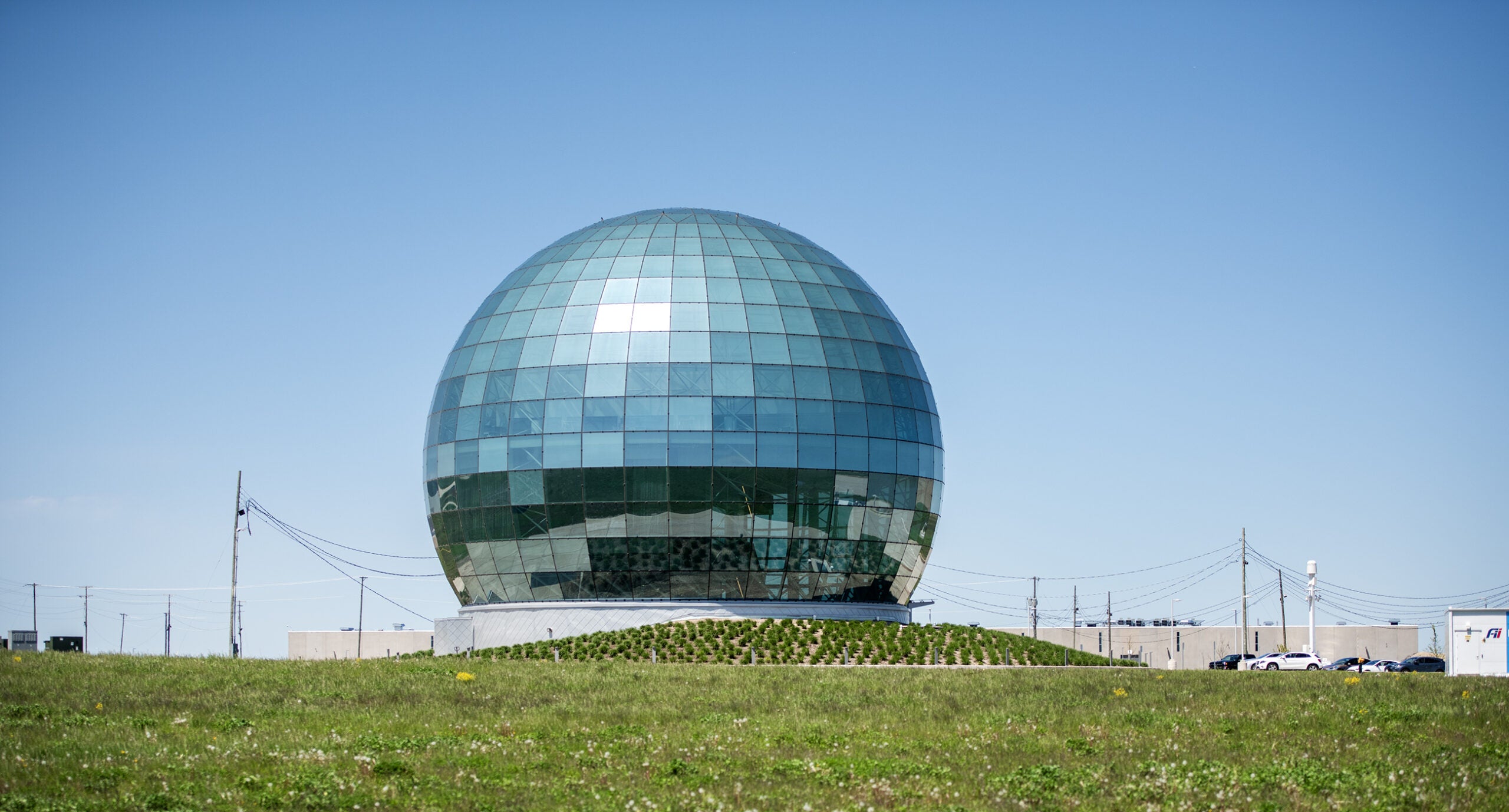
as noted above, foxconn has pivoted into data centers, now providing a fraction of the jobs at the same investment in the community. the city of mt pleasant borrowed nearly a billion dollars and removed people from their homes to build them that campus.

Here is another opinion about energy prices and data centers:

one thing to keep in mind when looking at that data is most of the new build data centers aren't fully online if at all, not actually consuming more electricity. furthermore, a lot of new data centers can't run at capacity because they don't have the utility infrastructure to support it. we should be looking at future use when they are running at capacity and the infrastructure upgrade costs are factored in, not prices from a decade ago. most of the increased energy use hasn't even happened yet.

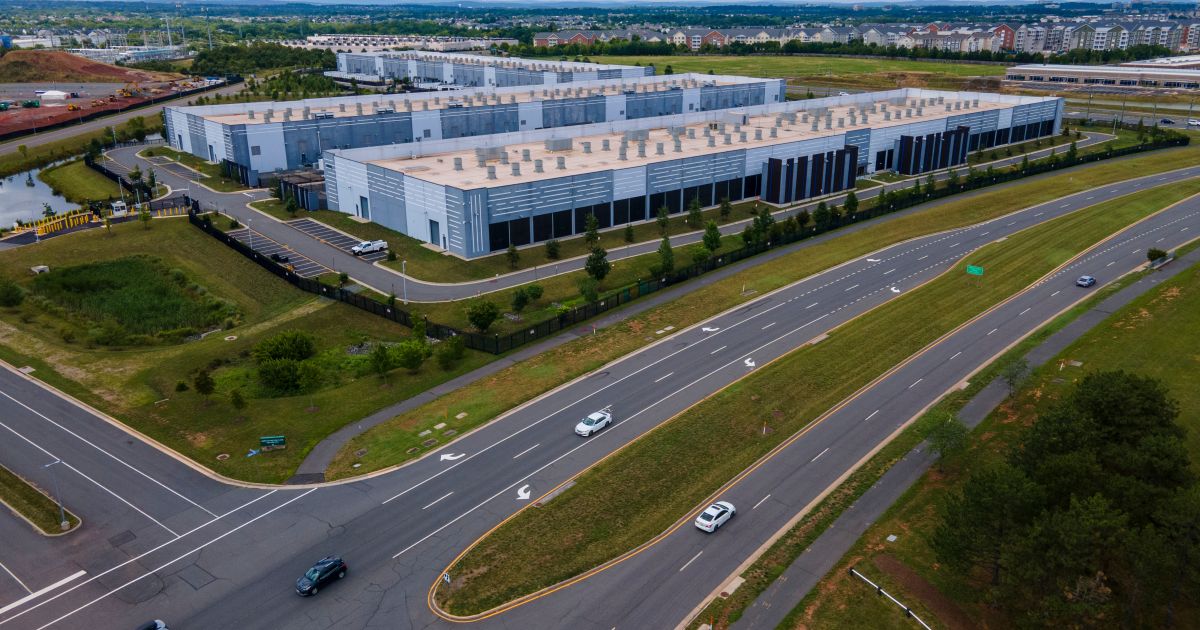
for example, the vantage data center in port washington, one of the largest in the country, isn't online yet but it's projected to dwarf most of the state in use if it runs at the capacity they claim. this will require billions in infrastructure and new power plants, which we are led to believe that none of that cost is going to passed onto the consumer?


  • Two AI Data Centers Require More Energy Than All Wisconsin Homes Combined: Just two AI data center projects — the Microsoft data center in Mt. Pleasant and Vantage data center in Port Washington — will require a combined 3.9 gigawatts (GW) of electric power, which is enough energy to power 4.3 million Wisconsin homes. There are only 2.8 million housing units in the entire state.
  • Energy Needs Triple the Capacity of Wisconsin Nuclear Plant: The energy needs of these two AI data centers is more than three times the power production capacity of the Point Beach nuclear reactor, which is Wisconsin’s single largest producer of energy.
  • Data Centers are Proliferating: Wisconsin’s energy utilities are often involved in the early planning of AI data center projects, sometimes playing an active role in bringing them to our state.


the other thing to remember is that when we use the term "data centers" in the context of this ai build out, it's mostly looking at the hyperscalers currently building the massive data centers as being the problem, not all data centers in general.
 
I'll just add into this thread that thermal pollution is still pollution.

Taking in water at one temp, using it to remove heat and then releasing it back with that stored heat is simply another form of pollution. The idea that data centres don't pollute the water they use to cool is simply wrong.

Air cooling has the same issue. When you transfer the heat you don't want to something else, it doesn't magically disappear, it just thermally pollutes that other medium. The same way having a brush fire isn't magically making old brush disappear, it simply turns it into ash and smoke that become the problem of others.

These operations can pretend to be as environmentally sound as they want but its just so much marketing. Taking your unwanted heat and making it everyone else's problem is not responsible.
 
Last edited:
Prediction: There wont be an issue as most of the huge planned datacentres won’t go ahead, there is simply no demand for the capacity being planned.
 
Kinda feel like we got along fine when we didn't have data centers?

I mean, googling ◊◊◊◊ is often handy and all that, but like downloading apps to buy a cup of coffee, I feel like we were doing better without them?
 
Kinda feel like we got along fine when we didn't have data centers?

I mean, googling ◊◊◊◊ is often handy and all that, but like downloading apps to buy a cup of coffee, I feel like we were doing better without them?
It’s the “hyperscalers” that are the problem, not the “old fashioned” datacentres.
 

ISF - Join now!

Every member here is approved by hand. No bots, no spam, just people who care about evidence and honest debate.

Membership is free!

Create your free account

Back
Top Bottom