• Security incident: ISF was recently accessed by intruders. Please change your password, and change it anywhere else you used it. Read more

Zohran Mamdani

I can save 10% without even trying:
Umm, no you can't.
Profit 3%
Ok, you have that ONE thing that a government store might "save" on.
Head office costs 5%
Ummm, no. Whether it is a private or public enterprise, management still exists. You still need people to push paper, to interact with suppliers, organize transportation of products, etc.. The "head office" in a private corporation does not just on its ass doing nothing all day.

And if your argument is "this can all be done by the stores themselves instead of a head office" then you are not "saving any money". You may have gotten rid of the head office, but you are going to need more people in the stores themselves to handle the things that would otherwise be done by the head office staff. The only difference is you won't be able to coordinate things between store locations, leading to inefficiencies, duplication, and higher costs overall
Advertising 3%
Except of course as we pointed out, you will still probably need to advertise because, despite them offering "cheaper food", not everything is at a reduced price, and people will want to comparison-shop.
Throw in cans and other completely safe food past "best by" dates, fruit & veg as noted,
Brilliant idea. that should make people feel good. "I am such a worthless individual I have to eat expired food".

Of course I wonder what happens the first time someone gets food poisoning and claims "the expired food made me sick". (Even if the food wasn't the culprit, it could still cause significant legal headaches.)
volunteer labour and reduced regulatory costs
And just what "regulations" are you going to reduce? Food control? Worker Health and safety? Financial regulations? Are you going to reduce them for EVERY store (private and public) or just your Mamdani-marts? (And if it is just at the government-controlled stores, how exactly is it fair that one store has to follow regulations while another doesn't.)

Trump gets criticized here quite often (and quite rightly so) because of his rather idiotic approach to deregulation. Why are you adopting his mentality?
Emmett Grogan opened his Free Store in the 1960s and that seemed to work ok.
I had no idea who this guy was or what his "free store" was. From the looks of things, it just seemed to be a chance for people to get rid of items they no longer needed or pick up stuff they might need.

There is nothing wrong with that as a concept (we have this here in my town, its called "freecycle". But it is not something that is applicable when there is a need for a regular supply of product.
Some people are altruistic and will jump on. I'd certainly make a case for a supplier to generate goodwill by being associated with the brand. Not everyone is a far-right loon.
You do realize that farmers have expenses too, right? As do meat packers and Food processing companies. And many farms are suffering (in a large part because of Trump's tariffs.) Farm bankruptcies have increased 46% between 2024 and 2025. Relying on some dirt farmer to "be generous" when he is facing the loss of his farm seems like a rather foolish thing to depend on.[/quote][/quote]
 
Last edited:
Mamdani says the 30% below market prices "will include all fresh produce, meat, and seafood, along with 20 other essential items like cheese, milk, and bread." So it'll be interesting to see what actually ends up on that list.
I am curious too.

Will it be just store-packaged meat? Will it include (for example) lunch meats like ham slices or hotdogs?

Is it just "regular" cheese? What about things like "cheese strings" or "baby bell" cheeses?
Mamdani also says the stores "will set prices for this core set of goods at 30% below typical retail prices. No exceptions, no gimmicks." So it'll be interesting to see how they determine "typical" retail prices...
One of the things I am wondering about is how they will consider "generics" in their calculations.

I can get "no name" bread at my supermarket cheaper than I can get wonderbread or country harvest. So when they set their "cheaper" prices, do they do it on a brand-by-brand basis? Or will they do some sort of aggregate? And will they have their own "generic" brand?
 
Segnosaur said:
Do you have a reference for that?

I am not saying you are wrong. In fact I suspect you are probably right. (It would make sense that it is.) I just like to see some verification of things.
I mean what will you accept? Here is a basic article about it.

"New York City is home to more than two dozen neighborhoods that are classified as food deserts....Mamdani’s proposal seeks to fill the void left by the market. He is offering city-owned grocery stores as a public option to low-income residents in neighborhoods that the private sector has abandoned."

Its... OK. Not great though. It describes the problem and how Mamdani-marts might address it. But I would have preferred a more direct statement from the govermnent about "the goal is to address food deserts"
I already said why. Because some people (such as those on a fixed income) might want to do some price comparisons before they make purchases. (Remember, not all prices Mamdani-mart will be '30% less', only certain staple foods. You don't want a person to go there to buy something that they could have gotten cheaper elsewhere.
You do understand the issue with a "food desert", yes?
Quite familiar with them. In fact, I was the one that brought up the issue in the first place.

But, there has been a lot about the stores reducing food costs (in addition to addressing food deserts). At least some people will want to shop at a Mamdani-mart because "Its cheaper and I am on a fixed income" (even if they have to travel further) rather than "I have no other shopping options".

It is for those people (those who can travel but want/need to reduce their food costs) that they will need to do at least some "price listings".

Micro-supermarkets can be quite expensive and have trouble carrying more than some essentials.
I agree, Micro-supermarkets are imperfect for various reasons (including costs). Its just that there are over a dozen food deserts in NY city (according to your article) and I think the plan is to only build 5 Mamdani-marts. That means there is a potential to leave multiple areas underserved.
 
Regarding child care and rental subsidies, they happen in Australia with most child care delivered by the private sector and most parents qualify for at least some subsidy. We have a slightly left leaning government, but the point is that even the right wing opposition will not change them. Here they are not seen as socialist policies at all.

I can see no reason why Mamdani can’t deliver these reforms.
 
i'm a little curious how this is going to work. though i think there's some areas where the government can eliminate costs where private companies can't, 30% is significant.

i will say though, being as how the private market has failed here, seems like a reasonable place for the government to step in

By buying direct from the producer and eliminating the middle man, the wholesaler. In essence the grocery store becomes the warehouse. It'll look like Costco or Sam's Club, but with greater oscillation in inventory.

Is that enough to do 30% though? Hm.
 
Ummm, no. Whether it is a private or public enterprise, management still exists. You still need people to push paper, to interact with suppliers, organize transportation of products, etc.. The "head office" in a private corporation does not just on its ass doing nothing all day.

I'd expect that given an organisation that already employs 300,000 people, the minuscule amount of admin required can be folded into existing staff.

We're talking about a small number of stores, not a nationwide operation.

Except of course as we pointed out, you will still probably need to advertise because, despite them offering "cheaper food", not everything is at a reduced price, and people will want to comparison-shop.

You didn't "point out" you stated an opinion which I believe is based on ignorance. I already noted how viral marketing and community groups will help, but the idea is that of a man who can tell people via press conferences which are far more powerful than ads.

Brilliant idea. that should make people feel good. "I am such a worthless individual I have to eat expired food".

Utter bollocks. There are chains of stores selling past "best by" food.

Of course I wonder what happens the first time someone gets food poisoning and claims "the expired food made me sick". (Even if the food wasn't the culprit, it could still cause significant legal headaches.)

I know, let's worry about crazy hypotheticals!

If a consumer decided to sue, I'm sure your courts can deal with it.

And just what "regulations" are you going to reduce?

Volunteers don't require the same amount of administration as employed workers.

Nice of you to bring Trump up. Nothing like a little well-poisoning to go with your food poisoning.

Relying on some dirt farmer to "be generous" when he is facing the loss of his farm seems like a rather foolish thing to depend on.

You could just about make a career out of being deliberately obtuse.

I gave the exact rationale of how it works and it wouldn't adversely impact on farmers at all.
 
It's interesting how the idea "We can't do anything about that because capitalism wont allow it" has become so ingrained.

People fear change. The older people get the more they fear it.

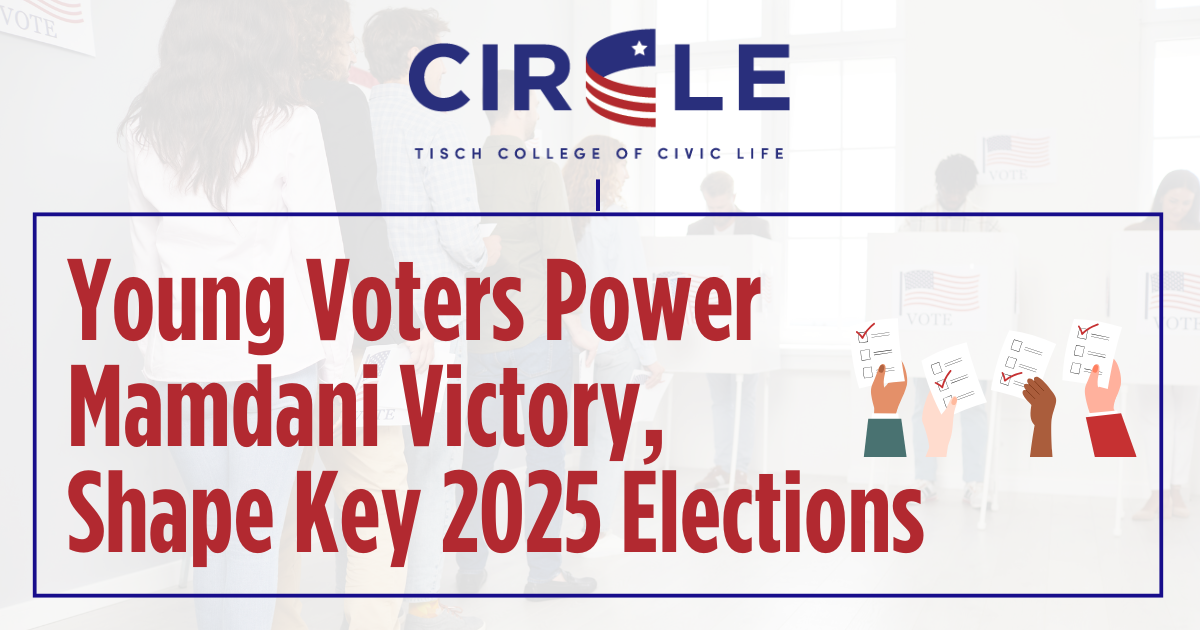
That's clearly shown in age demographics in the NYC mayoral vote:


Be thankful that there are more youth coming through as the oldest demographic dies off. It's our only hope!
 
Its... OK. Not great though. It describes the problem and how Mamdani-marts might address it. But I would have preferred a more direct statement from the govermnent about "the goal is to address food deserts"

Pretty much every article on the matter mentions them being done to fight food deserts. Other than that you will have to do your own homework.

Quite familiar with them. In fact, I was the one that brought up the issue in the first place.

But, there has been a lot about the stores reducing food costs (in addition to addressing food deserts). At least some people will want to shop at a Mamdani-mart because "Its cheaper and I am on a fixed income" (even if they have to travel further) rather than "I have no other shopping options".

It is for those people (those who can travel but want/need to reduce their food costs) that they will need to do at least some "price listings".

For those who can travel they can figure it out. Its not exactly for them. Otherwise listing prices online can be done on the cheap - just no need for TV ads or delivering weekly paper ads.

I agree, Micro-supermarkets are imperfect for various reasons (including costs). Its just that there are over a dozen food deserts in NY city (according to your article) and I think the plan is to only build 5 Mamdani-marts. That means there is a potential to leave multiple areas underserved.

The program is described as a pilot program. That means it is going to be a test run before expanding. We wouldn't want another concrete waste basket situation.
 
I can save 10% without even trying:

Profit 3%
Head office costs 5%
Advertising 3%

Throw in cans and other completely safe food past "best by" dates, fruit & veg as noted, volunteer labour and reduced regulatory costs and 30% doesn't seem impossible.

Emmett Grogan opened his Free Store in the 1960s and that seemed to work ok. Some people are altruistic and will jump on. I'd certainly make a case for a supplier to generate goodwill by being associated with the brand. Not everyone is a far-right loon.

To your point with the aesthetically pleasing items. We have a store in Fargo that sells dented cans because the grocery stores don't like them and they sell them pretty damn cheap. People that are struggling to eat don't have the same uppity mentality that some people in this thread apparently do.

As someone that grew up poor, dented ravioli tastes the same as non-dented. It tastes even better when you haven't ate in a day.
 
I don't think these stores are going to the dent & scratch models. They will probably be very normal stores.

Almost every supermarket I have gone to does have a small section (or just some rolling shelves) with dented cans on sale.

I don't know why people are determined to say this store will only be offering bottom-of-the-barrel goods.

I didn't think it was bottom of the barrel, lots of name brand, solid food comes in dented cans but we're talking about getting food to poorer people for a discount. Dented cans and close to expired foods are a great way to sell things cheaper.

I agree, I think it'll be a normal store as well, but I would be shocked if they didn't use visually damaged items to help fill gaps.
 
i'm a little curious how this is going to work. though i think there's some areas where the government can eliminate costs where private companies can't, 30% is significant.
The two big savings that are being touted as giving them the room to reduce prices that much are no rent payments and no real estate taxes. For the heck of it, I asked AI what those costs typically run for a grocery store. The answer was 2.5% to 5% of gross sales. Okay so we eliminate the profit (2-3% of sales) and we're somewhere between 4.5% and 8%, which is nowhere near 30%.
 
The two big savings that are being touted as giving them the room to reduce prices that much are no rent payments and no real estate taxes. For the heck of it, I asked AI what those costs typically run for a grocery store. The answer was 2.5% to 5% of gross sales. Okay so we eliminate the profit (2-3% of sales) and we're somewhere between 4.5% and 8%, which is nowhere near 30%.
Did you ask specifically about rent and taxes in NYC?
 
By buying direct from the producer and eliminating the middle man, the wholesaler. In essence the grocery store becomes the warehouse. It'll look like Costco or Sam's Club, but with greater oscillation in inventory.

Is that enough to do 30% though? Hm.
So Mamdani's problem is with the immigrant corner grocer and he would prefer the American capitalism of Costco and Walmart?
 
The two big savings that are being touted as giving them the room to reduce prices that much are no rent payments and no real estate taxes. For the heck of it, I asked AI what those costs typically run for a grocery store. The answer was 2.5% to 5% of gross sales. Okay so we eliminate the profit (2-3% of sales) and we're somewhere between 4.5% and 8%, which is nowhere near 30%.
They're going for utopia, not reality.
 
The two big savings that are being touted as giving them the room to reduce prices that much are no rent payments and no real estate taxes. For the heck of it, I asked AI what those costs typically run for a grocery store. The answer was 2.5% to 5% of gross sales. Okay so we eliminate the profit (2-3% of sales) and we're somewhere between 4.5% and 8%, which is nowhere near 30%.
If people try to claim "no rent/real estate taxes" helps them meet the 30% target, then they are engaging in a giant shell game.

Yes, not having to pay rent/taxes might make a Mandani-mart LOOK like its saving money, but that must be weighed against the alternatives. For example, if that Mandani-mart were privately owned, they would be contributing money to the city treasury. So the 'savings' by the store to reach the 30% savings target are just being paid for through the city. If the property is owned by the city, it could in theory be sold, and again the recovered money given to the city. Again lost opportunity by the city.
 
Did you ask specifically about rent and taxes in NYC?
3-6% of sales, so 0.5% to 1% higher. Keep in mind that these businesses survive on volume, so % measures are still going to apply. I checked what the markup on meat was in the average grocery store; it's about 30%-40% with NYC coming in at the top end of that. This gives them a gross margin (Sales-COGS)/Sales of 25%-30%. So if Mamdani mart discounts their meat 30% compared to the competition, they will be selling at basically their raw cost of the meat itself, with nothing left over to pay utilities, payroll, etc., and the city will have to subsidize those costs.
 
But, there has been a lot about the stores reducing food costs (in addition to addressing food deserts). At least some people will want to shop at a Mamdani-mart because "Its cheaper and I am on a fixed income" (even if they have to travel further) rather than "I have no other shopping options".
For those who can travel they can figure it out. Its not exactly for them.
Not everyone can spend a day travelling between stores to "find the best price". And given the fact that they make a big deal of the '30% discount' and talks about affordability, I am pretty sure that yes, it is indeed for them to a certain degree.
Otherwise listing prices online can be done on the cheap - just no need for TV ads or delivering weekly paper ads.
Yes they can put together a 'bare bones' website to allow price comparison. But even that requires funding, and it still counts as a form of "advertising". Even if it doesn't cost as much as (for example) newspaper it still means you are not saving the entire advertising budget.

Plus, something else nobody has mentioned.... the claim "they can save money to offset the 30% discounts by not advertising" seems to be an assumption. Looking at the official release on the mayor's web site there is nothing that says "we won't advertise ever". It is quite possible that Mamdani-mart will advertise just as much as traditional commercial stores (especially once the initial publicity has worn off and the stores are considered "just another supermarket")
 

ISF - Join now!

Every member here is approved by hand. No bots, no spam, just people who care about evidence and honest debate.

Membership is free!

Create your free account

Back
Top Bottom