
As I think I've said before, it wasn't a complaint -- more of an observation that it isn't as really law-driven as we were led to believe.And then people complain that the US supreme court has an exalted status!

-
Security incident: ISF was recently accessed by intruders. Please change your password, and change it anywhere else you used it. Read more
You are using an out of date browser. It may not display this or other websites correctly.
You should upgrade or use an alternative browser.
You should upgrade or use an alternative browser.
Does SCOTUS deserve its exalted status?
- Thread starter PitPat
- Start date
The Great Zaganza
Maledictorian

- Joined
- Aug 14, 2016
- Messages
- 32,730
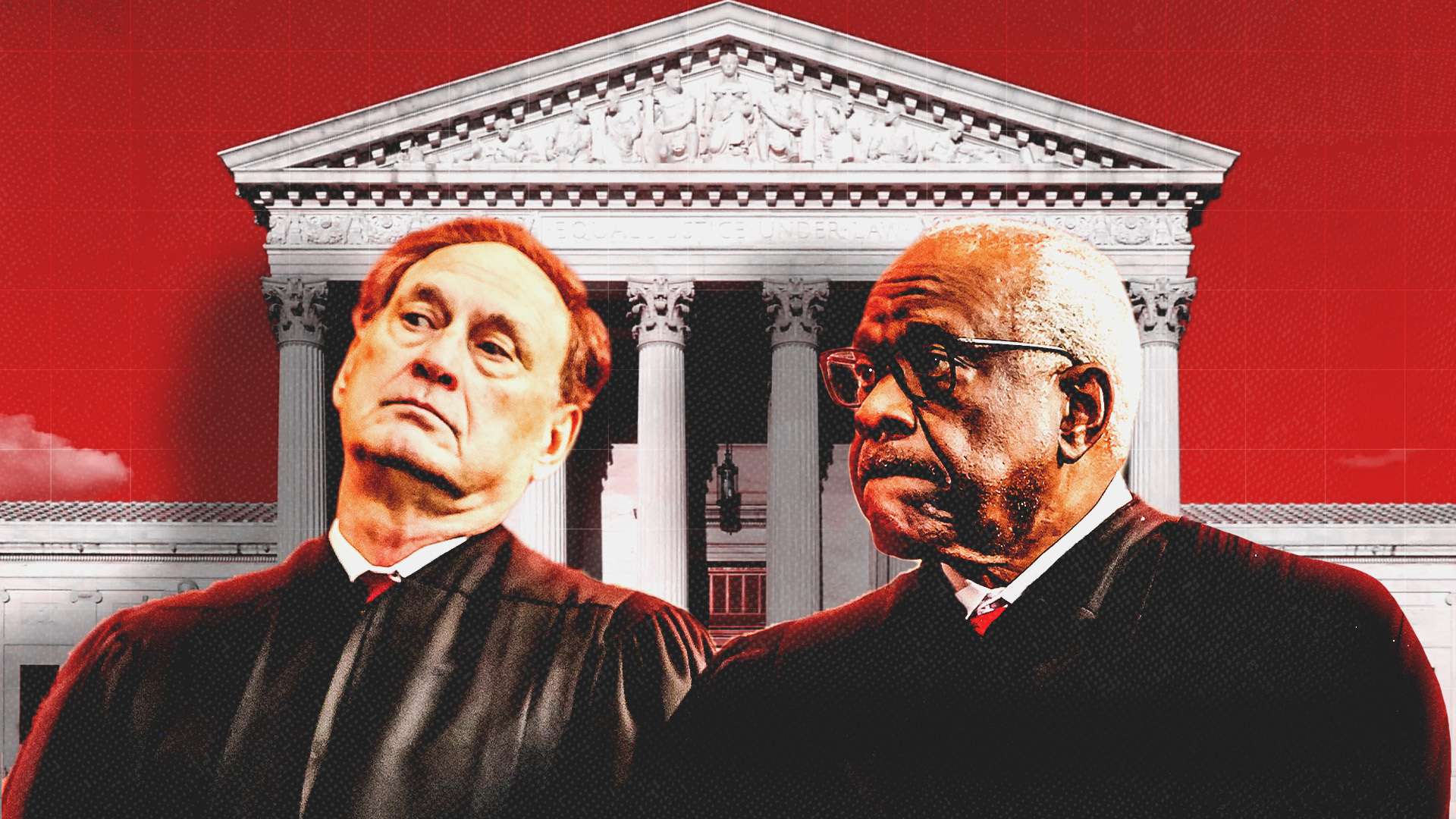
The Supreme Court’s 'shadow docket' has sprung a leak
The New York Times got its hands on a cache of private memos written by members of SCOTUS to each other about a hugely important 2016 case.
 reason.com
A leak of internal communications of the Judges concerning the so-called Shadow Docket, i.e. the decision to take up a case ore not.
This practice is controversial, as it doesn't require the Court to give any legal reasons.
Internal documents show that the judges basically justify their decisions on gut feelings and TV shows.
It's a disgrace
I have no problem with finding in favor of the defendant when it comes to ambiguous or vague criminal law. But the judge still has to read the law to figure out what it means or to figure out that its ambiguous or that it conflicts with other laws. Still starts with either originalism or textualism.
Meh, not a lot to this story really. It wasn't even the actual start of the shadow docket. The alternative would seem to be waiting for a case get through the courts as the executive branch or a state is doing something that may be illegal? Like say, deporting a bunch of people with questionable due process? Or not even that much due process.The Supreme Court’s 'shadow docket' has sprung a leak
The New York Times got its hands on a cache of private memos written by members of SCOTUS to each other about a hugely important 2016 case.
A leak of internal communications of the Judges concerning the so-called Shadow Docket, i.e. the decision to take up a case ore not.
This practice is controversial, as it doesn't require the Court to give any legal reasons.
Internal documents show that the judges basically justify their decisions on gut feelings and TV shows.
It's a disgrace
I'd say exalted in so much as they are the only branch more or less doing their job as it was more or less meant to be done. Congress isn't doing their job at all leaving the executive to overstep its authority. Courts are the only check on the executive right now. That's not the SCOTUS' fault.As I think I've said before, it wasn't a complaint -- more of an observation that it isn't as really law-driven as we were led to believe.
JayUtah
Penultimate Amazing

Yes in this hypothetical case because statutory ambiguity is almost entirely a textual analysis. But not so in general.But the judge still has to read the law to figure out what it means or to figure out that its ambiguous or that it conflicts with other laws.
You still seem to be laboring under the premise that textualism is the first step leading to all the other possible methods. That's as wrong as it can be. All methods begin with an analysis of the text—"statutory construction," in law terms. If the plain meaning of the text is ambiguous, there are so-called canons of construction that instruct lawyers how to interpret the language and construe the resulting rule.Still starts with either originalism or textualism.
Textualism's hallmark is that you do the textual analysis and then stop. You don't go on, for example, to do a historical analysis or a means-end analysis. Originalism's hallmark is that you do a historical analysis of the text and then stop. Textualism is not just doing a constructive analysis of the text. It's stopping at that analysis and using only those results as your final answer. It's not as if textualism does an analysis of the text and other traditions don't. That would be absurd. What sets textualism apart is precisely the denial of other steps that may invoke discretionary judgment after the rule is constructed.
If they begin with analysis of the text then they are either originalism or textualism but with modifications.

 en.wikipedia.org
en.wikipedia.org
en.wikipedia.org
The little consideration is doing a lot of work there but I tend to agree, little consideration should be given to anything but the text unless the text is vague, ambiguous, or in conflict with other laws. In which case the law should be invalid on that score.
Unless you are giving primacy to the written word, your just giving license to you your own bias. If you are giving primacy to the written word then you are an originalist or a textualist but possibly with some modifiers.
ETA: Before now I would have said I'm more of a textualist than originalist but now I think I'm more of an originalist. I think paying attention the records of debates or a law or things like the federalist papers and declaration of independence are valid considerations.
Originalism is a legal theory in the United States which bases constitutional, judicial, and statutory interpretation of text on the original understanding at the time of its adoption.
Originalism - Wikipedia
Textualism is a formalist theory in which the interpretation of the text is based primarily on the ordinary meaning of the legal text at the time of its enactment, where little consideration is given to non-textual sources, such as the intention of the law when passed, the problem it was intended to remedy, or questions regarding the justice or rectitude of the law.
Textualism - Wikipedia
The little consideration is doing a lot of work there but I tend to agree, little consideration should be given to anything but the text unless the text is vague, ambiguous, or in conflict with other laws. In which case the law should be invalid on that score.
Unless you are giving primacy to the written word, your just giving license to you your own bias. If you are giving primacy to the written word then you are an originalist or a textualist but possibly with some modifiers.
ETA: Before now I would have said I'm more of a textualist than originalist but now I think I'm more of an originalist. I think paying attention the records of debates or a law or things like the federalist papers and declaration of independence are valid considerations.
Last edited:

But isn't the judges role to interpret the law as they see fit?The ambulance driver broke the law.
ETA: Its not the judges role to rewrite the law as they see fit. That is the legislatures job.
...snip...
JayUtah
Penultimate Amazing
This is not quite correct. While the so-called shadow docket is where the court's orders appear accepting or rejecting cases, giving minute orders like granting permission to proceed in forma pauperis, and so forth, the subject of the memos is something far more substantial. In these memos, the justices are debating whether to enter a stay of an EPA rule in a case that is still in the lower court.The Supreme Court’s 'shadow docket' has sprung a leak
The New York Times got its hands on a cache of private memos written by members of SCOTUS to each other about a hugely important 2016 case.
A leak of internal communications of the Judges concerning the so-called Shadow Docket, i.e. the decision to take up a case ore not.
Most decisions on the shadow docket are unremarkable. They require no debate or legal reasoning. Occasionally when a case is declined, the minute order will say something like, "Justice So-and-So would have accepted the case," indicating how the vote may have gone. It's precisely because the shadow docket is as boring as watching paint dry that when a substantive order appears on it, it bears notice.This practice is controversial, as it doesn't require the Court to give any legal reasons.
In this case yes it is alarming because the Chief Justice is proceeding from facts not before the court. The case (cases, actually, since a number of them were consolidated) is still in the lower court.Internal documents show that the judges basically justify their decisions on gut feelings and TV shows.
Nor is that it's real name, nor did law professor Steven Vladeck coin the term, but his book is the definitive study of its history and use. The so-called merits docket is where the actual cases appear. When a petition for a writ of certiorari is submitted, a docket is opened and it accumulates the briefs and opinions. However, the day-to-day orders appear on a separate daily docket, a document that combines largely inconsequential orders from many cases and orders for the court in general. Here's a snippet of today's order sheet.Meh, not a lot to this story really. It wasn't even the actual start of the shadow docket.
25A872 HOLLAND, DJAVON V. UNITED STATES
The application for stay addressed to Justice Sotomayor and
referred to the Court is denied.
25M66 HANLEY, ORPHEUS, ET UX. V. PA PUB. UTIL. COMM'N
The motion for leave to file a petition for a writ of
certiorari under seal with redacted copies for the public record
is denied.
25M67 MARCH, ANTHONY W. V. UNITED STATES
The motion for leave to file a petition for a writ of
certiorari with the supplemental appendix under seal is granted.
Page after page after page of this. It's not secret. It's just boring and largely ignored except by the parties to the cases.
Yes, that's exactly how it's supposed to work, as several of the justices pointed out in their memos. The court that presently has the case is the one who should issue orders in the case. The appellants asked the court of appeals to issue a stay in the case, but the appeals court denied the stay. They have the factual record before them, the knowledge of the law, and the authority to rule on motions.The alternative would seem to be waiting for a case get through the courts as the executive branch or a state is doing something that may be illegal?
At that time it was entirely unprecedented for the Supreme Court to meddle in a case pending in a lower court. Now it has become relatively common, which is a concern for many of us. The appellants in the case (several energy companies) were unhappy with the denial of the stay in the court where their case was then pending and applied to the Supreme Court for a stay. The debate among the judges was whether a stay should be granted. Justices Breyer and Sotomayor proposed compromises that would preserve the procedural posture of the case while granting the applications avenues of post-appeal relief.
One of the proposals was to grant certiorari before judgment, a reasonably rare procedure where the Supreme Court agrees to take the case on appeal while the appeal in a lower case was still pending. The normal procedure is to send the petition for certiorari after the appeal has concluded.
The Chief Justice relied in part on facts that were part of the public record and also before the appeals court. But the bulk of his facts came not from the record from or before any court, but from a BBC interview with an Obama administration official. And most alarmingly, the Chief Justice was presenting these alleged facts to the court in the role of an advocate, rather than letting them arise in briefing or oral argument and therefore subject to challenge from opposing parties. This is flagrant advocation, which a judge should never do.
Because the matter was not briefed—and in fact could not be briefed or argued in the customary way since the case was not before the court in any posture—putting the stay order on the shadow docket was the extraordinary remedy granted by the majority.
In systems based on "common law" English system it is in fact the duty of judges to do so, that is what creates precedents, and it is not limited to bad laws, it's the same for all laws.This example would require the council to be brain dead. A judge's job is not to think for the legislative body or
fill in the blanks in badly written laws. Totally reasonable for the judge to state in their ruling that the law is poorly written.
JayUtah
Penultimate Amazing
No.If they begin with analysis of the text then they are either originalism or textualism but with modifications.
Asked and answered.Unless you are giving primacy to the written word, your just giving license to you your own bias.
No. Any "modifiers" that invoke discretionary judgment—as the other traditions often do—make it no longer textualism.If you are giving primacy to the written word then you are an originalist or a textualist but possibly with some modifiers.
And the other traditions do that also. But many do not stop at the historical understanding, as originalism mandates they do. Purposivism, for example, looks very extensively at the historical context and provenance of a law, but then tries to abstract the spirit of the law and its logic from that and apply it, say, to modern circumstances such as motor vehicles or the Internet.ETA: Before now I would have said I'm more of a textualist than originalist but now I think I'm more of an originalist. I think paying attention the records of debates or a law or things like the federalist papers and declaration of independence are valid considerations.
The problem with originalism is that it seeks something that may not exist: a singular "original public meaning" of a law. The very fact that legislatures debate laws evinces that there is no one singular meaning and intent behind a law. Perhaps once city council member voted to ban vehicles from the park because people in cars were doing drug deals. Maybe another member voted to ban them because she is an avid biker and has a hatred for motor vehicles in general. Sure, the end result is the same, but if you go down the rabbit hole of "Why does this law exist?" then you may not get a useful answer.
Other traditions certainly look at a historical analysis, but they put that analysis in a perspective that they can then argue better solves the modern problem.
Last edited:
Sounds like a good idea.Can't get away with anything else in a democracy, choose them by lottery?
In the UK our senior judges are nominally approved by the sitting government but it's pretty much a rubber stamp deal. Of course our judges have traditionally been conservative (small c) and from the establishment class but there really isn't the sheer political ideology that goes with the USA system, their decisions aren't viewed politically in the way USA decisions are.
JayUtah
Penultimate Amazing
In U.S. law, there are about a dozen areas of legal practice in equity that are governed extensively by common law. Torts and contracts are the most commonly encountered. While different jurisdictions can establish by statute how such cases are viewed, by far the most common method is via the so-called Restatements. These are non-statutory documents laboriously produced by the American Legal Institude. Rather than prescribe the law of, say, torts, the ALI compiles the collected tort judgments of courts nationwide and organizes them for easy reference. Then many states explicitly give statutory authority to the Restatement for that particular branch of law. Yes, in a technical sense that makes them laws, but the legislatures do not debate the merits of the restatements. They just rubber-stamp them.In systems based on "common law" English system it is in fact the duty of judges to do so, that is what creates precedents, and it is not limited to bad laws, it's the same for all laws.
So when someone sues my company alleging a defective product, the lawyer filing the case will cite to Restatement (Second) of Torts § 402A as the legal standard to, say, argue that strict liability applies to my actions in producing the product. No legislature passed a law defining strict product liability. The cause of action comes entirely from judge-made law—or more accurately, the agreement of thousands of judges over the course of hundreds of years, in many cases going back to when America was governed by British law. Changes to the restatements are slow, comprising the efforts of law professors, judges, eminent lawyers, and votes. We are only just now putting the final touches on the third restatement. But individual decisions in court on fact patterns the depart from the restatements enough to warrant it get new judge-made policy. Those become precedential only after years of consistent subsequent rulings on the same facts.
U.S. criminal law is, however, more closely tied to statute and constitutional law. This is because of the due process requirements I allude to above. A potential criminal must first be put on notice that certain exact conduct is lawful or unlawful. That relies on clearly written and published statutes, the changes to which are widely promulgated when made. Causes in equity are largely a judicial matter. Causes in law (i.e., criminal matters) depend heavily on the will of a legislature to apply its police power. And if the people should decide, say, that cannabis use is legal, we don't want to have to figure out how to square that with longstanding common law to the contrary. We want a legislature to enact the people's will and that then becomes the new legal standard.
That said, many evidentiary and procedural matters are still subject to precedent and therefore ultimately derive from a judge's opinion. Where does your 4th Amendment right to privacy in your home being, for example? At the street? At the doorstep? The modern legal concept of the "curtilage" for such determinations is judicial, not statutory: United States v. Dunn. No legislature made a law to this effect. The doctrine arises entirely from the opinions of judges interpreting the constitution. That said, my spouse can, with supreme conficence, move that a criminal court suppress evidence gathered by a police officer who was unlawfully in the curtilage of the defendant's home. (The 4th Amendment protects the curtilage.) And such motions are granted pleasantly often because the motion has solid legal authority, albeit ultimately only by judicial say-so.
From what I can tell you have very restrictive understanding what originalism and textualism are, even if that is what someone is trying to do, well the won't always succeed. Which I think most originalists and textualist will fully admit. Those that call themselves originalists, often disagree, so they seem to be aware that it's not always clear. If the law is clear, all you need is originalism or textualism. The law should be clear, if it's not it's a bad law and should be revised by the legislator not the judge.
The rabbit whole of why this law exists is much more of an issue with intentionalism. Originalism and textualism are trying not to do that by concentrating on what the words either mean now or what they meant at the time.
The judge should not be rewriting laws to solve modern problems, that is the job of the legislators. To apply that to the constitution is well, miss guided. The constitution is only meant to solve the problem of who to organize the government, apportion sovereignty between the Stats and the Fed, put limits on what the government can actually do. Now, I realize the last two are a problem that progressives think need solving and are fine with judges do it or congress or on occasion the president alone. I tend to disagree. Not saying the constitution is totally up to the task of modern governance but it can be amended. First one I'd vote for is to make it a little easier to amend.
I'm going bow out, I think we are talking in circles.
I think our differences are primarily. I think originalism is just putting primacy on the original meaning of a law and textualism is just putting primacy on the meaning of the plain language. You seem to think they then exclude any other factors (or at least enough as to be effectively the same thing). I think you also think the only reason folks say they are originalist is as a smoke screen for consequentialism for conservatives. I don't think there are many self-described originalists or textualist that would agree. I could be wrong. I also could be misunderstanding you, I'm not trying to create a strawman, just based on this conversation, I think I've stated your opinion more or less correctly.
My jurisprudence would be, the most important thing is what the words say. If that isn't clear you can look at the historical context. If that doesn't help, that's all a judge can do, they can rule the law is unenforceable on account of vagueness. They can opine that the law is outdated. They should not interpret the law in the modern context to address anything the law was not written to address.
The rabbit whole of why this law exists is much more of an issue with intentionalism. Originalism and textualism are trying not to do that by concentrating on what the words either mean now or what they meant at the time.
The judge should not be rewriting laws to solve modern problems, that is the job of the legislators. To apply that to the constitution is well, miss guided. The constitution is only meant to solve the problem of who to organize the government, apportion sovereignty between the Stats and the Fed, put limits on what the government can actually do. Now, I realize the last two are a problem that progressives think need solving and are fine with judges do it or congress or on occasion the president alone. I tend to disagree. Not saying the constitution is totally up to the task of modern governance but it can be amended. First one I'd vote for is to make it a little easier to amend.
I'm going bow out, I think we are talking in circles.
I think our differences are primarily. I think originalism is just putting primacy on the original meaning of a law and textualism is just putting primacy on the meaning of the plain language. You seem to think they then exclude any other factors (or at least enough as to be effectively the same thing). I think you also think the only reason folks say they are originalist is as a smoke screen for consequentialism for conservatives. I don't think there are many self-described originalists or textualist that would agree. I could be wrong. I also could be misunderstanding you, I'm not trying to create a strawman, just based on this conversation, I think I've stated your opinion more or less correctly.
My jurisprudence would be, the most important thing is what the words say. If that isn't clear you can look at the historical context. If that doesn't help, that's all a judge can do, they can rule the law is unenforceable on account of vagueness. They can opine that the law is outdated. They should not interpret the law in the modern context to address anything the law was not written to address.
I'd argue it's not the justices fault we see everything they do through a political lens. It's because congress won't do its job. And roe v wade. Your justice didn't write the laws about abortion for you, you all figured that out via the democratic process. You can trace a lot our disfunction to that. It created the religious right which then caused the parties to divide on ideological lines. Prior to the late 80s, our justices mostly just rubber stamped by the Senate.Sounds like a good idea.
In the UK our senior judges are nominally approved by the sitting government but it's pretty much a rubber stamp deal. Of course our judges have traditionally been conservative (small c) and from the establishment class but there really isn't the sheer political ideology that goes with the USA system, their decisions aren't viewed politically in the way USA decisions are.
Also, the ideological breakdown of our SCOTUS isn't nearly as clear cut as folks like to believe.
JayUtah
Penultimate Amazing
I hob-nob with a lot of law professors and trial lawyers. I'm confident in my understanding.From what I can tell you have very restrictive understanding what originalism and textualism are...
Same straw man as before.If the law is clear, all you need is originalism or textualism. The law should be clear, if it's not it's a bad law and should be revised by the legislator not the judge.
Agreed, but Intentionalism was the original form of Originalism, so it has to be discussed if only as a departed-from method.The rabbit whole of why this law exists is much more of an issue with intentionalism. Originalism and textualism are trying not to do that by concentrating on what the words either mean now or what they meant at the time.
Asked and answered. Judges must render decisions even when the law is ill-suited.The judge should not be rewriting laws to solve modern problems, that is the job of the legislators.
As you wish.I'm going bow out, I think we are talking in circles.
Correct. They specifically exclude any factors that involve discretionary judgments, which many of the other traditions not only allow but require, such as the means-end analysis in legal pragmatism. The fact that they explicitly exclude such factors is put forward as their much-advertised advantage.You seem to think they then exclude any other factors (or at least enough as to be effectively the same thing).
Straw man. I don't say that's the only reason. But I did provide plenty of examples of that happening. Your answer was that these were the fault of the practitioners, not the fault of the method. But the rejoinder is that the method fails at preventing that, and therefore fails to assure what its proponents promise.I think you also think the only reason folks say they are originalist is as a smoke screen for consequentialism for conservatives.
That's literally where every single point of jurisprudence begins.My jurisprudence would be, the most important thing is what the words say.
That's where quite a lot of statutory interpretation continues.If that isn't clear you can look at the historical context.
That's the straw man that arose out of our little hypothetical. But it hardly scratches the surface of what courts actually must do.If that doesn't help, that's all a judge can do, they can rule the law is unenforceable on account of vagueness.
They can, but neither would be textualist or originalist. The court must still render a verdict.They can opine that the law is outdated.
According to whom?They should not interpret the law in the modern context to address anything the law was not written to address.
I think that's a large part of the argument. It's of course what Trump wants forever on his side, as do all Presidents.So, no the SCOTUS isn't perfect but I think it beats the alternative, Trump being able to do whatever the hell he wants for four years.
It's not just four years. Bush 1 found that out with Souter. It's one of those weird lifetime appointments - maybe an argument for that on another thread. Like appointments for 12 or 16 years and then presiding president (ha!) still gets to choose.
Maybe the question is: should there be term limits for SCOTUS? (Yes I know it's not Constitutional. Just throwing it out there.)
As for me, no for the ones I like and yes for the ones I don't.
Last edited:
Suddenly
No Punting

I think that's a large part of the argument. It's of course what Trump wants forever on his side, as do all Presidents.
It's not just four years. Bush 1 found that out with Souter. It's one of those weird lifetime appointments - maybe an argument for that on another thread. Like appointments for 12 or 16 years and then presiding president (ha!) still gets to choose.
Maybe the question is: should there be term limits for SCOTUS? (Yes I know it's not Constitutional. Just throwing it out there.)
As for me, no for the ones I like and yes for the ones I don't.
Probably needs to be term limits throughout the federal system just so we have less senile judges, which is more of a thing than people think and probably as terrifying as it sounds.
Not to mention a court slightly less alienated from the will of the people. Right now we don't have a democracy as much as a policy lotto based on exactly when old people die. If we bump Scalia's death six months earlier and RGB's six months later it is hard to even imagine how different things would be.
The argument against term limits is that would mean the are even more political and probably more prone to corruption. Basically every president would get some number(usually 2 is suggested) nominees so they'd start campaigning with the nominees. Then at the end they'll still be in the job market, so, if you are looking for a job maybe you'll rule differently hoping to get paid off. I'm ambivalent about it. I do think we need to do something to reduce the stakes of who gets to pick justices. Its distorted our politics. I've heard some other suggestions that may reduce those down sides. Random panels drawn for the circuit courts or the Supremes get drawn from the circuit courts when one retires. Either randomly or by seniority. The idea being that there's a lot lower stakes when appointing circuit judges on account of their being so many of them.I think that's a large part of the argument. It's of course what Trump wants forever on his side, as do all Presidents.
It's not just four years. Bush 1 found that out with Souter. It's one of those weird lifetime appointments - maybe an argument for that on another thread. Like appointments for 12 or 16 years and then presiding president (ha!) still gets to choose.
Maybe the question is: should there be term limits for SCOTUS? (Yes I know it's not Constitutional. Just throwing it out there.)
As for me, no for the ones I like and yes for the ones I don't.
Yeah I get your ambivalence. There just doesn't seem to be a good answer right now.The argument against term limits is that would mean the are even more political and probably more prone to corruption. Basically every president would get some number(usually 2 is suggested) nominees so they'd start campaigning with the nominees. Then at the end they'll still be in the job market, so, if you are looking for a job maybe you'll rule differently hoping to get paid off. I'm ambivalent about it. I do think we need to do something to reduce the stakes of who gets to pick justices. Its distorted our politics. I've heard some other suggestions that may reduce those down sides. Random panels drawn for the circuit courts or the Supremes get drawn from the circuit courts when one retires. Either randomly or by seniority. The idea being that there's a lot lower stakes when appointing circuit judges on account of their being so many of them.
Maybe still appointments but with a higher threshold of Senate confirmation?