And of course, musk is as popular as ◊◊◊◊◊◊◊ on your shoes in most of the world, and has literally zero experience with heavy haulage and its requirements.....
Mary Barra (CEO of GM) was elected to the National Academy of Engineering in February 2018. In 2023 she was inducted into the Automotive Hall of Fame. She definitely knows her stuff. When Biden was crediting her for leading the industry towards EVs, she pulled him aside and said "Actually,
I think a lot of that credit goes to Elon and Tesla". Other industry leaders have made similar comments. Musk's popularity with the general public doesn't seem to bother them. Mind you, most them are careful not to let their political views become known. For all we know Mary Barra could be a secret Nazi!
When Tesla announced plans to develop the
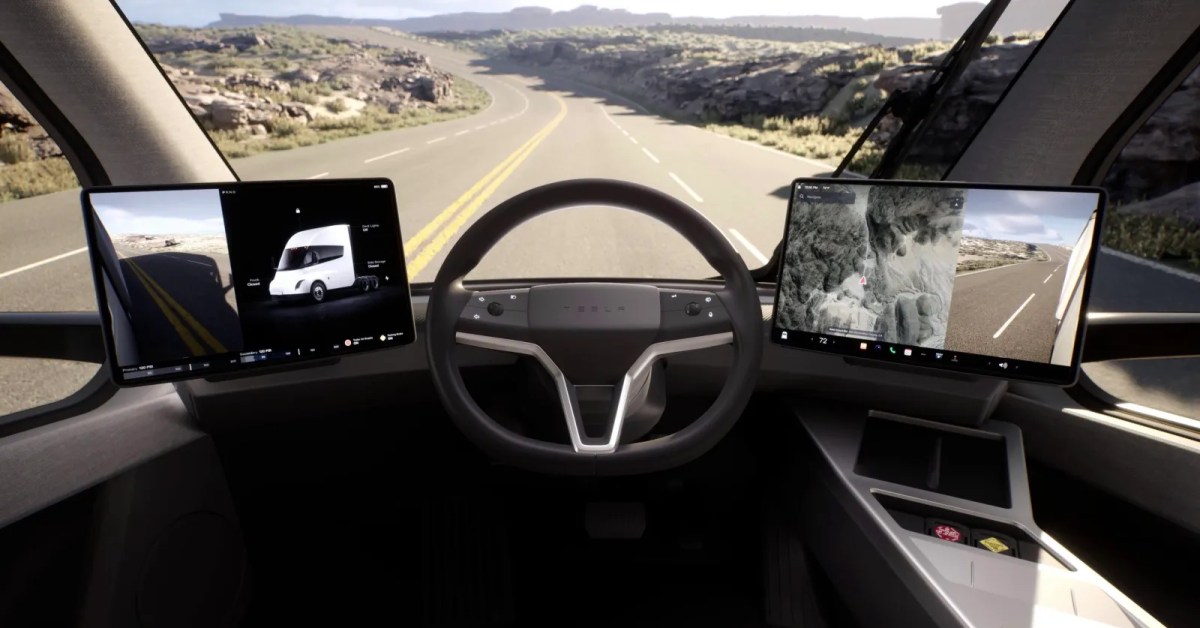
Semi in 2016 they may have had zero experience with heavy haulage, but they learned fast. They hired
Jérôme Guillen - former project leader for the Freightliner Cascadia program and Director of Business Innovation at Daimler - to lead the team, and by November 2017 a concept prototype was unveiled. The current lead for the Semi program is Dan Priestly, who has been a Tesla engineer since 2015. I wonder how they would characterize your insinuation that Tesla "has
literally zero experience with heavy haulage and its requirements".
Production of the Semi was planned to begin in 2019, but in January 2020 Musk said a lack of battery production capability was a limiting factor. Then Covid happened. The Tesla Semi entered pilot production in 2022. As usual with Tesla they have been doing extensive trials to get feedback from users. PepsiCo was the first to receive them, hauling food products up to 425 miles. By all accounts PepsiCo is very happy with their performance, and the drivers love them. As of May 2024 Walmart, Costco, Sysco, Martin Brower, and US Foods were also testing the Semi. Tesla has also been using the Semi for their own operations.
By the time it enters full-scale production the Semi should be as good as or better than any Electric truck on the market. In August 2024 logistics provider NFI tested the Semi and reported an efficiency of 1.64 kWh/mi (1.02 kWh/km). According to Volvo the FH does 1.76 kWh/mile (1.1 kWh/km) with a range of up to 186 miles (300km) - less than half the Tesla Semi's real-world range.
Good to see other truck makers producing EVs, but one look at them tells you they aren't as innovative as Tesla. One Chinese company is making what
looks like an exact copy though. Tesla should be pleased with this too, as their goal is to 'accelerate the world's transition to sustainable energy'. To this end Tesla has opened many of their patents to other companies (I bet the bean counters hate that). Musk never intended Tesla to take over the market, but to encourage the entire industry to go electric.
When the Semi goes big it will be just in time to go fully autonomous like Musk originally planned, then it could be a real 'game changer'. If Tesla's plans pan out things could get pretty wild. Imagine convoys of autonomous trucks plying the roads with robots in the back, waiting to load and unload goods made in factories manned by robots (with a small group of humans overseeing and maintaining them). This isn't science fiction, but a very real possibility in the near future (like next year). Tesla isn't the only one working on these technologies, but they are the only one putting it all together.
That's Musk's doing - only
he has the vision and drive to make it all happen. You can hate his politics, but don't let it taint your evaluation of Tesla's achievements. Mary Barra didn't, despite GM being one of Tesla's main competitors.