• Quick note - the problem with Youtube videos not embedding on the forum appears to have been fixed, thanks to ZiprHead. If you do still see problems let me know.

Nobody has got ghost, according to Quran.

I read all that P1/P2 stuff to mean two things: “I believe there are souls, so I am skeptical of anything that says otherwise” and “I believe that my belief is not a belief”.
 
I read all that P1/P2 stuff to mean two things: “I believe there are souls, so I am skeptical of anything that says otherwise” and “I believe that my belief is not a belief”.

Show the reader where - from that information - you came to that conclusion.
 
Last edited:
Are you inferring that there is no such thing?

I'm outright saying it, so we can just skip over that stupid part of the game.

If it's not collected in an organized way with error correction and control for biases it's not evidence.

If it is collected that way, it's science.

Everything else is semantics from people for whom "science" is a dirty word.

Again I already know the song and dance from "Oh no science is just lab coats and beakers" crowd and it's wrong.
 
Last edited:
Implying*

And no I'm not implying anything. I'm explicitly saying that there is no such thing as unscientific evidence. Anyone suggesting otherwise is a dupe or a tool.

Your statement "there is no such thing as unscientific evidence" is not accurate. Evidence can come from a variety of sources, including scientific sources, but also personal experience, expert testimony, and historical records, among others.

Evidence that cannot be tested or verified through scientific methods is often referred to as non-scientific or unscientific evidence.

I think it is important to approach all forms of evidence with an open mind and to critically evaluate their reliability, accuracy, and relevance, regardless of whether the evidence is scientific or non-scientific in nature.

This helps to ensure that my decisions are based on the evidence and are not influenced by personal bias or preconceived notions.

Your statement "Anyone suggesting otherwise is a dupe or a tool." is an example of ad hominem fallacy. This is a logical fallacy that involves attacking the character, motive, or other personal attribute of an individual who is presenting an argument, instead of addressing the argument itself.

In this case, you are making an insulting or dismissive statement about anyone who disagrees with your position, rather than engaging with their argument or evidence. This type of statement is not a productive or valid way of addressing differing opinions or ideas, and can detract from meaningful discussion and the exchange of ideas.

From my position, I would rather engage in constructive and respectful dialogue when discussing ideas and opinions, and to address arguments and evidence directly, rather than making personal attacks. This helps to promote meaningful and productive discussions and to ensure that decisions and beliefs are based on sound evidence and reasoning.
 
I'm outright saying it, so we can just skip over that stupid part of the game.

If it's not collected in an organized way with error correction and control for biases it's not evidence.

If it is collected that way, it's science.

Everything else is semantics from people for whom "science" is a dirty word.

Again I already know the song and dance from "Oh no science is just lab coats and beakers" crowd and it's wrong.

Your statement is also an example of the ad hominem fallacy. You are making a dismissive and insulting statement about anyone who disagrees with your position and using language that suggests that anyone who disagrees is using "semantics" and has a negative view of science.

While you are entitled to your opinion, it's important to recognize that dismissing or insulting people who disagree with you is not an effective way to engage in constructive dialogue or to advance the understanding of complex issues.

It's also not a productive way to evaluate evidence and make informed decisions.

I think it is important to engage in respectful and open-minded dialogue, and to evaluate evidence and arguments based on their merit, rather than dismissing them based on personal biases or preconceived notions.

AS I said in my previous post, this helps me to ensure that decisions and beliefs are based on sound evidence and reasoning, rather than on personal opinions or biases.
 
Every version of anti-intellectualism across the entire scope from Woo to Politics share one very important characteristic.

"Facts should be determined by stubbornness more than any other factor."

It's why wrong people NEVER SHUT UP.
 
Your statement "there is no such thing as unscientific evidence" is not accurate. Evidence can come from a variety of sources, including scientific sources, but also personal experience, expert testimony, and historical records, among others.
Yes, anecdotal evidence is a form of evidence.

Evidence that cannot be tested or verified through scientific methods is often referred to as non-scientific or unscientific evidence.
Anecdotal evidence can often be tested or verified through scientific methods. Sometimes it is verified and becomes scientific evidence, sometimes it is shown to be an artifact of our cognitive biases and can be dismissed. If it cannot be tested or verified through scientific methods then we know to be wary of it and not base any conclusions on it, because of its inherent unreliability.

I think it is important to approach all forms of evidence with an open mind and to critically evaluate their reliability, accuracy, and relevance, regardless of whether the evidence is scientific or non-scientific in nature.
Anecdotal evidence is known to be unreliable and inaccurate.

This helps to ensure that my decisions are based on the evidence and are not influenced by personal bias or preconceived notions.
If you recognise that anecdotal evidence is insufficient to reach a decision, yes. If you fail to do so you're falling right into that trap.
 
Your statement "there is no such thing as unscientific evidence" is not accurate. Evidence can come from a variety of sources, including scientific sources, but also personal experience, expert testimony, and historical records, among others...

How do you think an expert becomes an expert??? Do you think an expert in woo woo is one whose testimony is to be taken seriously?

Here are some "experts" for you...

[imgw=500]http://www.internationalskeptics.com/forums/imagehosting/thum_5128263e2bfd0c18c5.png[/imgw]​

Your statement "there is no such thing as unscientific evidence" is not accurate. Evidence can come from a variety of sources, including scientific sources, but also personal experience, expert testimony, and historical records, among others...


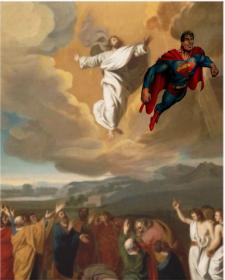
If historical records are not scientifically verified or SANE... do you think they are to be relied upon???


Here is a "historical" record for you...


[imgw=250]http://www.internationalskeptics.com/forums/imagehosting/thum_51282635ca5090b7ee.jpg[/imgw]​

Your statement "there is no such thing as unscientific evidence" is not accurate. Evidence can come from a variety of sources, including scientific sources, but also personal experience, expert testimony, and historical records, among others...


If personal experience is not scientifically verified and SANE... do think they are to be relied upon?

Here is a personal "experience" for you...

thum_5128262ce593be6827.jpg


In other words all the evidence hearsay you mentioned had to be VERIFIED as real and SANE before it is relied upon... and that is done by scientific means.

Get it? Evidence Claims that have not been verified by scientific means are not evidence.

thum_5128262e119fe1027c.jpg


...
I think it is important to engage in respectful and open-minded dialogue,...

[imgw=300]https://i.imgflip.com/10b217.jpg[/imgw]

thum_5128262c76633d58f5.jpg
 
Last edited:
Yes, anecdotal evidence is a form of evidence.


Anecdotal evidence can often be tested or verified through scientific methods. Sometimes it is verified and becomes scientific evidence, sometimes it is shown to be an artifact of our cognitive biases and can be dismissed. If it cannot be tested or verified through scientific methods then we know to be wary of it and not base any conclusions on it, because of its inherent unreliability.


Anecdotal evidence is known to be unreliable and inaccurate.


If you recognise that anecdotal evidence is insufficient to reach a decision, yes. If you fail to do so you're falling right into that trap.

From the neutral position where the bias of Emergent Theory and/or Religious Theory are not affecting the examination of the Ghost Theory, I find the following points pertinent.

1. There is a non-physical aspect of human experience that is responsible for generating consciousness and personality.
2. This non-physical aspect is sometimes referred to as the “Ghost” in the context of Ghost Theory.
3. The Ghost uses the human body as a vehicle in which data of experience is gained and personalities are developed.
4. The Ghost is consciousness and is responsible for developing personalities in relation to the human body.
5. Whether the Ghost is formed through Emergence Theory or not, it is still something non-physical interacting with something physical.
6. The interaction between the non-physical Ghost and the physical body can be observed through subjective experience, anecdotal evidence, and scientific measurements.
7. It is possible to measure a non-physical thing indirectly through scientific methods that are based on material things.
8. Psychology and neuroscience can shed light on how consciousness and mental phenomena interact with physical processes, and these fields can indirectly study non-physical entities or phenomena.

and of course

9. The Ghost Theory can be examined without bias by disregarding the bias of both Emergence Theory and Religious Theory.

These points allow for one to remain in the neutral position whilst examining Ghost Theory
 
These points allow for one to remain in the neutral position whilst examining Ghost Theory

Something which is entirely speculative cannot be examined in any meaningful sense of the word.

Get back to me when you have a shred of objective evidence for any of your points.
 

Back
Top Bottom
