if the entire Universe were compressed into a single point, what would happen? The answer is the same as it would be if you compressed any large-enough collection of mass or energy into a single point: it would form a black hole. What’s remarkable about Einstein’s theory of gravity is that if this collection of mass-and/or-energy isn’t charged (electrically) and isn’t rotating or spinning (i.e., without angular momentum), the total amount of mass is the only factor that determines how large the black hole is: what astrophysicists call its Schwarzschild radius.
Remarkably, the Schwarzschild radius of a black hole with the mass of all the matter in the observable Universe is almost exactly equal to the observed size of the visible Universe! That realization, on its own, seems like a remarkable coincidence, raising the question of whether our Universe might actually somehow be the interior of a black hole. But that’s only the beginning of the story; as we dive deeper, things get even more interesting...
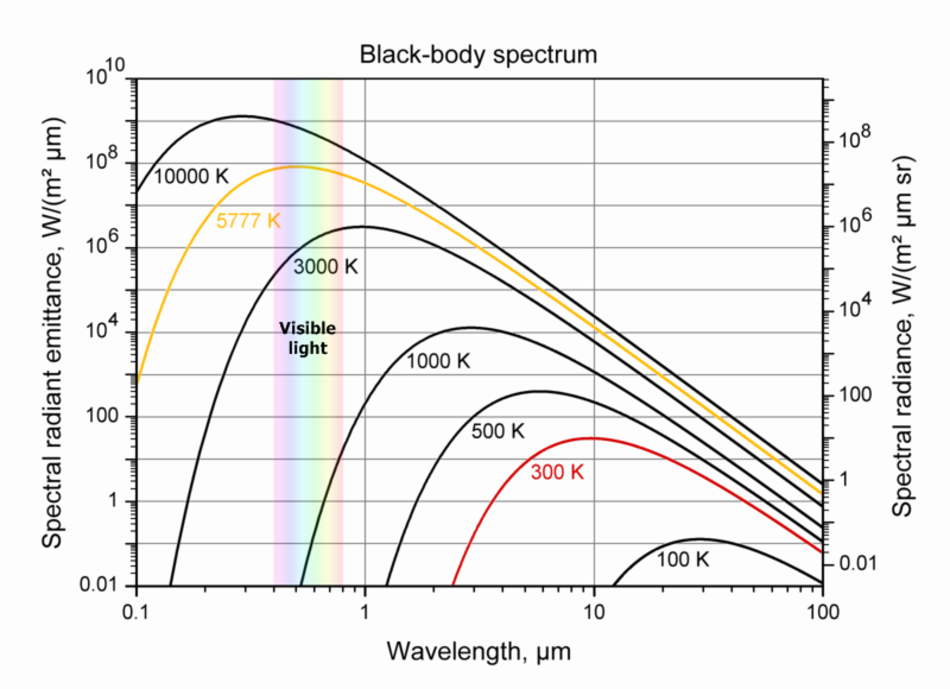
This radiation — originally called the primeval fireball and now known as the cosmic microwave background — represented critical evidence that our Universe is expanding and cooling because it was hotter and denser in the past. The farther back we extrapolate, the smaller, more uniform, and more compact things were. Going all the way back, this picture of the hot Big Bang appears to approach a singularity, the same condition found at the central interiors of black holes...
Is it possible that what we perceive as cosmic inflation marks the creation of our Universe from an ultramassive black hole? Is it possible that dark energy is somehow connected to black holes, as well?
And does this mean that, as astrophysical black holes have formed within our Universe, that each one gives rise to its own “baby Universe” somewhere inside of it? These speculations have been around for many decades, but without a definitive or provable conclusion. Nevertheless, many models and ideas abound, and this line of thought continues to be compelling to many who research black holes...
There’s a lot to like about the idea that there’s a connection between black holes and the birth of Universes, from both physical and mathematical points of view. It’s plausible that there’s a connection between the birth of our Universe and the creation of an extremely massive black hole from a Universe that existed before our own; it’s plausible that every black hole that’s been created in our Universe has given rise to a new Universe within it.
What’s missing, unfortunately, is the key step of a uniquely identifiable signature that could tell us whether this is the case or not. That’s one of the most difficult steps for any theoretical physicist: to determine the imprint of a new idea on our observable Universe, distinguishing that new idea from our old, prevailing ones. Until we successfully take that step, work will likely continue on these ideas, but they will only remain speculative hypotheses. We don’t know whether our Universe was birthed by the creation of a black hole, but at this point, it’s a tantalizing possibility that we would be foolish to rule out.





 )
)