meccanoman
Thinker

- Joined
- Feb 19, 2017
- Messages
- 232
That would generate the same issue, though. A bas relief mask is still a 3D object. The only difference is that it has a background, rather than being free standing.
Edti: Why go through all this silliness? Wouldn't it be simpler (if the chemistry proved accurate), to just paint the image with oil, then shake and bake?
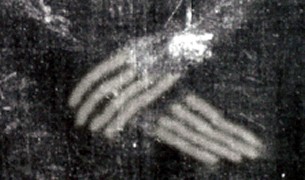
Yes, but linen, wet linen especially (as used in my Model 10) has an amazing ability to mould to SHALLOW relief, as is the case with bas relief, as distinct from full 3D. Try imprinting the back of your own hand if you don't believe me. Note the absence of creases, distortion etc. The first stage unwashed imprint, straight from the oven, looks for all the world like a close-fitting glove.
Where's the silliness in imprinting off a human body, if the aim was to promote the imprint as the actual one left by the crucified Jesus on Joseph of Arimathea's linen? It was virtually guaranteed to attract medieval pilgrims from far and wide, a rival attraction to the (then) celebrated Veil of Veronica, that being an 'inferior' face-only imprint.
Paint the image in oil? That would put too much oil into the fibres of the linen, probably interfering with image-development, and one could not be sure of the flour sticking only to the oil - it would get into the interstices of the dry, oil-free weave as well and then colour those too in the oven, giving a messy result.
The genius of the Shroud was to model the sweat/blood whole body imprint in a one-off session onto an up-and-over sheet of EXPENSIVE herringbone-weave linen. Business model: avoid any risk of a dud result by using one, or more probably two, REAL 3D human subjects as templates. (Why spoil the ship for a ha'penny worth of tar etc?)