
Trent Wray
Unregistered
- Joined
- Jan 25, 2010
- Messages
- 4,487
Why are we so obsessed with our identity? Imprinting, Gods,& labels we give ourselves
* I am not talking about Genomic imprinting, rather the psychological aspect of "imprinting"
So why are we (as human beings) seemingly so obsessed with our identity? "I'm a Conservative," or "I'm an implicit atheist," or "I'm gay," or "I'm an electrician," .... etc and so forth?
Is it mostly a status thing? Is it more culturally related? Or some other need to identify with "something"?
And when did this become a noticeable aspect to our society ... is it the result of analytical thinking, etc and so forth? Or is it the result of imaginative thinking? Or both?
Geese are a good example of the kind of imprinting I'm speaking of, which if I understand it correctly is filial imprinting. Between the first 13-16 hours after hatching, they will lock on and identify with a suitable moving stimulus, and for the rest of their life they will recognize that same stimulus and follow it. There is also apparently the imprinting that goes on with unborn humans in the womb and recognizing the voice of those around them, there is sexual imprinting, and the Westermarck effect (reverse sexual imprinting) ... for examples.
So is a person's need or desire to understand themselves, and identify themselves as "this or that", akin to us having a need to further imprint for some reason? If so .... is it because we "lack something"? There is something missing for us to imprint on and identify with suitably?
I'm not making a claim, but exploring questions and an idea: suppose human imprinting in this manner is partially responsible for authority recognition, mother/father recognition and emulation, sexual preferences and fetishism, etc and so forth. In these ways, we are not dissimilar perhaps from other creatures. So we, as humans, imprint on humans, and thus do not really need to look at the squirrel and call it "mama!", etc and so forth.
However intellectually speaking ... we do not have "equals". So, as our intellect and knowledge grows and changes, we still have this need to imprint on things. To identify with something else in order to continue to "progress". Some will look to animals .... and begin to identify with "totem spirits" and ideas like the Otherkin, actually thinking they are perhaps something other than a human being, etc and so forth (one of my favorite polls/threads). Others will look to other people, and try and forum groups classified by their intellect and reasoning capacity and ability. Still others will try and imprint with "something even greater" or unknown ... the idea of a god, or gods, or advanced extra-terrestrial beings, etc and so forth.
So perhaps the ideas behind us identifying with certain groups and ways of believing and thinking, has more to do with a need to imprint on something similar to us for recognition, guidance, etc and so forth .... but since our intellect and ability to reason seems to be advancing and changing alongside civilization, when we look to our parents or others around us, we don't always see something we can identify with, for whatever reason. So we have to look elsewhere ... and if we continue to not find something we can identify with and imprint on, then we have to "fill in the gaps" .... and thus fantastical thinking finds solutions for us, or galvanizing into groups (like, "I'm a die hard atheist, not a theist and this is important to me you understand the terminology"), or looking into ourselves and "self imprinting", or to a career or profession to identify ourselves with, or whatever.
I hope I've described this idea clearly enough.
Thoughts anyone?
One more thing: from what I understand as an obvious laymen, imprinting usually involves a "critical period". If there is any validity to this idea above, what would the critical period for a person be involving this identity/intellectual type of imprinting? And when would it ever end? Because people can go to their graves being "die hard republicans" and fighting the systems, etc and so forth ... with their own personal identities being perhaps the most important aspect of their day to day lives.
* I am not talking about Genomic imprinting, rather the psychological aspect of "imprinting"
So why are we (as human beings) seemingly so obsessed with our identity? "I'm a Conservative," or "I'm an implicit atheist," or "I'm gay," or "I'm an electrician," .... etc and so forth?
Is it mostly a status thing? Is it more culturally related? Or some other need to identify with "something"?
And when did this become a noticeable aspect to our society ... is it the result of analytical thinking, etc and so forth? Or is it the result of imaginative thinking? Or both?
Geese are a good example of the kind of imprinting I'm speaking of, which if I understand it correctly is filial imprinting. Between the first 13-16 hours after hatching, they will lock on and identify with a suitable moving stimulus, and for the rest of their life they will recognize that same stimulus and follow it. There is also apparently the imprinting that goes on with unborn humans in the womb and recognizing the voice of those around them, there is sexual imprinting, and the Westermarck effect (reverse sexual imprinting) ... for examples.
So is a person's need or desire to understand themselves, and identify themselves as "this or that", akin to us having a need to further imprint for some reason? If so .... is it because we "lack something"? There is something missing for us to imprint on and identify with suitably?
I'm not making a claim, but exploring questions and an idea: suppose human imprinting in this manner is partially responsible for authority recognition, mother/father recognition and emulation, sexual preferences and fetishism, etc and so forth. In these ways, we are not dissimilar perhaps from other creatures. So we, as humans, imprint on humans, and thus do not really need to look at the squirrel and call it "mama!", etc and so forth.
However intellectually speaking ... we do not have "equals". So, as our intellect and knowledge grows and changes, we still have this need to imprint on things. To identify with something else in order to continue to "progress". Some will look to animals .... and begin to identify with "totem spirits" and ideas like the Otherkin, actually thinking they are perhaps something other than a human being, etc and so forth (one of my favorite polls/threads). Others will look to other people, and try and forum groups classified by their intellect and reasoning capacity and ability. Still others will try and imprint with "something even greater" or unknown ... the idea of a god, or gods, or advanced extra-terrestrial beings, etc and so forth.
So perhaps the ideas behind us identifying with certain groups and ways of believing and thinking, has more to do with a need to imprint on something similar to us for recognition, guidance, etc and so forth .... but since our intellect and ability to reason seems to be advancing and changing alongside civilization, when we look to our parents or others around us, we don't always see something we can identify with, for whatever reason. So we have to look elsewhere ... and if we continue to not find something we can identify with and imprint on, then we have to "fill in the gaps" .... and thus fantastical thinking finds solutions for us, or galvanizing into groups (like, "I'm a die hard atheist, not a theist and this is important to me you understand the terminology"), or looking into ourselves and "self imprinting", or to a career or profession to identify ourselves with, or whatever.
I hope I've described this idea clearly enough.
Thoughts anyone?
One more thing: from what I understand as an obvious laymen, imprinting usually involves a "critical period". If there is any validity to this idea above, what would the critical period for a person be involving this identity/intellectual type of imprinting? And when would it ever end? Because people can go to their graves being "die hard republicans" and fighting the systems, etc and so forth ... with their own personal identities being perhaps the most important aspect of their day to day lives.
Last edited:


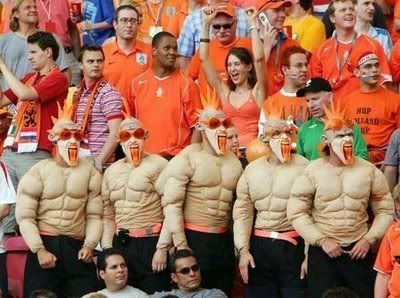


 But sometimes it's just a statement of fact, i.e., basically acknowledging something I am. Just like mentioning that I've read War And Peace. Doesn't mean it's got some special meaning for my identity, nor that now I'm the grand shaman of that tribe.
 . I was hoping there might have been some sort of concrete studies making these connections, but a quick google didn't bring anything up that stood out to me blatantly.

