• Quick note - the problem with Youtube videos not embedding on the forum appears to have been fixed, thanks to ZiprHead. If you do still see problems let me know.

What the hell is a platypus?

The other ones have poison? I thought that the platypus was the only venomous mammal.

There are three or four different species of echnidnas. They have the spur
but they have non-functional venom glands.

http://www.aussie-info.com/identity/fauna/echidna.php


There is another type of venomous mammal besides the platypus, the solenodon which is a shrew.

The solenodon has poisonous salivary glands with ducts opening at the base of its large second lower incisors, which are deeply grooved on the inner sides to inject venom when biting. This is one of the very rare poisonous mammals, but see also the platypus and water shrew.


http://www.americazoo.com/goto/index/mammals/33.htm

There is also a group of PNG Birds which are poisonous known as the pitohuis.

http://nationalzoo.si.edu/Publications/ZooGoer/2001/2/intoxnewguineabirds.cfm
 
Last edited:
Yeah, but have you ever been stung?

Fortunately, No.

But that's what I've Read, (about the specificity of the toxin) and heard (about how painkillers don't help at all) from unfortunate others, who have.

As a result, Not grabbing a passing Platypus, is high up on my list of things to do, when observing Platypuses in the wild!:)
 
On a different note, something very wrong with platypussies that Andy didn't mention :

"The name monotreme means "one-holed," referring to the cloaca, a single hole that serves the urinary tract, anus, and reproductive tract in monotremes."


Leading to an Aussie expression of "Stick that in your Jatz Cracker".
 
If its good enough for North America to have Big Foot then its good enough for us to have Yowies.

I have yet to see any grainy, blurry video evidence, but plenty of drunken campers swear they have seen one!! There is a clear relationship between alchohol intake and sightings - much like alien space craft.

Beware of the Yowie!

And Bunyips!

And the Min Min lights...
 
Last edited:
Why the platypus?

I loved reading about the platypus when I was in grammer school.

I tend to think of this wonderful animal as living proof that nature doesn't have to conform to human prejudices.

I have always had the sneaking suspicion that people have a tendancy to want to 'cubby-hole' things into preconcieved boxes, and once something is cubby-holed, we believe--in our arrogance--that we understand it.

I've always wondered why we can't consider a platypus to be in a category all by itself. Sure, it has hair and it nurses (but it doesn't use nipples--it secretes milk like a film of sweat from hundreds of different glands on the abdominal surface, and the babies lick it off instead of suckling), but there are so many other differences. If it wasn't for the hair, then I think it would have been considered to be in a different category.

To classify a platypus as a mammal seems like we're trying to cram a slightly oval peg into a round hole, and forcing it to fit by beating on the end of it.

All the best,

---Kevin
 
Well , the point of taxonomy is to establish relationships, ideally evolutionary ones, in order to build a clear picture of how life is connected.
Creating individual taxonomic groups above the species level should be avoided where unnecessary as it defeats the whole purpose of the exercise.
Stephen Gould rather fell into this trap when he wrote "Wonderful Life" . If the hole truly is round, we should not force flat pegs in- but round animals do tend to flatten when fossilised.
 
Platypus?

Isaac Asimov wrote a wonderful nonfiction essay about the platypus called 'Holes in the Head', which appeared in 'The Left Hand of the Electron' and in 'The Magazine of Fantasy and Science Fiction.'

He proposed an argument that the platypus (and other monotremes) are not primitive mammals, but the last survivors of a prehistoric group of animals called therapsids.

The reasoning involved arguments about the trigeminal nerve.

In mammals, the trigeminal nerve reaches the brain through a hole in a skull bone, while in the extinct therapsids, the trigeminal nerve reaches the brain through a hole in a seam where two skull bones come together,

In an adult platypus, this nerve goes through a hole in the skull like a mammal, but only because the animal is an adult and the bones have fused completely together. In young animals, the nerve goes through a hole in a seam just like the extinct therapsids.

It seems convienent to consider the platypus as a late-model therapsid, as it explains all of the other differences.

Just thought you'd all be interested.

All the best,

---Kevin Levites
 
Romanii Eunt Domus.

:p Just let my kids watch that for the first time.

aaah drop-bears, gotta love em. When I took my wife (American) home for a visit we went camping and had to give her the usual warnings re drop bears while sitting around the fire. My little brother had a hard time keeping a straight face tho. Straight faces were completely out of the question the following morning when my wife came into the tent and warned us there were baby bears outside. Bears? In Oz? Her baby bears turned out to be adult wombats. She still hasn't lived that down.

If its good enough for North America to have Big Foot then its good enough for us to have Yowies.

I have yet to see any grainy, blurry video evidence, but plenty of drunken campers swear they have seen one!! There is a clear relationship between alchohol intake and sightings - much like alien space craft.

Beware of the Yowie!

And Bunyips!

And the Min Min lights...

Okay, I know what a 'growler' is:D , but for some of us non-Austrailians, can you let us in on the gags?

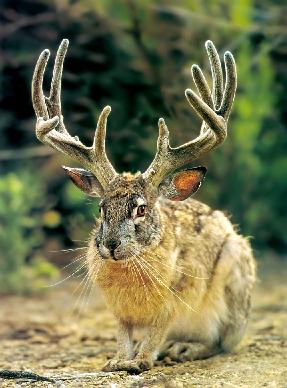
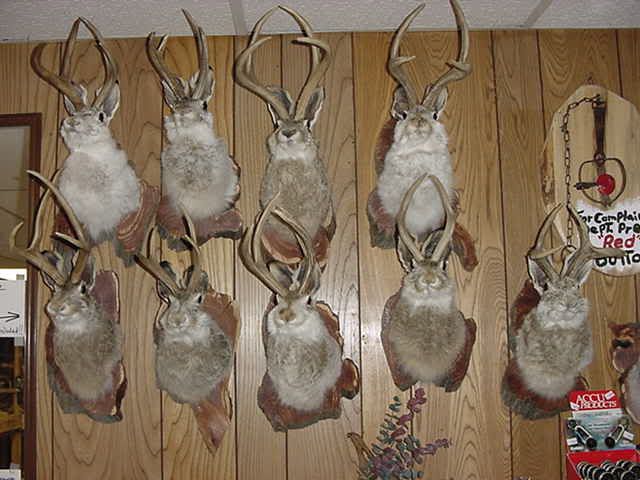
And I'll tell you about the dreaded jackalope:

jackalope-640.JPG

Jackalope.jpg

jackalope.jpg

jackalope.jpg
 

Back
Top Bottom