• Quick note - the problem with Youtube videos not embedding on the forum appears to have been fixed, thanks to ZiprHead. If you do still see problems let me know.

What is art?

Your definition of "good art" seems to be based entirely on skills.

I suppose I should let Arch speak for himself but...
He said, and I quote, "No, I actually disagree that "Skill" is one thing and "Art" is another. I think they're two sides of the same coin."
I don't think he could have been clearer.

Skills are relative and as I exemplified before, Thelonious Monk was perhaps one of the less skilled pianists ever, his technique was faulty in hundreds of way, his fingering was tense and awkward, his sitting was all over the place, etc etc etc etc... but he had a unique sound and concept of harmony which became strongly influential, because it appealed to the public.
So the "skill" side of the coin was tarnished but the "art" side of the coin was sufficently polished to make his coin worth having. Indeed the tarnished side could, in some respects, be said to enhance the final product.
I'm reminded of a more familiar example. Neil Young, whose guitar riffs and melodies were exquisite, had a voice that was, at times, excruciating. But, somehow, the satisfaction derived from Neil Youngs performance demanded that both be present. Would you go to a concert to hear [insert elegant Singer of your choice] do Neil Young?

I stress the last part, "because it appealed to the public". If it hadn't appealed to the public but only his two close friends and his mom, he wouldn't have been considered an artist, regardless of having a unique tone and concept of harmony.
He would not have been a recognised artist, but surely he would still have been an artist. As someone said before, Henry Draper had no audience at all during his lifetime. Does that mean he was not an artist until he was discovered sometime after his death? If so, how does that work exactly?

Even these things are irrelevant. Having a great skill is irrelevant. Having no skill and being a controversial enfant terrible is irrelevant. The only thing that matters is that what you do happens at a certain cultural time and cultural place that captures an audience of people who then begin to follow your work and appreciate it because it stirred something in them. That's Art in a nutshell.
I think you have an unnecessarliy restricted view of "what is art?". Skill is relevant. It's just not the only thing. And some things you seem to think are essential seem to me to be irrelevant. Having an audience, for instance, is nice but irrelevant as to question of whether or not it is art.

Practicing every day to develop a good skill is not equals to doing something that will captivate an audience who will then consider your work art. You can be very good at something, but not communicate anything that evokes feelings in people.
No, but it is an essential element. Even Thelonius Monk had skill, just not very well developed. He concentrated more on the "art" aspect and he was sufficiently original in that respect that it more than made up for his deficiency in the "skill" department. Neil Young's voice also suffered in the "skill" department, but it actually complemented many of his songs and didn't necessarily detract from most of the others; occasionally, of course, his voice was excrutiating and you just wished for him that he could actually sing. But he was an especially good modern artist in my opinion. Certainly he had the quality of touching you emotionally.

To put it in another way, if skill = art, then science = art since science takes a lot of skill. And we know science and art are two very different things
As I said, that (skill = art) was not the argument.
And science is not so very far removed from art as you seem to think. Scientific hypotheses can be every bit as elegant as works of Art. Elegant scientific theories can, of course, can be subsequently improved upon but that does not detract from their originality and elegance. Mathematical equations can be elegant. Computer code can be elegant.

You can have all the skills in the world and never evoke any feelings with your creation, never captivate an audience.
Yes, the coin has a flip side.
 
Last edited:
I suppose I should let Arch speak for himself but...
He said, and I quote, "No, I actually disagree that "Skill" is one thing and "Art" is another. I think they're two sides of the same coin."
I don't think he could have been clearer.

So the "skill" side of the coin was tarnished but the "art" side of the coin was sufficently polished to make his coin worth having. Indeed the tarnished side could, in some respects, be said to enhance the final product.
I'm reminded of a more familiar example. Neil Young, whose guitar riffs and melodies were exquisite, had a voice that was, at times, excruciating. But, somehow, the satisfaction derived from Neil Youngs performance demanded that both be present. Would you go to a concert to hear [insert elegant Singer of your choice] do Neil Young?

Well, I think the coin example is a very personal way of yours to see this issue. Of course there's always going to be a degree of skill in every art product, even the ones that involved very low skills. I'm not arguing that. All I argue is the claim that whether something is art or not is solely decided on the base how much skill there is to make such product. Skill is relative and not a decisive factor for determining whether something can be appreciated as art. When people are moved by something and find it artfully, they don't necessarily care how much skill there was involved.

He would not have been a recognised artist, but surely he would still have been an artist. As someone said before, Henry Draper had no audience at all during his lifetime. Does that mean he was not an artist until he was discovered sometime after his death? If so, how does that work exactly?

I think you have an unnecessarliy restricted view of "what is art?". Skill is relevant. It's just not the only thing. And some things you seem to think are essential seem to me to be irrelevant. Having an audience, for instance, is nice but irrelevant as to question of whether or not it is art.

I was waiting for this argument to come out: Is an artist one who has an audience or not? Stay tuned:

If you go ahead and make the argument that having an audience is irrelevant, then you have to consider that any single individual who, for his own personal purposes thinks anything is art (For instance, a crazy guy at a mental institution who thinks the stump on his nose is art) and take their definition of art at face value as a "valid" one.

Unfortunately, the concept of art doesn't work like that. The concept of art is one created in masse by societies, by cultures. And that involves groups of people. If we're going to attack the issue of defining art, we have to do it in its context. And the context of art is not the individual alone, separated from the world. It's the masses of people who feel moved by the creation of one individual. Therefore, audience not only is relevant, it is the one determining factor (as opposed to skill) The audience makes the artist.

Anyone is entitled to consider anything art, individually without finding another soul that agrees with them, but that's something else. Thats personal taste. Art is understood as a cultural phenomenon. One that enters the folklore of people, that earns the appreciation of groups of people, that becomes a sort of a cult, with followers and sometimes with "schools" that derive from its aesthetics.

As I said, that (skill = art) was not the argument.
And science is not so very far removed from art as you seem to think. Scientific hypotheses can be every bit as elegant as works of Art. Elegant scientific theories can, of course, can be subsequently improved upon but that does not detract from their originality and elegance. Mathematical equations can be elegant. Computer code can be elegant.

I didn't make the argument that some things in science can't be considered art. I said Art is one thing and Science is another.

....I pretty much agree with your follow up post though :)

Well... Finally we have something in common! :)
 
Last edited:
I disagree. You dismiss him because his math is bad.

Cranks very rarely produce any maths at all so bad are they at maths and so little do they understand maths. A pity because maths has a habit of sorting out the real from the pseudo scientist. There is a certain rigour in maths. It's their philosophy that is faulty and, as we all know, there is plenty of wriggle room in philosophy that you just can't get away with in maths.

His credentials, or lack thereof, are irrelevant to that. If his math is bad, I don't care if he's a Harvard professor or a dairy farmer
You could show a mathematics professor where his maths has gone wrong. A crank is not even be capable of recognising the error even when it is clearly pointed out to him. As I said, in the end, you just simply have to dismiss him with something akin to, "You, sir, are not a mathematician".
Seriously, try arguing with a crank sometime (or a creationist).
 
Exactly. A non-mathematician is not going to produce the same results as a mathematician. But I, a non-artist, can place a piece of tissue on a pedestal just as well as an artist who has been putting tissue on pedestals for years.


Dood, your Sum does not add up. :D
 
Well, I think the coin example is a very personal way of yours to see this issue. Of course there's always going to be a degree of skill in every art product, even the ones that involved very low skills. I'm not arguing that. All I argue is the claim that whether something is art or not is solely decided on the base how much skill there is to make such product. Skill is relative and not a decisive factor for determining whether something can be appreciated as art. When people are moved by something and find it artfully, they don't necessarily care how much skill there was involved.

Actually, it was Archie's metaphor.
Other than that there is nothing I would disagree with in that paragraph. :)

If you go ahead and make the argument that having an audience is irrelevant, then you have to consider that any single individual who, for his own personal purposes thinks anything is art...and take their definition of art at face value as a "valid" one.
Here we are back to art v Art.
I am certainly not a post-modernist. :eek:

Unfortunately, the concept of art doesn't work like that. The concept of art is one created in masse by societies, by cultures. And that involves groups of people. If we're going to attack the issue of defining art, we have to do it in its context. And the context of art is not the individual alone, separated from the world. It's the masses of people who feel moved by the creation of one individual. Therefore, audience not only is relevant, it is the one determining factor (as opposed to skill)
I think you confuse the actual work of art with the appreciation of that work of art.
Henry Draper's paintings were works of art right from the time they were completed. The wider community didn't get to appreciate his works of art until they were discovered after his death and entered the public sphere.

The audience makes the artist.
Henry was an artist long before he had audience.
An audience could have made him popular and given him all the trappings that come with that popularity, but I think that is irrelevant from the point of view of whether or not he created works of Art.
Perhaps it's more accurate to say that the art culture of his time is what made Henry Draper - well, apart from all those other factors :D

Art is understood as a cultural phenomenon. One that enters the folklore of people, that earns the appreciation of groups of people, that becomes a sort of a cult, with followers and sometimes with "schools" that derive from its aesthetics.
Now you are talking about art as a cultural phenomenon.
Certainly the "schools" "cults' and "followers" are important in the development of a genre originated by an artist.
And, certainly, the cultural milieu in which an artist finds himself does, in turn influences his art, even if it causes him to jump out of that culture to create an new and original genre with subsequently its own cult of followers. We are back to context here and I agree it is important. Even Henry Draper's art was influenced by the culture of his time and that is an important factor in appreciating his art.

Well... Finally we have something in common! :)
I have a feeling we're not too far apart. :)
 
Last edited:
Actually, it was Archie's metaphor.
Other than that there is nothing I would disagree with in that paragraph. :)

Here we are back to art v Art.
I am certainly not a post-modernist. :eek:

:)
Which one was art and which one was Art again?
Either way, these concepts are your own. For popular terms, this differentiation doesn't exist and hasn't been agreed upon formally by any society as far as I'm concerned.

I think you confuse the actual work of art with the appreciation of that work of art.

If there is any such thing as "two sides of one coin", those are it: Art and the Appreciation of Art by a given audience, are two sides of one coin. There's no "art" without an audience to appreciate it.

Henry Draper's paintings were works of art right from the time they were completed. The wider community didn't get to appreciate his works of art until they were discovered after his death and entered the public sphere.

Henry was an artist long before he had audience.
An audience could have made him popular and given him all the trappings that come with that popularity, but I think that is irrelevant from the point of view of whether or not he created works of Art.
Perhaps it's more accurate to say that the art culture of his time is what made Henry Draper - well, apart from all those other factors :D

It is irrelevant what period of time the audience is from, what matters is that there was one. Henry Draper was acknowledged as an artist because he had his audience. In fact, the very fact that he was acknowledged could only be possible if he had an audience. Otherwise, who's going to acknowledge him as an artist?

Now you are talking about art as a cultural phenomenon.

As opposed to art as an individual phenomenon of one single person who finds something to be art even though the rest of mankind doesn't agree with him?

Clearly what I'm trying to imply with that question is that art is a cultural phenomenon. The rest of the cases is isolated individuals and their individual appreciation of something they themselves label as art in the privacy of their individual lives.
 
Last edited:
Let me have a go:
Craftsman make reproductions of originals with varying degrees of skill. Artists use their varying degrees of skill to produce the originals.
(Of course the craftsman may have produced the original but, in that instance, he was an artist.)


See, I think that's where we start going off the rails

Because it is not original?
Certainly, if it is art, it is "accidental" art.
(I assume you're talking about the actual V8 engine, not the photographic image)


More accurately, I was talking about "designs", which are far from accidental, by any definition.

I can empathise with that.
The code can work, but if it doesn't look good...


See above. To a motorhead a great engine design can be as artistic an achievement as a fine piece of code can be to a programmer.

There's another thing reflected a little bit here, and also elsewhere in this thread.

There is a certain tendency to add, reduce, or even create classifications and subsets when trying to include or exclude things which are not convenient to someone's stock definitions. "Accidental art" or "found art", 'outsider art", "fine art", etc., etc. We've seen all these terms in this thread, and probably more as well.

I decided many years ago that I didn't like "country music". I did, however, like "bluegrass". No problem. That was different ... somehow. Then I discovered I liked Asleep At The Wheel. Okay, we'll call that "Western Swing". Some of The Band's songs or CCR can sound suspiciously like "country". Well, maybe that's "country rock". Then there's The Grateful Dead.

See where I'm going here? After a while I realized that I was searching for a different name to explain all the exceptions I was making, just so I didn't have to call something "country music". Because I already knew I didn't like "country music", so it must be something else. Right? And what it really boiled down to was whether I liked that group or that song, or not.

I liked Dan Hicks and the Hot Licks. Was it "swing"? Sorta ... sometimes. Was it "jazz"? You could argue that. Was it "pop"? Well, a couple of their songs did chart ... when someone more well known sang 'em.

I needed to quit worrying about the names that put the music into some pigeonhole, and just like it or dislike it.

"Is it art?" seems to be a question that ends up going down the same path. I'm intrigued by the distinction you made about creating work. If a craftsman "creates" something then poof he's an artist. If he didn't set out to create something, but someone else later decides that he had then he's an "accidental artist".

I'm not discounting this distinction, but I hope you can see why I struggle with it a little bit.

I just finished reading a Homer Hickam novel, "The Keeper's Son" (highly recommended, BTW). It's setting is on the Outer Banks of North Carolina, and two of the characters make jewelry from shells and flotsam found on the beach. This thread made me think of that. There's lots of beach jewelry out there. Some good and some bad. Some of it unquestionably art, and some still quality craftsmanship, but somehow without that spark or essence which takes it over the edge.

I think we've agreed that most artists are good craftsmen (although that "most" part is still there :(), but we have this sense that not all good craftsmen are artists. You suggest that reproduction vs. creation is the dividing factor. I wonder if that doesn't just shift the target without really changing it. Each piece a craftsman makes is at least subtly unique. Sometimes there seems to be a threshold that is crossed. Sometimes that threshold is, well, time.

There's still something here that is wriggling away from our conceptual grasp. Mine, at any rate.

--------------------------------------------

I was rereading this and got to thinking along another tack. I'm just thinking out loud right now, so you don't need to pay much attention. (If anyone has been to start with. :blush:)

Machines excel at reproduction, but we are not inclined to describe that as craftsmanship. Except that we do. For example. In the declining days of Detroit as the automotive capital of the world Lee Iaccoca was different from most other auto industry executives beause he was a "car guy". He loved automobiles for themselves, not just for the revenue. He saw the "fit and finish" of an automobile as an essential part of its value, which wasn't the case with his peers at the time, and was one of the reasons he got fired by Ford.. He was talking about craftsmanship, even though the product came off an assembly line.

This would be craftsmanship in the sense of "well made", or perhaps "carefully produced". I'm not sure that that is the sense which I intended when I first broached the subject, but maybe it is. There is something which somehow seems 'different' about the usages to me, although I can't quite pin down why. Somehow that difference feels like it relates to this topic, though.

Is a "craftsman" just a flesh and blood machine, with sloppier tolerances and a less predictable output? That's a tough call, because when you get right down to it machines actually can do a better job in the right circumstances. Faster and cheaper, too.
 
:)
Which one was art and which one was Art again?

Come on, it's only short hand.

Here is some mathematics:
1 + 1 = 2

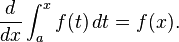
Here is some Mathematics:
0302486962619ed1831cc4d8f54235a7.png


Either way, these concepts are your own. For popular terms, this differentiation doesn't exist and hasn't been agreed upon formally by any society as far as I'm concerned.
In the mean time I throwing my art in the bin because I recognise that is not what I would call Art.
Hey, it's just a matter of degree.
And I trust you a not post-modernist.

If there is any such thing as "two sides of one coin", those are it: Art and the Appreciation of Art by a given audience, are two sides of one coin. There's no "art" without an audience to appreciate it.
If you say so.

Henry Draper was acknowledged as an artist because he had his audience. In fact, the very fact that he was acknowledged could only be possible if he had an audience. Otherwise, who's going to acknowledge him as an artist?
But now you are talking about being acknowledged as an artist.
Henry Draper was an artist from the time he produced his paintings, but he was acknowledged as a artist only after his death - because it was only then that his paintings were first discovered and made public.

As opposed to art as an individual phenomenon of one single person who finds something to be art even though the rest of mankind doesn't agree with him?
His art is not Art, a difference of degree only.
The elephant painting is art in comparison to the Art of Jackson Pollock.
(or insert the name your favourite artist)

Clearly what I'm trying to imply with that question is that art is a cultural phenomenon.
Art is a cultural phenomenon.
Art as a cultural phenomenon.
Hey, as I said, there is not much difference between us! :D
 
<snip>

As opposed to art as an individual phenomenon of one single person who finds something to be art even though the rest of mankind doesn't agree with him?


Until the rest of mankind changes its collective mind. Then it becomes art.

Clearly what I'm trying to imply with that question is that art is a cultural phenomenon. The rest of the cases is isolated individuals and their individual appreciation of something they themselves label as art in the privacy of their individual lives.


It seems to me that this approach places art strictly in the realm of perception, quite independent of any intent on the part of the artist.

I'm cool with that, but it pretty much establishes that opinion and consensus are what constitutes art. The artist becomes irrelevant.

This would, of course, go a long way toward explaining why the subject always seems to develop so much rancor whenever it pops up.
 
Last edited:
So now a speech given by a scientist about phenomena for which there is scientific evidence is the same as a Religious freak offering you to read his pamphlet?
That sure shows your enthusiasm about, and understanding of science.

Don't be silly. Clearly, it was your exhortation to watch the 90min video which I was likening to the zealot's assurance that if I only read their sacred book I would understand.

Once again, art is not science. I have a science degree, as it happens, but you're right - I'm not a science zealot, nor 'a true scotsman scientist', merely an interested amateur.

Also again, if you watched and understood that 90min video, could you not just list the seven principles I saw a reference to when I flicked through it? It would have taken less time, and been more useful, than your deliberately deceitful and contentious post - which sure shows your enthusiasm for, and understanding of, debate.

Finally again, no, I won't be watching that 90min video just because you assure me it will answer the question 'what is art?' (not least because we appear to have established that it covers those things science can understand, like pattern recognition, but not those it doesn't, like 'what is art?'). I fully accept that I may be wrong, but for the benefit of everyone at loggerheads in this thread, if there is an answer (the answer) in that video, just tell us all what it is.
 
See, I think that's where we start going off the rails
Hey, I did say "Let me have a go"! :(

More accurately, I was talking about "designs", which are far from accidental, by any definition.
I was thinking of the V8 as a practical design that is accidentally artistic.
The artistry, in that case would not lie with the engine designer, but the person who discovered the accidental artistry in that design and took a photograph to bring out the artistry that he recognised. Much like the landscape photographer who recognises the accidental art in a landscape.

There is a certain tendency to add, reduce, or even create classifications and subsets when trying to include or exclude things which are not convenient to someone's stock definitions. "Accidental art" or "found art", 'outsider art", "fine art"...
I didn't actually mean to classify it as "Accidental Art". All I was meaning to say is that it is possible to produce art accidentally.
Those elephants produced art accidentally.
The artist who made a mistake (with a slip of his brush stroke) that was "the best mistake that he ever made" accidentally raised the artistic value of his creation.

I needed to quit worrying about the names that put the music into some pigeonhole, and just like it or dislike it.
As I said, that was not my intention with the "accidental art" thing. I would hazard a guess that many artists make mistakes that they then recognise as artistic (though the vast majority would undoubtedly be recognised as trash and discarded). But at least they did recognise the artistry in their accident (just as that photographer recognised the artistry in that accident of nature, and the elephant owner recognised the artistry in some of the many dawbings his elephant produced).

"Is it art?" seems to be a question that ends up going down the same path. I'm intrigued by the distinction you made about creating work. If a craftsman "creates" something then poof he's an artist. If he didn't set out to create something, but someone else later decides that he had then he's an "accidental artist".
But I think it is still art even it was produced accidentally. By calling it "accidental art" I didn't mean to exclude it as "art".

There's lots of beach jewelry out there. Some good and some bad. Some of it unquestionably art, and some still quality craftsmanship, but somehow without that spark or essence which takes it over the edge.
Like with Ron Tomkins, I don't think I disagree with much of what you say. :)

I think we've agreed that most artists are good craftsmen (although that "most" part is still there :(), but we have this sense that not all good craftsmen are artists.
:)

You suggest that reproduction vs. creation is the dividing factor. I wonder if that doesn't just shift the target without really changing it. Each piece a craftsman makes is at least subtly unique. Sometimes there seems to be a threshold that is crossed.
Well I wonder if you are really saying anything different.

There's still something here that is wriggling away from our conceptual grasp. Mine, at any rate.
I must admit I dont see it. But that that could be my problem rather than yours.

-------------------------

Machines excel at reproduction, but we are not inclined to describe that as craftsmanship. Except that we do. For example. In the declining days of Detroit as the automotive capital of the world Lee Iaccoca was different from most other auto industry executives beause he was a "car guy". He loved automobiles for themselves, not just for the revenue. He saw the "fit and finish" of an automobile as an essential part of its value, which wasn't the case with his peers at the time, and was one of the reasons he got fired by Ford.. He was talking about craftsmanship, even though the product came off an assembly line.
Maybe that just because craftsman use tools and the assembly line is just a very complicated tool.
A craftsman might use tools made by others (craftsmen in their own right), or they might modify that tool for a modified purpose, or they might even craft a completely new tool for a specific purpose.
The machine, then, is really just a very complicated tool crafted for a specific purpose.

Is a "craftsman" just a flesh and blood machine, with sloppier tolerances and a less predictable output? That's a tough call, because when you get right down to it machines actually can do a better job in the right circumstances. Faster and cheaper, too.
I suppose machines come in all degrees of tolerances.
I suppose the craftsman's job is to craft machines that reduce these tolerances towards zero so as to produce the ever more perfectly crafted object.
 
Actually, Ramachandran does address and answer the question "What is art" in his own way. You can agree or disagree but his assertion is based on observations that are based on the general behaviors of human brains (and these cannot be disagreed on, since these are based on empiric, scientific evidence), both regarding the subjects who create art and the subjects who appreciate art.

'In his own way'? Whatever that means... I neither agree nor disagree, since you haven't attempted to explain what his own way is, you haven't shared his answer with us, and you resist repeated requests to do that. I do not doubt or dipute that your man is a scientist and that what he does really truly is actual proper science. But how has he established what is art, before he set about measuring the brains of 'artists' or people who appreciate 'art'? Do you not see the problem?

Fine. Don't watch the video. You seem to have already made up your mind on the subject and don't even care to peek at other theories.
You say you don't want to turn this into a semantic argument but on the other hand you say you want a scientific definition of "what is art" which is simply creating an intellectual trap, because ANY definition anyone gives you is open to disagreement by ANYONE. Art is a subjective, culture-influenced concept, malleable, subject to change anytime in any way.
There is no such thing as a "scientific formula for a definition of art", but there are many scientific cues to understanding how we make it and how we appreciate it. After all, Art, whatever the Hell it is, is something created by us, humans. By our brains. So studying the human brain, how it works, how it perceives and how it projects is a first very important step to start getting an empiric concept about art, as a neurological phenomena.

There really is no call for petulance. I'm sorry it surprises you that I won't watch a 90 min lecture which cannot (as you now concede) address the question 'what is art?' Indeed, you concede that there cannot be an answer. I conceded, right at the start, that science can measure things that are in, and of, art.

I know you won't. As I said, it's pretty clear you've made up your mind about your concept, and don't even care to listen to other ideas and explanations even if just to see out of curiosity what they have to say. Your loss.

What's clear is that I've made up my mind I won't watch 90 mins (an hour and half (one sixteenth of a day)) of some random video pressed on me like a zealot with a holy book. I wouldnt do it for the book, I won't do it for your video. The fact that one is mumbo-jumbo and the other is science is neither here nor there. The fact that you expect me to care about it as much as you do is the point of comparison. The fact that my refusal leads to fantastical speculation and abuse may be another....
 
I stand by my definition on this point. If it's not intended to convey anything at all, it isn't art at all.
Art is, by its nature, an expressive activity. If the activity is undertaken without the purpose of expression, then it's an activity other than art.
A portrait painted purely for the purpose of accurately rendering a subject, with no other expressive intent behind it, is not "art" anymore than a court reporter typing the words said in a courtroom is an "artist".
Portraits recognized as art are recognized for doing more than this -- for expressing something through the choices of the artist more than a precise representation of the subject devoid of aethetic selection or emotive thought.

Jake and Dinos Chapman would agree with you - they've described realist painting as 'autistic art'. Great portrait artists will bring more to their work than mere representation. Lesser artists won't. (Why is the conveyance of the expression 'this is what so-and-so actually looks like' not part of your 'conveying an expression' definition?)


I disagree. Graffiti artists are certainly intending to convey a message in both their choice of medium and the artistry of their conveyance. Fits squarely within the definition.

Actually, you agree. I said they intended to convey a message, as opposed to your original contention that art must convey an emotion or visceral sensation. You shifted your goalposts and then had the gall to say you 'disagreed'...with yourself, it would appear.


Then we can't establish it to be art. The definition intentionally places the question of "art" squarely on the shoulders of the "artist", and nowhere else. If we don't understand that a work was created for an appropriate expressive purpose, then we don't know it to be art under this definition. It can still become art later when a proper "presenter" or "performer" finds it.

So, while it does not change materially, the work only 'becomes' art when somebody suitably qualified recognises it as such. But what is it they are recognising? 'Art' which is not art? No, of course not, they are recognising art, which was art before they found it.
 
Come on, it's only short hand.

Here is some mathematics:
1 + 1 = 2

Here is some Mathematics:
[qimg]http://upload.wikimedia.org/math/0/3/0/0302486962619ed1831cc4d8f54235a7.png[/qimg]

Exactly. As you will see from this Math/math example you've also provided me, this is your own personal concept. You won't find any single mathematic books making the distinction between mathematics and Mathematics. These are not formally, universally accepted categorizations. In other words, both of the examples you listed (The Math example and the math example) are simply examples of mathematics (in the strict sense of the word, regardless of a capital M or not). You've just created a categorization of your own, which is cool, but don't pretend such categorization is actually used by everyone else. It's not valid to make such differentiation. There is only mathematics and that's it. The same applies with art.


If there is any such thing as "two sides of one coin", those are it: Art and the Appreciation of Art by a given audience, are two sides of one coin. There's no "art" without an audience to appreciate it.

If you say so.

I could respond to the same thing to your "Art/Skill" sides of the coin or to your "Art & art" differentiation. By saying "if you say so"... where's the objective differentiation? It's all personal points of view, right?

Not quite. The big difference is: it is factually true that you can't have art without an audience to appreciate it and to consider it art. There is no "objective" art that simply is art for its own sake, without an audience to appreciate it. Art is a culturally created concept, which requires actual human beings to form such consensus within a society.

But now you are talking about being acknowledged as an artist.
Henry Draper was an artist from the time he produced his paintings, but he was acknowledged as a artist only after his death - because it was only then that his paintings were first discovered and made public.

His art is not Art, a difference of degree only.
The elephant painting is art in comparison to the Art of Jackson Pollock.
(or insert the name your favourite artist)

Ok, BillyJoe, lets do something here to illustrate the situation: You say there is a difference between being an artist and being acknowledged as an artist. I say you're wrong. Being an artist is being acknowledged as an artist.

Now please read carefully before you reply, cause I can feel how your finger is gonna be tickling to press that quote button and start replying to my points immediately.

If you are right, and it is true that "being acknowledged" an artist is one completely different thing that's irrelevant to "being an artist", then... that leaves us with the scenario of an "artist" as you say, who's objectively an artist even though absolutely no one else acknowledges him as an artist. He is the only human on earth who considers himself an artist.

What then is the criteria to determine he's an artist? Take a lunatic who urinates on dead animals and calls that art but no one agrees with him. Is he an artist?

On the other hand, take the same lunatic, doing the same thing, but for some reason inspiring a group of people. They are caught by what he did, are somewhat interested, they begin to follow his work, take pictures, someone interviews the guy, he makes the headlines. More people are caught by him. Meanwhile the guy continues to urinate on dead animals, using different kinds of animals every time, maybe on a blue canvas... a few years later the guy is a phenomenon. He has started a new tendency in art, accepted by communities.

You may say "bollocks" but what about some of the controversial works by Duchamp, such as the one that features a urinal? What about John Cage's 4:33 piece which is basically a person sitting in front of a piano not playing one single note? (By the way, that one took zero skill, so now your coin has only one side) What about H.R Giger's controversial material or Bill Henson's?
Many of the things that are considered art by masses of people, are not art to some of us. And that's ok. Art is always about groups of people, currents, tendencies. There are different flavors for each different taste.

But saying that the same criteria of defining art can apply to one single individual who does his crazy thing and doesn't inspire nor influence anyone else in the world, is a reductio ad absurdum. Art is born as a cultural phenomenon, the same way a Religion is. In fact, many Religions are believed to become part of the arts once there's no one left who believes in them.
 
Last edited:
Finally again, no, I won't be watching that 90min video just because you assure me it will answer the question 'what is art?' (not least because we appear to have established that it covers those things science can understand, like pattern recognition, but not those it doesn't, like 'what is art?'). I fully accept that I may be wrong, but for the benefit of everyone at loggerheads in this thread, if there is an answer (the answer) in that video, just tell us all what it is.

So much straw you can make. It's amazing.

I never said the video "answers the question of what is art". I posted the video only on the basis that you said (and I quote): "Science cannot explain artistic principles"

That is a different question of whether or not "science can answer what is art". Two complete different questions you keep confusing, by claiming I implied the later.

Understand? I merely gave you a little example of how science indeed can explain artistic principles. I left that little thing there so that you're aware that yes, science can explain these principles. If you don't want to watch it, it simply means you want to continue believing your pet assertion that science cannot explain artistic principles. And by all means, continue believing that. But just for the record, you're wrong and the evidence is out there. Whenever you feel like checking it, just feel free to do it.
 
Last edited:
So much straw you can make. It's amazing.

I never said the video "answers the question of what is art". I posted the video only on the basis that you said (and I quote): "Science cannot explain artistic principles"

That is a different question of whether or not "science can answer what is art". Two complete different questions you keep confusing, by claiming I implied the later.

Or, as was explained to you earlier, when you wilfuly or ignorantly missed it originally, the statement that science cannot explain artistic principles was contained within a context of conceding that it could explain pattern recognition, pigments and perspective (for example), but not answer the question 'what is art?'. That's the principles, the first things, the primary things - what it is. Science can explain many things in and of art, which was never disputed. One completely the same question, which you wilfuly or ignorantly misconstrued and answered with link to 90mins of video that you fondly imagined I'd watch simply because you exhorted me to.


Understand? I merely gave you a little example of how science indeed can explain artistic principles. I left that little thing there so that you're aware that yes, science can explain these principles. If you don't want to watch it, it simply means you want to continue believing your pet assertion that science cannot explain artistic principles. And by all means, continue believing that. But just for the record, you're wrong and the evidence is out there. Whenever you feel like checking it, just feel free to do it.

For the record, I'm right, and you are wilfuly and/or ignorantly wrong, repeatedly, and no amount of bluster will change that. Once again, by the way, and I've lost count of the number of times I've asked: if that video has anything of value, and you have both watched it and understand it and feel as passionately as you appear to that its truths should be shared with me then just list the seven principles it contains because there is now even less possibility that I will give up 90 mins of my time for something you think I should watch, based on your wilful and/or ignorant insistence on ignoring the context of something that has been said.

Right from the start, in the very same sentence you plucked a part from, I said that there was much in and of art that science can explain. These are not principles however, even if you say they are. They are ingredients, parts, components, secondaries. The principles are what define art, that answer the question 'what is art?'. You've already conceded that science can't do that. Get over yourself, and if you have found anything of value in that video then for pity's sake just summarise it here. Understand?
 
Exactly. As you will see from this Math/math example you've also provided me, this is your own personal concept. You won't find any single mathematic books making the distinction between mathematics and Mathematics...There is only mathematics and that's it. The same applies with art.

Hell, Ron, of course its all mathematics. But there's also a spectrum of difficulty within mathematics. As shorthand, I'm simply calling one end of this spectrum mathematics and the other end Mathematics. That's all.

The same applies to art and Art. It's just my shorthand way of saying that while my art might qualify for my bedroom wall, Jackson Pollock's Art qualifies for an Art Gallery.

...it is factually true that you can't have art without an audience to appreciate it and to consider it art.
But how big is this audience?

Let's consider some scenarios:
Scenario 1: Henry Drapers paintings are destroyed in a house fire before anyone other than Henry Draper ever sees them.
Scenario 2: A famous art critic discovers Henry Draper's paintings but they are destroyed in a house fire before he can organise for their removal to an art gallery.
Scenario 3: Henry Drapers paintings are moved to an art gallery and a selection of famous art critics from around the world get to see them by special invitation before opening night but they are destroyed in a gallery fire before the gallery opens to the public.
Scenario 4,5,6,7,and 8: As for scenario 3, but the paintings are destroyed ta day/week/month/year/decade after the opening day.

What is the critical mass? In which scenario does the audience become large enough for Henry Draper's paintings to be considered art?

If you are right, and it is true that "being acknowledged" an artist is one completely different thing that's irrelevant to "being an artist", then... that leaves us with the scenario of an "artist" as you say, who's objectively an artist even though absolutely no one else acknowledges him as an artist. He is the only human on earth who considers himself an artist.
First of all, I'm talking about works of art, not artists.
Secondly, I said nothing about the assessment being "objective".
Thirdly, see above (how many people does it take before a particular painting can be considered art?).

...what about some of the controversial works by Duchamp, such as the one that features a urinal? What about John Cage's 4:33 piece which is basically a person sitting in front of a piano not playing one single note?
What about them?
How many people does it take to agree they are art before they are accepted as art? What is the critical mass?

(By the way, that one (John Cage's 4:33 piece which is basically a person sitting in front of a piano not playing one single note) took zero skill, so now your coin has only one side.
But is it art or is it art reduced to a clever idea with a momentary appeal.
One important characteristic of Art is it's enduring appeal. You want to see the Mona Lisa again. Sure. You wanna sit through 4 minutes and 33 seconds of a man not playing a piano. I don't think so. You wanna see that urinal again. I hope not.
As you approach that end of the spectrum - as the skill, the subjective response, and enduring appeal approach zero - the value of the art approaches zero.

But saying that the same criteria of defining art can apply to one single individual who does his crazy thing and doesn't inspire nor influence anyone else in the world, is a reductio ad absurdum.
It is not. It just demonstrates that there is art of diminishing capitalisation at one end, and there is ART OF INCREASING CAPITALISATION at the other end, and there is the whole spectrum in between.
(And please excuse the idiosyncratic terminology ;))
 

Back
Top Bottom