• Quick note - the problem with Youtube videos not embedding on the forum appears to have been fixed, thanks to ZiprHead. If you do still see problems let me know.

'What about building 7'?

Status
Not open for further replies.
While waiting for gerrycan's reply I've done my own googling research on the significance of the stubs.

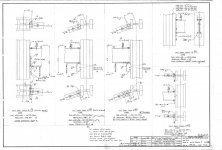
These are the stubs they talk about:

Beam_stubs.jpg


They are the short stubs attached to the northmost beam east of the girder between 44 and 79.

If they are that far, then what makes them so important that the whole report has to be thrown away because NIST didn't consider them for inclusion in the ANSYS FEA?

I found the explanation (by Szamboti) here:

http://aibafs.com/thread/9998/new-standard-deception-nist-report

The NIST WTC 7 report actually claims two potential failure modes to move the girder off its seats.

1. The girder is pushed off its seat at column 79 laterally from east to west by beam expansion.

2. The northmost beam buckles, after pushing against the girder end that cannot translate due to it being between the flanges of column 44, causing the other beams to buckle and rocking the girder off its seats by pulling it back to the east.

[...] In the second case, the lateral support of the beam stubs keeps the northmost beam from being slender and buckling, while also allowing it to deflect the girder to the west, while the girder is restrained by the other beams and putting them in tension, precluding any possibility of them buckling.

But as we have seen, that is of no significance to the walk-off, as the movement of the column to the east introduced the displacement that, together with the expansion of the beams, would cause the center of gravity of the girder to walk off the seat, leading to failure.

Interestingly, these stubs would make that beam provide a leverage for the girder's end in the C79 side to displace more than the beams pushed it. But that's a side note of no relevance here.

So, there, that completes gerrycan's list. None of its points changes the validity of the NIST report in any way.
 
My first point is that you are so intent on disagreement that you fail to carefully consider what it is you are disagreeing with.

NONE of the 7WTC collapse videos showed the lower floors, where even the NIST agrees the main action occurred.


Those lower floors at which the AE911T proposition is that all the PERIMETER columns were explosively severed, over 8 floors?
The collapse was initiated at the building core, and unlike all the loud well advertised building demolitions you like to tout, the implosion was triggered in a largely sealed, sound suppressing environment.

So you disagree with the idea that the perimeter columns were all blown at once thus causing the at g acceleration?

Without actually testing to actually determine what sound levels could be generated from the core of a similar test enclosure, the NIST ran with the self-serving assumption that the generated levels would be comparable to run-of-the-mill demolitions.

Again, no perimeter explosive demolitions.


The NIST never evaluated that peer-reviewed research, just as they chose to ignore eye-witness testimony regarding explosions when it contradicted their chosen hypothesis.
Where ?
... And what does it have to do with sudden, simultaneous demolition of PERIMETER columns?

In spite of the naked falsity of their hypothesis, the NIST claimed that simple roaming office cubicle fires lead to the failure of the those massive core columns and the high speed collapse of the 47-storey 7WTC.

And because those who could and should have disagreed, feared to effectively challenge the government and have their patriotism questioned, the NIST got away with it.
I think you meant roaring office fires. Office fires DO buckle steel.

You probably have little idea about what is involved in sound recording.

Most major Hollywood action films rely on audio that was not part of the video you see.

I do! I have worked in TV broadcast for 20 years having to explain to reporters how to operate their microphones.
Your "ignore a boom" is more correct than you realize.
Perhaps you can duplicate this for us. Surely you have a recording in which there is no hint of a loud sound despite persons supposedly reacting to them.

Yes, in many of those building demolitions, you see and then hear the sharp cracks of mostly perimeter explosives.
There's that bugaboo of mine again. Please confirm your disagreement with AE911T re:perimeter explosives.
High-pitched sounds reverberating from enclosures cleared of sound dampening furnishings, wall coverings, doors, curtains, and windows.
Of course the low pitched harmonics are what travel best and farthest, often propagating better through solid material or even the earth itself.

It is a different story when those explosions are engineered to be as muffled as possible and occurring largely out of view, and shielded by enclosures, a labyrinth of office cubicles, heavily sealed perimeter windows, and an outside cacophony of 9/11 street noise.
What dampened the perimeter column explosives?

Those "ignore a boom" microphones failed to realistically record the proper intensity of what we know were the loud low-pitched sounds of "the planes impacting both the WTC Twin Towers, the subsequent fireball explosions, the falling debris, the collapses of the Twin Towers, and finally the collapse of 7WTC at 5:20 pm on 9/11".
There's your problem. You believe you can equate the crash and deflagration of fuel with the sounds of heavy column shattering explosives.

The NIST's talk of how many decibels of sound should have been generated, does not equate to the sound levels that would be expected to be recorded.
We get it, you disagree but require NIST satisfy your gut feeling.

As shown on 9/11, on more than one occasion, a reporter is seen to stop an interview, turn and react to the explosive sound of a collapsing World Trade Center Tower.
Yep, the sound of collapse would have been attention getting.

Yet, the microphone in their hand only heard the nearby voices.
Collapse sounds also not often recorded in real demolitions which, OTOH, record the explosions preceding collapse.

I do not need to perform that work.

After working in broadcast TV for over 35 years, I am well aware of the characteristics and nature of sound.

For that reason, I would have expected the NIST to support their lame assertions by doing more than consulting in a table of sound generation levels.
[/QUOTE]
I would expect that AT LEAST one video's audio track would support the contention of explosive use that has absolutely no evidence other than witness description of explosive sounding noises.
 
Last edited:
Those lower floors at which the AE911T proposition is that all the PERIMETER columns were explosively severed, over 8 floors?

So you disagree with the idea that the perimeter columns were all blown at once thus causing the at g acceleration?

MM's has recently distanced himself from the idea that *all * vertical support - across the entire building for 8 floors - was necessary to explain the visible outcome (creating, as you suggest, a distance between him and some mainstream Truther beliefs).

MM's claims have fallen apart many times over the years, but this is one example where his revisionism actually brings him *closer* to NIST.

To explain how the facade might fall at ~g over 8 storeys he has now accepted that a core-driven collapse might pull in the perimeter in such a way that the perimeter loses ~all vertical support for that time, which is what NIST said.
 
So, there, that completes gerrycan's list. None of its points changes the validity of the NIST report in any way.

I received a message saying that good old Oystein was promoting a real discussion about Building 7 on the forum that once belonged to the JREF, and what´s more, that he was actually asking the trolls to stay out.

So let´s test this and see what kind of discussion is possible, and let me focus on pgimeno since he has been the one responsible for debating gerrycan.

Before someone is tempted to flood the thread with trolling it should be known that all of my posts are sent directly your own frontman Chris Mohr and his buddy Rick Shaddock.

And since Building 7 is gathering a LOT of interest, I have asked some potential recruits to 9/11Truth to observe this discussion (they are mostly engineers). They all have very specific questions and expect very specific answers.

Now to the matter at hand. The first impression of pgimeno´s responses is a little bit disappointing because they seem to be mostly bare assertions.

So question 1 to pgimeno - topic #1:

As we all know by now the NIST says that once the girder had been displaced 6.25 inches the flange would fold. That´s a nice theory, sounds good. But it does of course rely on the notion that something somehow did the deed, that is the displacement.

So my question to you is, how exactly did this happen according to NIST. That is, how is this explained in NIST´s little final report? I am not interested in what you or others think may have happened, I am asking how this event happened acoording to NIST? So just refer to the relevant chapter of the final report, figures and page numbers etc.
 
As we all know by now the NIST says that once the girder had been displaced 6.25 inches the flange would fold. That´s a nice theory, sounds good. But it does of course rely on the notion that something somehow did the deed, that is the displacement.

You're not starting out well, that's not what is reported. Please recite where they claim this.

Maybe you could get an engineer to explain the report to you. :rolleyes:
 
Last edited:
So my question to you is, how exactly did this happen according to NIST. That is, how is this explained in NIST´s little final report? I am not interested in what you or others think may have happened, I am asking how this event happened acoording to NIST? So just refer to the relevant chapter of the final report, figures and page numbers etc.

It's probably best you just read the the report.
 
It is kind of an odd request. Maybe he's looking for someone to explain the NIST report to him. It is after all not really written for laymen.

It's all a bit weird, what's the bit with Chris Mohr and Rick shaddock about ?
 
It's all a bit weird, what's the bit with Chris Mohr and Rick shaddock about ?
Got me. (although reading ziggi's past work gives me a good idea) :confused:

If Rick is watching: What happened to the $1000 you supposedly gave to Mark Basile for his study?
 
Last edited:
Got me. :confused:

If Rick is watching: What happened to the $1000 you supposedly gave to Mark Basile for his study?

Why has he got ae911 engineers over looking with very specific questions ?

This is a conspiracy forum not The NIST
 
I received a message saying that good old Oystein was promoting a real discussion about Building 7 on the forum that once belonged to the JREF, and what´s more, that he was actually asking the trolls to stay out.

So let´s test this and see what kind of discussion is possible, and let me focus on pgimeno since he has been the one responsible for debating gerrycan.

Before someone is tempted to flood the thread with trolling it should be known that all of my posts are sent directly your own frontman Chris Mohr and his buddy Rick Shaddock.

And since Building 7 is gathering a LOT of interest, I have asked some potential recruits to 9/11Truth to observe this discussion (they are mostly engineers). They all have very specific questions and expect very specific answers.

Now to the matter at hand. The first impression of pgimeno´s responses is a little bit disappointing because they seem to be mostly bare assertions.

So question 1 to pgimeno - topic #1:

As we all know by now the NIST says that once the girder had been displaced 6.25 inches the flange would fold. That´s a nice theory, sounds good. But it does of course rely on the notion that something somehow did the deed, that is the displacement.

So my question to you is, how exactly did this happen according to NIST. That is, how is this explained in NIST´s little final report? I am not interested in what you or others think may have happened, I am asking how this event happened acoording to NIST? So just refer to the relevant chapter of the final report, figures and page numbers etc.

Can't you read NIST? You have to explain why what NIST said happened, can't happen. Then you need to explain how the fantasy of CD is possible. Then you have to explain why no steel was damaged by 911 truth delusional thermite theory which has never been explained, or why there is no damage to any WTC steel from explosives. Where does 911 truth find in their fantasy world of BS, the no product no damage thermite, and the no blast silent explosives.

According to 911 truth, what happened. Why has 911 truth never presented their theory. All 911 truth has is followers saying CD, thermite, explosives. Where do you get the silent explosives?

What are the trolls, the people who fail to show up with evidence for CD? Or are the trolls the ones supporting the lies from 911 truth, with no evidence.

What is 911 truth exactly like a faith based religion?

But the truth is, the OP has been answered by reality based evidence.
The OP -
... -- how can there be 2.25 seconds of free fall at Building 7 without some additional energy source removing 8 stories of structure abruptly from beneath the upper structure?
Where is Deets now?
Why is there free fall of a single point tracked from the roof-line?
Because the interior collapsed first, and was collapsing before the exterior began to fall, thus there was nothing holding up the exterior when the roof-line was seen falling at g.

That is the answer to the OP, and not much you could add.

Why has 911 truth failed to provide evidence for CD? Inside job? Explosives? Thermite?

Did Deets try for a Pulitzer with his evidence for CD? Did he team with a newspaper yet? Have you, don't you have proof of the inside job, proving all debunkers are full of BS, where is your Pulitzer? Because if what you support is true, it is the biggest conspiracy in history, thousand are in on it, and you will be famous when you team with a newspaper and get the Pulitzer exposing all the stuff you knew is true. Oops, you have no evidence, you believe in the 911 truth BS based on, faith. darn, we almost had a Pulitzer Prize winner posting at the forum, except for evidence and a newspaper to break the big story, which was always BS and fantasy based on lies and ignorance.
 
Last edited:
I received a message saying that good old Oystein was promoting a real discussion about Building 7 on the forum that once belonged to the JREF, and what´s more, that he was actually asking the trolls to stay out.

I think you're on the wrong thread.

Oystein started a troll free thread about the complete lack of evidence for thermite.

http://www.internationalskeptics.com/forums/showthread.php?t=289588

You can comment on it here;

http://www.internationalskeptics.com/forums/showthread.php?t=289594

kthnxbi
 
Hello Ziggi, welcome to the forum.


As we all know by now the NIST says that once the girder had been displaced 6.25 inches the flange would fold. That´s a nice theory, sounds good. But it does of course rely on the notion that something somehow did the deed, that is the displacement.
Actually, and just to nitpick, they don't. They say that, but for the beams, not for the girder, though they mention girders failing "in this manner" (which may be interpreted as the failure of the flange as described for beams, but it may also refer generically to a displacement by a distance of half the seat width). But since you concede anyway that that distance is enough, let's not focus on that.


So my question to you is, how exactly did this happen according to NIST. That is, how is this explained in NIST´s little final report? I am not interested in what you or others think may have happened, I am asking how this event happened acoording to NIST? So just refer to the relevant chapter of the final report, figures and page numbers etc.
NIST said in p.482 of NCSTAR 1-9 volume 2 (last sentence in the page) that "eam walk off in the lateral direction was monitored during the analysis". That sentence appears in the description of the analytical model, which also mentions that walk-off in the axial direction was monitored through a control element (I presume that they meant the COMBIN37 one in the illustration).

Then in section 11.3, titled "ANALYSIS RESULTS", they give more details on that monitoring:

The analysis of the structural response of WTC 7 to the effects of elevated temperatures produced a large volume of output data. Results for Floors 2 to 7 and Floors 15 and 16 are not presented as they were subject only to gravity loads and were not subjected to thermal loads. The analysis results for Floors 8 to 14 were first examined graphically for a selected response, such as vertical displacement or strains. Areas of interest were then examined in more detail by listing the results of interest.
(p.489).

Then in the same section, in subsection 11.3.2 (Case B temperatures), p.504, it says: "The following beam and girder failures occurred: [...] On Floor 13 (Figure 11-35), all four of the north-south girders attached to Columns 79, 80, and 81 had failed, due to either buckling or girder walk off of the bearing seat at Columns 79 and 81".

Note that they are not mentioning here the precise mechanism that caused the failure; in the context of a section that reports the results of the ANSYS analysis, the only possible meaning of their words is that they are saying that the FEA produced that result. Nothing more, nothing less. This necessarily means that by that time, the distance between the girder's center and the seat's center at the point where the girder and the seat were when the failure occurred, exceeded a certain predetermined distance, as that's the criterion for determining if that girder walks off the seat or not. And that distance was monitored from ANSYS output, as I've already established above.

At no point in the report do they say that any beam expanded by 5.5" or 6.25". That claim doesn't exist in the report. That distance is indicated as "the distance for walk-off", not "the distance by which the beams expanded".

What they do mention, however, is that "[o]n Floors 10, 11, and 12 (Figure 11-32, Figure 11-33, and Figure 11-34), the girder between Columns 76 and 79 failed due to a tensile weld failure in the knife connection on the west side of Column 79. Temperatures in this region were less than 100 °C on these floors. The tensile force in the connection was due to an eastward lateral displacement of Column 79, which was primarily caused by thermal expansion of the girder between Column 76 and Column 79 at Floor 13". This NECESSARILY indicates a displacement of the seat to the east in ANSYS. No way around it. The girder between 76 and 79 was next to the seat.

So, that's primarily what NIST is saying here: that the simulation showed the girder walking off the seat. They don't point to exact reasons.

They proceed to interpret the results in the next section, 11.4: "DISCUSSION OF RESULTS". They repeat this (p.525, top): "By 4.0 h of heating, there was substantially more damage in the WTC 7 structural system, particularly the loss of lateral support to Column 79 after the failure of girder connections at Floors 10, 11, 12, and 13. [...] The girder between Columns 44 and 79 had walked off the bearing seat at Column 79 on Floor 13, and all 4 bolts had failed on Floor 14 and two to three bolts had failed on Floor 12 at this seated connection".

Later in this section, in page 527, they say: "Walk off occurred when beams that framed into the girders from one side thermally expanded and the resulting compressive forces in the beams pushed laterally on the girder from one side, sheared the bolts at the seated connection, and then continued to push the girder laterally until it walked off the bearing seat". Note that it doesn't say what happened to the seat. That sentence is followed by: "A girder was considered to have lost vertical support when its web was no longer supported by the bearing seat. The bearing seat at Column 79 was 11 in. wide. Thus, when the girder end at Column 79 had been pushed laterally at least 5.5 in., it was no longer supported by the bearing seat". That distance was later corrected to 6.25 in.

Note that:
1. They don't say that the beams expanded that much. They only say that when that situation happened, the girder would no longer be supported.
2. This is an interpretation of the results, not the results themselves.
3. For discussion purposes, it's reasonable to consider that since the column displaced east, they are talking about the main factor that displaced the girder from the seat and not each and every factor.

The mention to the displacement of the column comes in the paragraph next to it: The temperature of the girder between Columns 76 and 79 on Floor 13 was sufficient to displace Column 76 to the west and Column 79 to the east. The forced displacements at Floors 10, 11, and 12 created a tensile load in the girder knife connections to the columns, and failed the connection fillet weld to the column". Note how they mention column 79 displacing east.

So, are they guilty of not being specific enough about the pushing of the column to the east, as they said happened in the simulation, in the fragment of the discussion related to the girder walk-off? Yes, definitely. That doesn't invalidate the report, however. That's focusing too much in the primary cause and forgetting about the secondary ones, that certainly happened. But they are not lying or misrepresenting the primary cause of the failure. That also does not invalidate the initiating event experienced in their FEA in any possible way.

Hope I have made the point clear enough to you.
 
No, it doesn't. "Frankel 1985" is a reference. It's listed in the REFERENCES section. All the other drawings figures contain the same text "Frankel 1985".

Let me repeat the post that you must have missed:

_____________________________


And you surely can support that claim, right?

While you get on it, let me paste you some quotes and the REFERENCES section in NCSTAR 1-9 Chapter 2 p.15.

The quotes:

The structural design drawings (Cantor 1985) specified design forces for connections and suggested a typical detail, but did not show specific connection designs; this was standard practice on the U.S. east coast. The erection drawings (Frankel 1985) indicated that design shear forces for the typical beam and girder connections were to be taken from the American Institute of Steel Construction (AISC) beam design tables for beams without shear studs, using 1.5 times those forces for beams with shear studs. The fabrication shop drawings (Frankel 1985a) were used to confirm information about floor connections, which NIST obtained from the structural and erection drawings and from photographs taken during renovations conducted during 1989 to 1990 on a number of floors. [...]
And the references (p.45):
2.7 REFERENCES
[...]
Cantor 1985. Irwin G. Cantor P.C., Structural Engineers, Structural Drawings, 7 World Trade Center.

Cantor 1988. Irwin G. Cantor P.C., Structural Engineers, Structural Drawings for Salomon Brothers 7
 World Trade Center Headquarters.

Frankel 1985. Frankel Steel Limited, Erection Drawings, 7 World Trade Center.

Frankel 1985a. Frankel Steel Limited, Fabrication Shop Drawings, 7 World Trade Center (drawing set was not sealed).

And in page 359-360:

8.11 REFERENCES

[...]
Frankel 1985. Frankel Steel Limited, Erection Drawings, 7 World Trade Center.

Frankel 1985a. Frankel Steel Limited, Fabrication Shop Drawings, 7 World Trade Center (drawing set was not sealed).

Are they talking about the same thing? Let's see the captions of some figures.

[qimg]http://www.formauri.es/personal/pgimeno/xfiles/11-s/Frankel-1985-collage.jpg[/qimg]

Whatever the correct drawing number is, it must contain a hell of a lot of information! :rolleyes:


Oh Gerry, Gerry... Why don't you listen when I tell you to drop that strategy?

Seriously, stop with the ad-hom. It backfires on you every time.

Do you not agree that this would be the correct drawing to reference for the column 79 connection?

attachment.php
 

Attachments

  • 9114jpg.jpg
    9114jpg.jpg
    91.5 KB · Views: 117
And since Building 7 is gathering a LOT of interest, I have asked some potential recruits to 9/11Truth to observe this discussion (they are mostly engineers). They all have very specific questions and expect very specific answers.

Software, Central Heating or Steam Locomotive Engineers?
 
Do you not agree that this would be the correct drawing to reference for the column 79 connection?

[qimg]http://www.internationalskeptics.com/forums/attachment.php?attachmentid=32605&stc=1&d=1425175290[/qimg]
That's the one they say they used, as I already pointed out:

In further support of the fact that "(Frankel 1985)" was a bibliographic reference and not a drawing number, I have found this 911blogger post: http://911blogger.com/news/2013-11-06/nist-replies-stiffeners-inquiry where NIST replies to a couple questions by (Jonathan?) Cole. (Side note: the other question replies to why the stiffener plates weren't considered, if anyone's interested).

A snippet:
A) In NCSTAR 1-9, which design drawing was used to create:

Figure 8-21?.................1091, 9114Figure 8-23?.................1091, 3004, 9114
Figure 8-26?.................1091, 3004, 9114
Figure 8-27?.................E12-13
Figure 11-16?...............E12-13, E120
Figure 11-19?...............None
Figure 12-24?..............1091, 9114
Figure 12-25?..............1091, 9114, E12-13


Note the highlighted, as it's one of the pictures in my "collage". A caption subtitle says "Based on fabrication shop drawings (Frankel 1985)" exactly as in figure 11-15. The caption itself says, "Figure 8-21. Seated connection at Column 79".

So, gerrycan, with this new information I think I am now able to reply to your question, as the diagram in figure 8-21 is essentially equivalent to that in figure 11-15 which is the one you asked about.


The (likely) answer is drawings 1091 and 9114. I say likely because apparently Cole didn't ask about figure 11-15 specifically. Shame, but at least Cole did realize that the 1985 in the captions did not mean a drawing number, it meant a bibliographic reference.
 
That's the one they say they used, as I already pointed out:

So why does the connection not match with the drawing for either of their models. LSDYNA has the connection modelled to match C81, and the ANSYS one doesn't account for some elements.
 
So why does the connection not match with the drawing for either of their models. LSDYNA has the connection modelled to match C81, and the ANSYS one doesn't account for some elements.
We haven't started to discuss LSDYNA. The link I posted shows the reasons for the ANSYS simulation to omit the element in question you are referring to.

I'll admit to start discussing LSDYNA, as soon as you admit the seat moved east and therefore the distance the beams needed to push the girder in order to cause walk-off is reduced.

Do you admit this?

If so, we can move on to the next chapter.

If not, I won't admit to this gish-gallop.
 
Status
Not open for further replies.

Back
Top Bottom