• Security incident: ISF was recently accessed by intruders. Please change your password, and change it anywhere else you used it. Read more

Vera C. Rubin Observatory is Fully Operational

Puppycow

Penultimate Amazing
Joined
Jan 9, 2003
Messages
34,471
Location
Yokohama, Japan
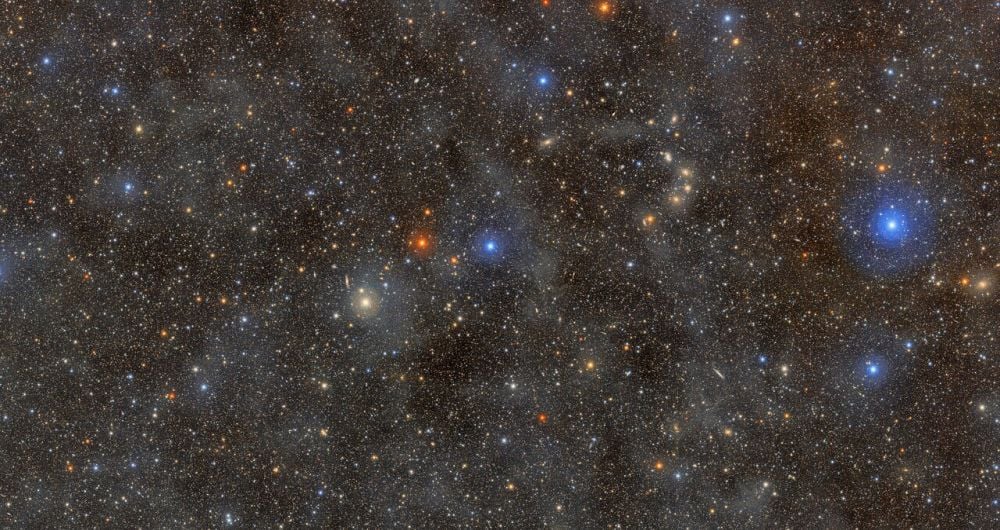
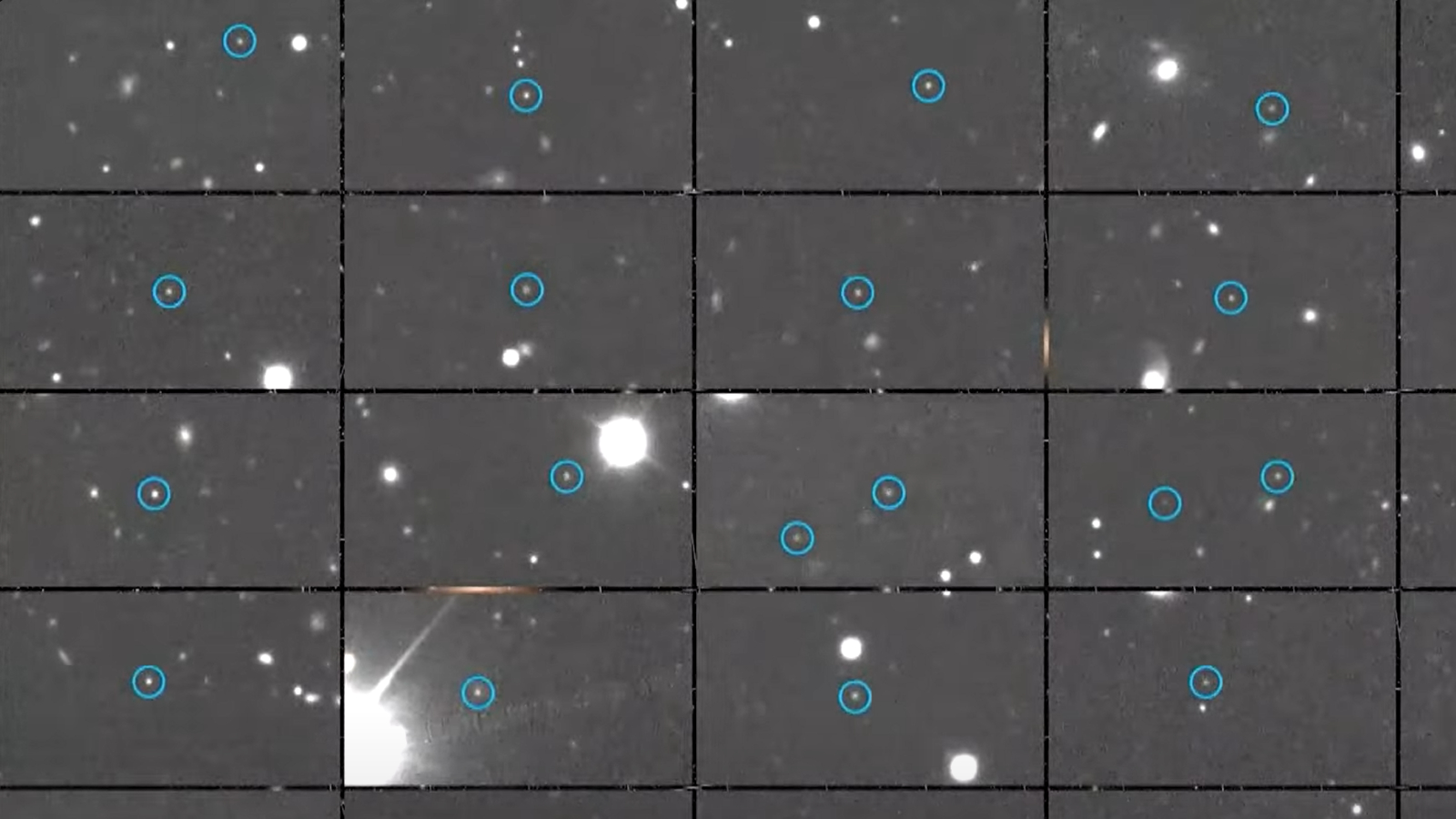
Should be some interesting new images and new discoveries coming from this telescope in Chile. The first batch of images has just been released. It has already discovered over 2,000 new asteroids. This is what it looks like:

960px-Iotw2229a_-_Night_Light.jpg


Here's their homepage. Worth a look:


Here's an image you can zoom in on:

 
Another news story:

After decades of preparation, the Vera C. Rubin Observatory released its first images to the world in a live stream on Monday (June 23). The photos, taken by the world's largest digital camera, are highly-detailed and show relatively large areas of the sky.
The full image includes 10 million galaxies in and around the Virgo Cluster, many of which have never been seen before, Zeljko Ivezic, Project Scientist at Rubin and Deputy Director of the observatory's Large Synoptic Survey Telescope (LSST) construction project, said during the live stream.
In the observatory's first year of operation, it will gather more data than all other existing optical observatories combined, according to a statement from the observatory.
It's going to be a lot of new data. "More data than all other existing optical observatories combined."
The images are so clear too. They look to be equal to or maybe even better than the Hubble Space Telescope. They have since figured out new techniques to improve the focus for ground-based telescopes by correcting for atmospheric distortions.
 
What makes this telescope different from other telescopes?


It achieves this through its unique three-mirror design. Light enters the telescope from the night sky, hits the primary mirror (8.4m diameter), is reflected onto the secondary mirror (3.4m) back onto a third mirror (4.8m) before entering its camera.

The mirrors must be kept in impeccable condition. Even a speck of dust could alter the image quality.

The high reflectivity and speed of this allow the telescope to capture a lot of light which Guillem Megias, an active optics expert at the observatory, says is "really important" to observe things from "really far away which, in astronomy, means they come from earlier times".

The camera inside the telescope will repeatedly capture the night sky for ten years, every three days, for a Legacy Survey of Space and Time.

At 1.65m x 3m, it weighs 2,800kg and provides a wide field of view.

It will capture an image roughly every 40 seconds, for about 8-12 hours a night thanks to rapid repositioning of the moving dome and telescope mount.

It has 3,200 megapixels (67 times more than an iPhone 16 Pro camera) and would require 400 Ultra HD TV screens to show a single image.
 
I've been digging the pics since first published. Color accuracy will allow much finer distance estimates and group galaxies and other structures more accurately. So cool. The Atacama desert is in itself also so cool.
 
I'm confused by this passage:

"It achieves this through its unique three-mirror design."

Achieves what? The preceding paragraph seems unrelated.

Also, what is unique about its three mirror design? According to Wikipedia, three-mirror telescopes are not new. This one is not the first.

And this passage:


"The high reflectivity and speed of this allow the telescope to capture a lot of light..."

What is "this"? Again the preceding passage offers no clue.

And why does speed matter? Speed of what?

It almost seems like the original copy was longer, and the editor did a hatchet job.
 
It almost seems like the original copy was longer, and the editor did a hatchet job.
Maybe. It could be some sentences were inserted or moved. If you remove "Each detail of the observatory's design exhibits similar precision." it actually seems to link up better. (And it's also not entirely clear what "similar" refers to there.)

Anyway, I think you can still fill in the blanks using some common sense to decipher the general gist of it. I agree it's not the best edited article ever.
 
The three mirror design is quite unique for survey telescopes. If you look at previous ground based survey telescopes (e.g. SDSS, PanSTARRS, Blanco+DECam, HSC) they are either one or two mirrors. The three mirror telescopes that exist today are mostly space based, with much smaller fields of view and long focal lengths. The only comparable one is the Space Surveillance Telescope, which is much smaller and doesn't do astronomy.

Speed in terms of optics related to the ratio of the focal length to the diameter. A faster telescope or camera lens means the light is more concentrated on the detector. Speed can also mean survey speed, it is proportional to how fast a telescope can survey some area to some limiting sensitivity. It's the field of view times the collecting area. Rubin is more than 20 times faster than SDSS (the imager) or PanSTARRS. Compared to Some more recent survey cameras (DECam and HSC), Rubin is only 9 to 3 times faster. Which seems less impressive, but these instruments were only used a fraction of the time, and so couldn't reach their full potential. Rubin is really more than an order of magnitude faster than any previous survey telescope, which is why it can revisit the sky fairly rapidly to study transients and variability. It will also go much deeper over a huge fraction of the sky.
 
Here's another video about the telescope. This one is from Dr. Becky.


Less about the construction of the telescope itself, and more about what sort of astronomy it will do.

The comparison with the images from the earlier Sloan survey shows how much more this telescope reveals than the previous sky survey telescope. For example, some faint galaxies appear that simply didn't show up with the Sloan telescope. By faint I mean not super far away in astronomical terms but just thin.
 

ETA: This one is from Astrum, which is a decent channel in my experience. There are 9 people listed in the credits of the video description, so it's not some fly-by-night crap channel.
 
Last edited:
When I posted this thread originally, I was (slightly) mistaken. The telescope was not yet "fully operational". That was just a teaser I guess. After the original set of data was released as a sort of preview, I guess it was taken offline again to complete (I don't know what, exactly). But NOW, it is finally back online again, as this press release and Space Bites video informs us.

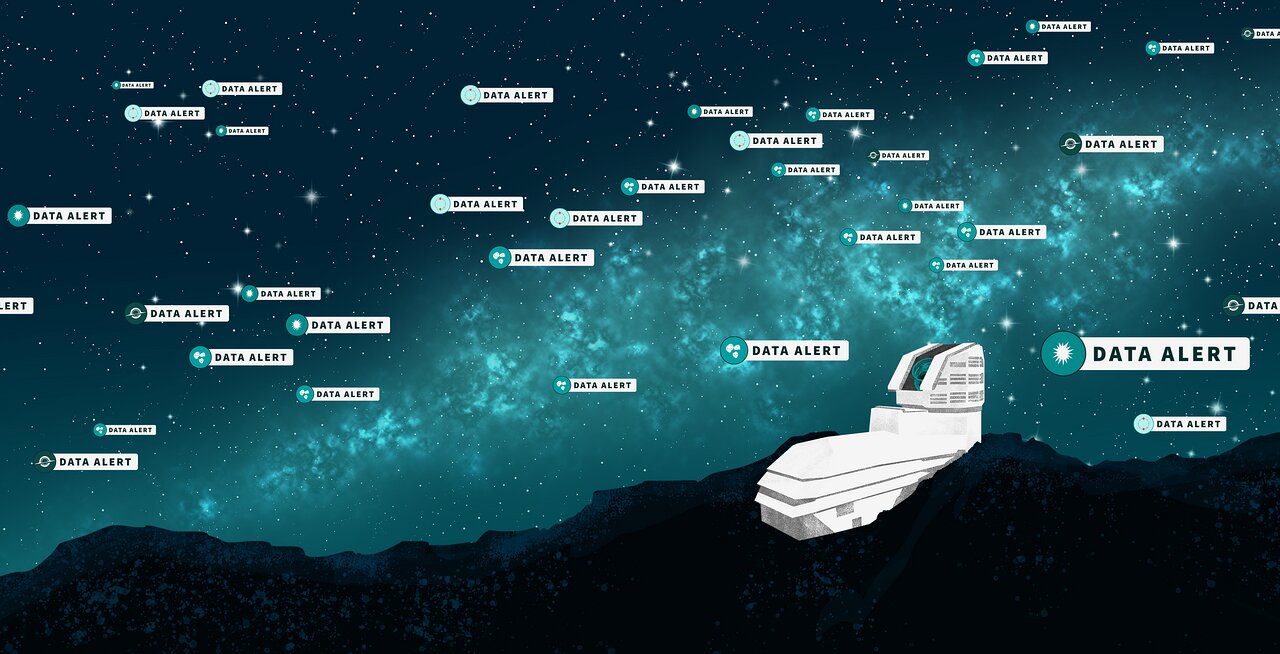
NSF–DOE Vera C. Rubin Observatory, jointly funded by the U.S. National Science Foundation (NSF) and the U.S. Department of Energy's Office of Science (DOE/SC), has released its first alerts documenting astronomical events spotted by the observatory. Rubin issued 800,000 alerts the night of 24 February. These alerts called scientists’ attention to new asteroids, exploding stars, and other changes in the night sky. This milestone marks the launch of a system expected to eventually produce up to seven million alerts per night.

Among the first alerts are detections of supernovae, variable stars, active galactic nuclei, and objects whizzing around our Solar System, such as asteroids. The beginning of scientific alerts is one of the last major milestones before Rubin Observatory begins its Legacy Survey of Space and Time (LSST) later this year. During the LSST, Rubin will scan the Southern Hemisphere sky nightly for ten years to precisely capture every visible change using the largest digital camera ever made. These alerts will chronicle the treasure trove of scientific discoveries that Rubin will make through its time-lapse record of the Universe. In the first year of the LSST, Rubin is expected to capture images of more objects than all other optical observatories combined in human history.

 
Last edited:
I was wondering whether there was anything new coming from the Rubin Observatory. Went to their website and saw this:

Severe Storms Impacting Rubin Operations in Chile
In July 2026, Chile was impacted by an exceptionally powerful storm with heavy precipitation and widespread flooding. Recovery efforts at NSF NOIRLab’s mountain facilities, which include NSF–DOE Rubin Observatory, are underway. Ongoing status updates are available on this NOIRLab web page.
The latest:
28 August 2026

It has been another week of steady progress in restoring NSF NOIRLab’s observing sites in Chile following the severe storms. Improved road access enabled a critical fuel delivery at Cerro Pachón. Minibuses are now cleared to carry personnel to the summit, enabling overnight stays.

At Gemini South, the backup generator is functional and providing power during daily access to the telescope. With road, fuel, water, and hotel services improving, work is continuing toward the telescope’s planned shutdown.

Equipment checks at NSF–DOE Vera C. Rubin Observatory continue in preparation for previously planned engineering downtime. Cerro Pachón-wide recovery efforts also continue around the site, including repairs on roads, power, and Internet lines.

At the SOAR Telescope, the team is preparing to begin a remote-observing pilot, which could reduce the number of personnel required on the mountain while maintaining operational support.

Liquid nitrogen has been delivered to the NSF Víctor M. Blanco 4-meter Telescope, which will allow the Dark Energy Camera (DECam) to begin cooling and testing. The team will continue engineering activities as they work toward a return to operations.
 
So no direct damage to the telescope!

I was thinking about Vera and the new Roman telescope, they are going to be producing so much data over their lifetimes that it could keep literal generations of astronomers busy even if no other new telescopes ever come online.
 

ISF - Join now!

Every member here is approved by hand. No bots, no spam, just people who care about evidence and honest debate.

Membership is free!

Create your free account

Back
Top Bottom