
-
Security incident: ISF was recently accessed by intruders. Please change your password, and change it anywhere else you used it. Read more
You are using an out of date browser. It may not display this or other websites correctly.
You should upgrade or use an alternative browser.
You should upgrade or use an alternative browser.
Thermal expansion examples
- Thread starter Confuseling
- Start date
-
- Tags
- nist thermal expansion

Confuseling
Irreligious fanatic
- Joined
- Feb 26, 2008
- Messages
- 1,243
Water is one of the few substances that expands as it freezes, so Ice takes up more room than water.
So expansion from heating does not apply to Ice, thermal expansion occurs when Ice is cooled, so an Ice age is the thermal expansion of water, and global warming is themal contraction and filling of he ocean basin.
Ok - I can follow you in certain frames. Snowball Earth, for example, would be a thermal expansion.
But that notwithstanding, thermal expansion still occurs at present (alongside thermal contraction) as the Earth heats.
I would have to assume that there's an awful lot more ocean than there is ice / snow, and in light of the above quotes, a net thermal expansion.
Do you not agree? What do you make of the IPCC quotes?
ETA:
Here we have an estimate that 97.5% of Earth's water is salt, and of that excluded 2.5%, about 70% is frozen. Not a lot.
http://www.ec.gc.ca/water/descrip/nature/prop/a2f2e.htm
Last edited:
defaultdotxbe
Drunken Shikigami

- Joined
- Jul 30, 2006
- Messages
- 7,474
the fuselage of an SR-71 Blackbird:
http://en.wikipedia.org/wiki/SR-71#Fuselage
To allow for thermal expansion at the high operational temperatures the fuselage panels were manufactured to fit only loosely on the ground. Proper alignment was only achieved when the airframe warmed up due to air resistance at high speeds, causing the airframe to expand several inches. Because of this, and the lack of a fuel sealing system that could handle the extreme temperatures, the aircraft would leak JP-7 jet fuel onto the runway before it took off. The trail of leaking fuel would often be ignited from the engine exhaust, with the effect that the plane's takeoff would be accompanied by a streak of fire trailing it down the runway.
http://en.wikipedia.org/wiki/SR-71#Fuselage
Jontg
The Bear Skeptic

- Joined
- Oct 20, 2004
- Messages
- 1,002
You sick, sick puppy! Bad puppy!

*whine*
Horatius
NWO Kitty Wrangler

- Joined
- May 9, 2006
- Messages
- 29,691
Beat ya to it.
Although I left off the part about the trail of fire, since it was unsourced and seemed a bit too Die Hard II for a serious discussion.
A W Smith
Philosopher

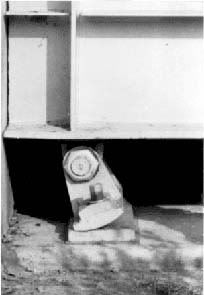
note this bridge girder smack up against the bridge abutment over its rocker bearing
Thermal expansion and WTC7
So I read chapter 11 of the NIST WTC7 report and made some notes:
CHAPTER 11
First model up to floor 16:
101,357 elements
93,413 nodes
9961 'break elements'
11.2.7 Boundary Conditions and Loads
"The gravity loads were applied as concentrated forces to each column at Floor 16".
11.3.1
Axial column stresses … low.
(Very good - I have done many FEAs and it seems the WTC7 structure was low stressed = well built!).
11.3.2 Analysis …
… damages and failures surrounding Column 79
Building response at 3.5 h
After 3.5 h of heating there were failures at …. Floor 12 had thermally induced damage …
Fin connections failed … due to thermal expansion in the beams, by shearing the bolts …
… The beams had a weld failure … lost vertical support when all connection bolts were sheared.
The … beams … had connection failures (i.e., all the bolts were sheared) … which were induced by thermal expansion of the beams.
Building response at 4.0 h
Summary (p. 504)
After 4.0 h … there were considerably more failures of …
After 4.0 h … Columns 79, 80 and 81 had lost lateral support … at Floor 13. …
Columns 79, 80 and 81 had lost lateral support at one or more floors (sic).
11.6 SUMMARY …
The failures … were caused by … structural responses to heating.
… thermal expansion … caused axial forces … which led to … connection failures: bolt shear failure, … failure of … connection welds.
… buckling due to … lateral displacement due to thermal expansion … and increasing axial loads due to thermal expansion.
Comments:
It appears NIST has made a FEA model that is loaded with gravity loads. The forces and stresses in all elements are then very low, i.e. the structure is good.
Then NIST models that some elements are heated up (to simulate a fire) and NIST reports what happens: Forces (and thus stresses) increase in the elements (sic) and bolted and welded connections start to fail (bolts sheared off and welds are broken)!!
It seems all local failures of connections and parts are due to thermal expansion of the structural parts involved.
It is simply not possible. Evidently the whole structure expands due to heat and the forces remain virtually the same in the structural connections before heating and when heated. It is very easy to verify in a laboratory:
Take a steel bar/beam, arrange it with bolted connections at both ends that in turn are fixed to walls. Heat the steel bar/beam … and the bolts will not shear off! Evidently the steel bar/beam expands by heating (thermal expansion) but the expansion is so small that the forces in the bolts are hardly affected.
Actually a fair amount of force and energy is required to shear off a bolt and this force and energy cannot be provided by heating the attached part.
Conclusion:
The FEA software used by NIST in chapter 11 is simply wrong.
So I read chapter 11 of the NIST WTC7 report and made some notes:
CHAPTER 11
First model up to floor 16:
101,357 elements
93,413 nodes
9961 'break elements'
11.2.7 Boundary Conditions and Loads
"The gravity loads were applied as concentrated forces to each column at Floor 16".
11.3.1
Axial column stresses … low.
(Very good - I have done many FEAs and it seems the WTC7 structure was low stressed = well built!).
11.3.2 Analysis …
… damages and failures surrounding Column 79
Building response at 3.5 h
After 3.5 h of heating there were failures at …. Floor 12 had thermally induced damage …
Fin connections failed … due to thermal expansion in the beams, by shearing the bolts …
… The beams had a weld failure … lost vertical support when all connection bolts were sheared.
The … beams … had connection failures (i.e., all the bolts were sheared) … which were induced by thermal expansion of the beams.
Building response at 4.0 h
Summary (p. 504)
After 4.0 h … there were considerably more failures of …
After 4.0 h … Columns 79, 80 and 81 had lost lateral support … at Floor 13. …
Columns 79, 80 and 81 had lost lateral support at one or more floors (sic).
11.6 SUMMARY …
The failures … were caused by … structural responses to heating.
… thermal expansion … caused axial forces … which led to … connection failures: bolt shear failure, … failure of … connection welds.
… buckling due to … lateral displacement due to thermal expansion … and increasing axial loads due to thermal expansion.
Comments:
It appears NIST has made a FEA model that is loaded with gravity loads. The forces and stresses in all elements are then very low, i.e. the structure is good.
Then NIST models that some elements are heated up (to simulate a fire) and NIST reports what happens: Forces (and thus stresses) increase in the elements (sic) and bolted and welded connections start to fail (bolts sheared off and welds are broken)!!
It seems all local failures of connections and parts are due to thermal expansion of the structural parts involved.
It is simply not possible. Evidently the whole structure expands due to heat and the forces remain virtually the same in the structural connections before heating and when heated. It is very easy to verify in a laboratory:
Take a steel bar/beam, arrange it with bolted connections at both ends that in turn are fixed to walls. Heat the steel bar/beam … and the bolts will not shear off! Evidently the steel bar/beam expands by heating (thermal expansion) but the expansion is so small that the forces in the bolts are hardly affected.
Actually a fair amount of force and energy is required to shear off a bolt and this force and energy cannot be provided by heating the attached part.
Conclusion:
The FEA software used by NIST in chapter 11 is simply wrong.
Last edited:
mrbaracuda
Banned
- Joined
- Dec 6, 2007
- Messages
- 3,797
Evidently the whole structure expands due to heat and the forces remain virtually the same in the structural connections before heating and when heated. It is very easy to verify in a laboratory:
Once you're back from your sooper sekret lab Batman, please let us know and present us with your working theory on what happened. Thank you.
Confuseling
Irreligious fanatic
- Joined
- Feb 26, 2008
- Messages
- 1,243
...
It is simply not possible. Evidently the whole structure expands due to heat and the forces remain virtually the same in the structural connections before heating and when heated. It is very easy to verify in a laboratory:
...
Are you actually trying to assert that the whole thing just evenly gets a couple of feet bigger? That's special.
Publish, Heiwa. Publish, and be damned.
Conclusion:
The FEA software used by NIST in chapter 11 is simply wrong.
Correction, the software is correct but the input to it provided by NIST is incorrect.
It seems some internal nodes are fixed (cannot move in any direction - held by an invisible hand), i.e. the structure or rather some parts are prevented from displacing. Then thermal expansion of a local member may cause failure of, e.g. a connection.
But in reality there are no fixed internal nodes in a structure. You heat any member and the whole structure deforms elastically and no local high forces, stresses of failures will occur.
So Chapter 11 is pure disinformation.
Are you actually trying to assert that the whole thing just evenly gets a couple of feet bigger? That's special.
Publish, Heiwa. Publish, and be damned.
I will, of course. Using clear thinking, laymen's terms, adapted for children, as usual. Popular reading.
And the whole thing actually expands a foot or so in various directions due heat. Quite easy to simulate using FEA. But no big forces develop anywhere causing failures.
Confuseling
Irreligious fanatic
- Joined
- Feb 26, 2008
- Messages
- 1,243
I will, of course. Using clear thinking, laymen's terms, adapted for children, as usual. Popular reading.
And the whole thing actually expands a foot or so in various directions due heat. Quite easy to simulate using FEA. But no big forces develop anywhere causing failures.
Although I commend you for attempting to convey your ideas to laypeople (children included), would it not be more appropriate to explicate so unorthodox a position - particularly when it has so many safety critical implications - in a clear, unambiguous, and therefore necessarily technical manner, first?
Surely the engineering community needs to know this before its kids do?
ETA: And additionally, internal nodes may not be bound, but what about the foundations? Does a relatively poorly heat conducting object under uneven heating need to be bound to something in order to deform?
Last edited:
Although I commend you for attempting to convey your ideas to laypeople (children included), would it not be more appropriate to explicate so unorthodox a position - particularly when it has so many safety critical implications - in a clear, unambiguous, and therefore necessarily technical manner, first?
Surely the engineering community needs to know this before its kids do?
ETA: And additionally, internal nodes may not be bound, but what about the foundations? Does a relatively poorly heat conducting object under uneven heating need to be bound to something in order to deform?
The foundation nodes at floor 0 are evidently fixed. But the initial, alleged, structural, local failures by NIST occurred much higher up, where the structure/nodes were free to expand and displace preventing huge forces due to thermal expansion to develop. The NIST faiures could simply not develop due to fire/heat. They are just fantasy!
Then we have many strange failures of really solid members that NIST has not considered: http://www.911blogger.com/node/17445 . Thermal expansion?
I do not consider my observations unorthodox. Most people I know wonder about the WTC7 demolition. I think the NIST idea 'thermal expansion' is unorthodox.
Safety (at sea) is my business. Many end users cannot read or write, so I try to keep it simple. Quite a challenge.
Grizzly Bear
このマスクに&#
The only major failures I see in these images are bolt failures where two column parts met:Then we have many strange failures of really solid members that NIST has not considered: http://www.911blogger.com/node/17445 . Thermal expansion?
http://img504.imageshack.us/my.php?image=blg7002py7.jpg
http://img530.imageshack.us/my.php?image=blg7003vq2.jpg
This one looks like cleanup was already under way:
http://img391.imageshack.us/my.php?image=blg7009ix9.jpg
Using cherry picked pictures... you should know better than that Heiwa
X
Slide Rulez 4 Life

- Joined
- Oct 17, 2007
- Messages
- 4,127
It seems all local failures of connections and parts are due to thermal expansion of the structural parts involved.
It is simply not possible. Evidently the whole structure expands due to heat and the forces remain virtually the same in the structural connections before heating and when heated. It is very easy to verify in a laboratory:
Take a steel bar/beam, arrange it with bolted connections at both ends that in turn are fixed to walls. Heat the steel bar/beam … and the bolts will not shear off! Evidently the steel bar/beam expands by heating (thermal expansion) but the expansion is so small that the forces in the bolts are hardly affected.
Actually a fair amount of force and energy is required to shear off a bolt and this force and energy cannot be provided by heating the attached part.
Conclusion:
The FEA software used by NIST in chapter 11 is simply wrong.
Bwahahahahahahahaha!
That is my professional (as near as a student can call it porfessional) opinion.

Something is flawed in you thinking.It is simply not possible. Evidently the whole structure expands due to heat and the forces remain virtually the same in the structural connections before heating and when heated. It is very easy to verify in a laboratory:
Are you sure the jumping kids on the bed should not be used as an analogy for thermal expansion?
Confuseling
Irreligious fanatic
- Joined
- Feb 26, 2008
- Messages
- 1,243
The natural assumption of the majority of the engineering community will be that NIST's is the current best hypothesis - for that reason alone your position is unorthodox.
They may well be wrong. You may well be right. It is even possible that although you are right, you cannot publish - institutional bias, conservatism, whim, or prejudice may be stacked against you.
But the point remains - this is a safety issue. If you truly believe in your hypothesis, then save the popularisation for later, and do everything presently within your power to get it described in the most general and technical way your mind is capable of. People's lives depend on it.
They may well be wrong. You may well be right. It is even possible that although you are right, you cannot publish - institutional bias, conservatism, whim, or prejudice may be stacked against you.
But the point remains - this is a safety issue. If you truly believe in your hypothesis, then save the popularisation for later, and do everything presently within your power to get it described in the most general and technical way your mind is capable of. People's lives depend on it.
The natural assumption of the majority of the engineering community will be that NIST's is the current best hypothesis - for that reason alone your position is unorthodox.
They may well be wrong. You may well be right. It is even possible that although you are right, you cannot publish - institutional bias, conservatism, whim, or prejudice may be stacked against you.
But the point remains - this is a safety issue. If you truly believe in your hypothesis, then save the popularisation for later, and do everything presently within your power to get it described in the most general and technical way your mind is capable of. People's lives depend on it.
Yes, it is a safety issue and NIST's contribution is nil. WTC7 didn't collapse due to 'thermal expansion' and would not have collapsed due to local fires. Present building standards ensure just that. NIST is just covering up the real cause, whatever it can be, criminal CD? The performance of Shyman Sunder is pathetic. But this is the world we live in! Not very safe. You may be the next in line!
http://www.salon.com/opinion/greenwald/2008/08/30/police_raids/
It seems the evil forces are attacking people that can read, write and think.
DGM
Skeptic not Atheist

Heiwa:
Local fires would not expand the whole structure evenly. You are the most intellectually dishonest person I have ever encountered. Fortunately for you children and "truthers" can't spot your dishonesty so you still have some credibility (among the ignorant)
Local fires would not expand the whole structure evenly. You are the most intellectually dishonest person I have ever encountered. Fortunately for you children and "truthers" can't spot your dishonesty so you still have some credibility (among the ignorant)
Last edited:
Newtons Bit
Penultimate Amazing

- Joined
- Apr 12, 2007
- Messages
- 10,049
Heiwa:
Local fires would not expand the whole structure evenly. You are the most intellectually dishonest person I have ever encountered. Fortunately for you children and "truthers" can't spot your dishonesty so you still have some credibility (among the ignorant)
Though he is intectually dishonest, I think this error of his is based on a concept known as "not knowing wtf he's talking about".