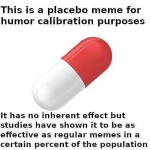
No, but the question is what exactly those nocebo effects are. From arthwollipot's link, but a comment, not the article itself:If there is no such thing as a placebo effect then does that mean that there is no such thing as a nocebo effect?
* In this context, symptoms would be a better word than effects.Rogue Medic
Nocebo effects can be very common. OTOH, the adverse effects are all the effects* that participants noticed and recorded, so they may not be due to the placebo (nocebo), but just the ordinary symptoms that come and go as part of daily life. They seem relevant because the researchers require the participants to record anything that might be a symptom.
As with asymptomatic infections during the pandemic, what is a symptom to one person is not a symptom to another - and what is a symptom during a study is just an ordinary part of life outside of the study.
In some (probably many) cases, it may be a question of misattribution: You got vaccinated and felt bad, the next day (for whatever reason), couldn't sleep, (or slept longer than you usually do), and now you attribute it to the vaccination.
This is similar to some cases of the Havana 'syndrome' where some people come down with all kinds of actual physiological symptoms, many of them with well-known causes, but in the context of the 'syndrome' narrative, the symptoms are attributed to imaginary attacks with 'directed energy weapons' (DEWs).
See Joy's story, as told by 60 Minutes and The Insider: post 2,447, 2,455, 2,458 in the 'syndrome' thread. Joy's disease is a fairly typical case of semicircular canal dehiscence/Minor's syndrome, but she attributes it to something else, the alleged DEW attacks, and the media tells her story without investigating it properly, i.e without consulting (unbiassed) medical experts.
See also Vaccine Adverse Event Reporting System (VAERS) (Wikipedia) and how it has been abused by anti-fvaxxers.
Last edited: