Tesla would have a brilliant idea one day, and then put forward pure crackpottery the next.
This is one of the hallmarks of a genius.
No it's not. That's a popular, Hollywood image of genius, but lots of geniuses never
put forward their crackpot ideas. They may
explore them, but there's a difference between exploring an unconventional notion and becoming (and remaining) convinced of crackpot ideas. Tesla had a tendency to do the latter.
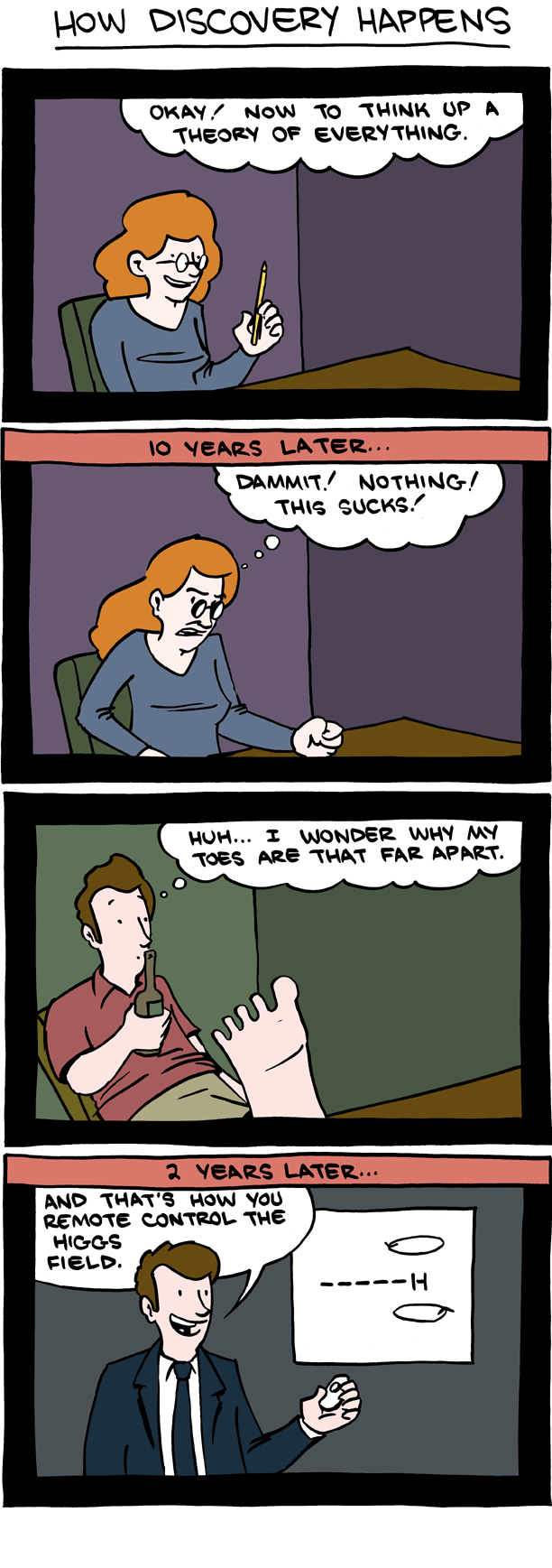
If you wait around to have the perfect idea, you wait a long time. If you're willing to pursue any idea and you have lots of ideas then some of them will be worthwhile.
Maybe. Again, that's the Hollywood version of genius. People differ, and some work better if they focus on a particular issue, while others work better if they let their minds wander. But in Tesla's case, the problem wasn't the wandering mind; it was latching onto incorrect notions and
refusing to give them up.
I would say that Tesla was a better scientist than Edison, but neither of them was really a scientist. They were both closer to being engineers. Extraordinary engineers, true, but more engineers than scientists. In fact Tesla rejected a lot of modern physics even as it was being proven true. He was a genius when it came to electricity, but for the big-picture stuff, he was too latched on to his own preconcieved notions. Almost the opposite of what you were suggesting.
Of course, this makes him a folk hero among the type of crackpots who hope to overturn all of modern physics without understanding it. (A category we regularly see here on JREF.) Unfortunately, it's his crackpot notions that make him a hero to the crackpots, not the rest of his work, which is what makes him a hero to the rest of us. Which is why he remains a controversial figure.
(His crippling social disorders did him no favor either--and again, those are not the marks of a genius. Those are the marks of a Hollywood "genius".)




 That's the beauty of The Oatmeal.


