William Parcher
Show me the monkey!

- Joined
- Jul 26, 2005
- Messages
- 27,654
How much Coke do you have to drink to get diabetes?


It depends.How much Coke do you have to drink to get diabetes?


About 700 mL"24 ounces of sugary soda"... ounces? What's that in actual measurements?
That's per day to get diabetes?"24 ounces of sugary soda"... ounces? What's that in actual measurements?
And that's not all!
 pmc.ncbi.nlm.nih.gov

I appreciate that they mention "the physical activity environment."Causes of obesity: a review
Alongside the intrinsic mechanism of obesity, we must recognise external influences, such as the rapid emergence of fast-food chains, meal deals, upsized drinks and the easy availability of inexpensive ultraprocessed food as part of the problem; we also ought to take a step back and analyse why such a significant part of the world's population suddenly has an energy balance disorder. According to the Foresight report on Tackling obesities,1 although genes, energy intake, early growth pattern and diet have an important role in the development of obesity, it is the obesogenic environment that has modified human behaviour and interacted with human physiology to cause the increase in obesity rates. Today, there are numerous opportunities to eat high-calorie food. Other aspects include: the lower cost of food and drinks; increased marketing of food products; technological advances (such as the improved quality of television and computer screens, increased variety of video games and virtual reality simulators that encourage sedentary behaviour); increased rates of sedentary employment; longer working hours; and improved accessibility of food (convenience stores and vending machines), which result in decreased overall movement.
(...)
Conclusion
The causes of obesity are a nexus of communal and individual factors. Although most of these are modifiable, controlling all contributing factors is a real challenge. The Foresight report 1 describes these risk factors as ‘interconnected’ and grouped them into different clusters on an ‘obesity map’ to enable easier understanding and management of obesity. These groups include the physical activity environment, food consumption, food production, individual psychology and social psychology. Understanding these risk factors individually and appreciating their interconnection is key to understanding the causes of obesity and working toward a plausible solution to curb this worldwide pandemic.
Yes, Mike, you would! And it would be good for you!I Like America. Well, I like 13 things about it. (Michael Moore, Oct 17, 2021)
13. We Are a Hot Mess!
Yes, there’s a lot wrong in America. But that gives us each a chance to fix it. There’s literally something we can do to fix something here every single night and day. Never boring! Never a dull moment! What would we do if we all lived in Denmark?! Ride bikes?

 www.theguardian.com
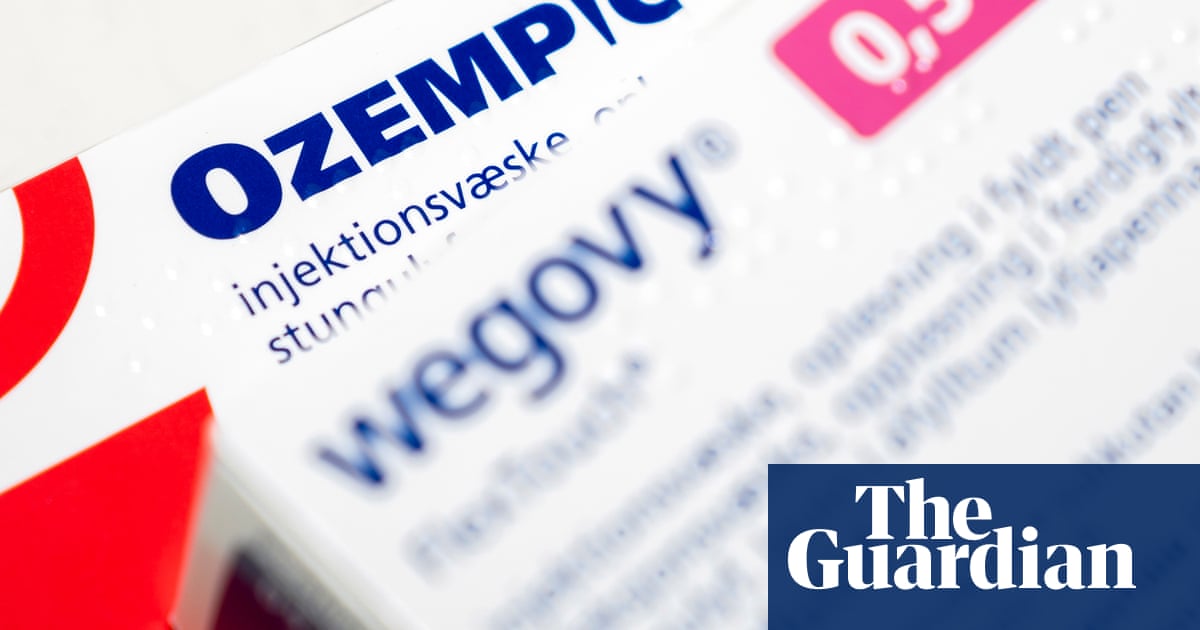
A study by scientists from the University of Bern in Switzerland has found that appetite-suppressing injections also improve mood, wellbeing and quality of life more than insulin and other antidiabetic drugs.
Originally developed for diabetes patients, the medicines have transformed how obesity is treated and there is growing evidence of wider health benefits.
I didn't know that diabetes is one of the things that tend to cause people with mental illness to die much sooner than others:Five studies found that they actually improved mental wellbeing and quality of life in people with schizophrenia spectrum disorders, major depressive disorder and bipolar effective disorder. For adults without mental illness, the weight loss injections had a greater beneficial effect on mental health than insulin and other antidiabetic drugs.
Rachel Hastings-Caplan, the clinical research policy manager at Rethink Mental Illness, said: “The physical health of people severely affected by mental illness is often overlooked, and they tragically die on average 20 years earlier than the rest of the population, often due to preventable conditions such as diabetes.
Diabetes and Mental Health (CDC, May 15, 2024)
People with diabetes are 2 to 3 times more likely to have depression than people without diabetes.
Well wouldn't you be miserable if you weren't allowed to eat chocolate!I don't think it's "happy hormones in the drug," but this is another thing I wasn't aware of (I googled it just now):
And it is also preventable:
- Even though lean mass was reduced in these studies, the amount of lean mass lost when compared to total body mass increased, suggesting a positive overall effect.
- The authors conclude that semaglutide affects weight loss primarily through fat mass reduction, but loss in lean mass leads to concerns, especially from larger clinical studies.
But it made me wonder: Is it possible that muscle wasting is not due the medication as such but due to the weight loss that it causes?The good news is that there are proven way to help maintain muscle strength if you are at risk of muscle loss.
- Engaging in strength (resistance) training and maintaining optimal levels of protein in your diet may help with muscle loss during Ozempic treatment.
- Studies have shown that resistance training can be effective to maintain muscle mass during weight loss in people with obesity or overweight.

 www.theguardian.com
With the medications known to reduce muscle mass, Whyte said an important question was whether this went beyond what would be expected from weight loss alone.
Yet with GLP-1 drugs having been used for diabetes for almost 20 years, Whyte said the data suggested overall the medications were safe.
“There was an initial concern [about], maybe it could lead to higher risk of pancreatitis or even pancreatic cancer or thyroid [cancer]. That has not been borne out in any of the follow-up data,” he said.
Any time you lose weight, you will tend to lose both fat and muscle weight, roughly in proportion to the percentage of your total body weight that was fat and muscle to begin with. This is especially true for diets that aren't accompanied by increased exercise. Semaglutide helps control your appetite so you eat less and lose weight. Calling this "muscle wasting" is alarmist nonsense.But it made me wonder: Is it possible that muscle wasting is not due the medication as such but due to the weight loss that it causes?
I.e. if you don't combine the use of Ozempic or other semaglutide products with increased exercise, you now carry around less weight than you used to, so your muscles will be exercised less and shrink.
I don't know if that's the case or if there is a way to measure if is, but it would be interesting to know.
