The Central Scrutinizer – Case

I agree - Schizophrenia does not just go away. It may vary quite considerably in its severity and manifestations, so it may at times appear to get better (but will usually flare up again).
Point is, how would the MAS collective even know how to clinically assess someone from the psychiatric point of view to recognise whether anyone had got better or just gave the impression of being better?
 
1. Show a good diagnosis to demonstrate they had schizophrenia.
2. Give half the people in the trial a conventional medicine, give half the homeopathic medication.
3. Measure thiet symptoms six months later.

Looks good, but I would make three groups: conventional meds, homeopathy, and placebo control.
 
I agree - Schizophrenia does not just go away. It may vary quite considerably in its severity and manifestations, so it may at times appear to get better (but will usually flare up again).
Point is, how would the MAS collective even know how to clinically assess someone from the psychiatric point of view to recognise whether anyone had got better or just gave the impression of being better?
More what I had in mind. I'm trying to talk in extremely simple, generalisable terms, but DD is of course quite correct.
 
...they call may of these so-called practitioners "quacks":
No way. I mean, I'm looking at the article but I still don't believe it. Is the Urdu (or Punjabi) term for someone offering sham cures also the word for the sound a duck makes? One would sure think it by reading those articles but I need someone familiar with Pakistani idioms to opine here.
 
So I am just curious where you heard that schizophrenia remits in a third of cases?

I thought I had remembered from Abnormal psych that about a third remit, a third respond well to drug treatment and a third do not respond to treatment.

I just dug out my old text and can't decide where I ever got those ideas...

Thanks for setting me straight.
 
No way. I mean, I'm looking at the article but I still don't believe it. Is the Urdu (or Punjabi) term for someone offering sham cures also the word for the sound a duck makes? One would sure think it by reading those articles but I need someone familiar with Pakistani idioms to opine here.


Well they are Pakistani sites and newspapers so I have no reason not to believe it isn't a commonly used term - indeed doing a search on "Pakistani quack" brings back a huge number of Pakistani sites using that term.
 
Why would they want to use Punjabi/Urdu terms in articles written in English?
 
Wow, we've been offered a single case. That's not at all anecdotal.

These homeopathy threads are getting even more frustrating as time goes by.
 
Wow, we've been offered a single case. That's not at all anecdotal.

These homeopathy threads are getting even more frustrating as time goes by.
Maybe if you were to dilute 'em by reading thousands of other threads? ;)

CFLarsen said:
Why would they want to use Punjabi/Urdu terms in articles written in English?
Of course one wouldn't. But the ease of translation into the English idiom, and particularly the frequency, makes me wonder if the word is also the word for a duck noise in the original language. What's Danish for "quack?" And just for fun, what's Danish for the noise a duck makes?
 
If you are refering to Quack as in a person who claims to be able to heal people with snakeoil or the likes or attempts to do so without the proper training
English: Danish:
Quack Kvaksalver

ETA: Kvak probably comes from the sound a frog makes allthough a duck can also be the origins......Anyone have better intell on this?
 
Well I'll be damned. Turns out the English word "quack" comes from the Dutch "kwaksalver" -- seller of salve.
 
I thought I had remembered from Abnormal psych that about a third remit, a third respond well to drug treatment and a third do not respond to treatment.

I just dug out my old text and can't decide where I ever got those ideas...

Thanks for setting me straight.

Darn , I thought there was something new, the law of thirds is believed to apply to those who take medication, a third will go into remission, a third respond well, and a third respond poorly.

No straight to set.
 
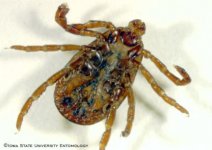
tick.jpg

The Tick?
 

ISF - Join now!

Every member here is approved by hand. No bots, no spam, just people who care about evidence and honest debate.

Membership is free!

Create your free account

Back
Top Bottom