Some countries, Japan and Korea. When your economy has a lot of old folks dependent on not many young folks supporting them, that's a potential disaster in the making .It is really strange that some people consider a return to population levels 30 years ago a "collapse"

-
Security incident: ISF was recently accessed by intruders. Please change your password, and change it anywhere else you used it. Read more
You are using an out of date browser. It may not display this or other websites correctly.
You should upgrade or use an alternative browser.
You should upgrade or use an alternative browser.
Sustainable Fuels
- Thread starter Orphia Nay
- Start date
Dabop
Master Poster

Formula E is already a big thing (as are many other classes of EV races)The trouble is that energy density for BEVs is much lower than for ICE cars. In order to compete with an ICE F1 car a BEV would need very large very heavy battery. That, of course, would compromise cornering speed, tyre wear and braking performance. I doubt that any BEV will ever compete with an ICE F1 car over a standard F1 race distance.
That's not to say you couldn't have a race of that distance involving BEVs. It would be much slower though and the fans will be whining because, apparently, the most important thing in F1 is that the engines are really really loud.

Official Home of the ABB FIA Formula E World Championship
Formula E is Change.Accelerated. Get the latest news, video highlights, race results, calendar, team & driver profiles for the all-electric racing series.

The guy I bought my places offgrid battery bank from races an electric race car...
(thats it on the trailer, behind his homemade electric Hilux lol)

Another ran Karnacross in his homemade car

(very popular as its cheap and easy to get into)
one of his races (2 mins long)
He's dropped out of that into making an EV 550 Porsche Spyder replica


I really finding out in 2025 that there were more Japanese people alive who were born between 1940 and 1944 than born between 2020 and 2024.Some countries, Japan and Korea. When your economy has a lot of old folks dependent on not many young folks supporting them, that's a potential disaster in the making .
That's still a surprising statistic to me
The Great Zaganza
Maledictorian

- Joined
- Aug 14, 2016
- Messages
- 32,988
Only if you refuse migrants and prevent integration.Some countries, Japan and Korea. When your economy has a lot of old folks dependent on not many young folks supporting them, that's a potential disaster in the making .
China avoided the "one child Armageddon" by massively "importing" brides from neighbouring countries.
theprestige
Penultimate Amazing

6 billion people depending on overconsumption of fossil fuels was already considered an unsustainable death spiral for human civilization, back in 1996.It is really strange that some people consider a return to population levels 30 years ago a "collapse"
But no, civilization would probably not collapse, if we culled 2.6 billion people... as long as the 6 billion survivors get to keep overconsuming fossil fuels at *at least* 1996 levels. The situation looks even better if we make sure to cull 2.6 billion old, infirm, unemployed, or otherwise net consumers of everyone else's labor output. Civilization is less likely to collapse if your population control focuses on people who are no longer contributing, or not currently contributing, or not capable of ever contributing.
But I doubt that's what you have in mind.
Puppycow
Penultimate Amazing

So I've heard that if you converted less than half of the land that is used to grow corn to make ethanol for fuel (and only that, not food or animal feed) it would be more than enough.Electric vehicles are based on batteries that store energy. Do they store energy as efficiently as an equivalent mass of gasoline?
That energy still has to be generated somewhere, by some means. What means do you propose? Enough wind and solar to generate all the electricity needed for a 1:1 replacement of fossil fuel-powered ground transportation?
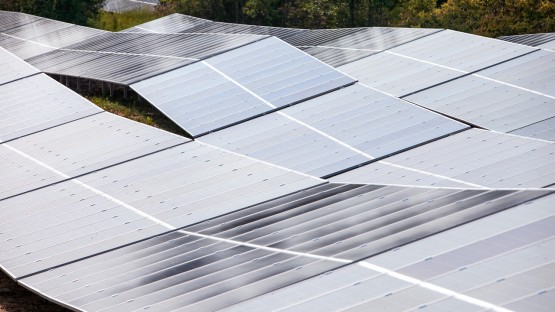
Trading some corn-ethanol land for solar offers ‘tremendous opportunity’ | Cornell Chronicle
In the U.S., strategically converting a small fraction of land used to grow corn for ethanol to solar facilities could vastly increase energy production per hectare, as well as provide ecological benefits and financial resiliency for farmers.
They found that the energy generated by one hectare of utility-scale solar would require 31 hectares of corn-ethanol crops. In other words, solar can generate the same amount of energy as corn-ethanol in just 3.2% of the land used.
Rolfe
Adult human female

Battery weight when it comes to planes. Otherwise, we've already shown its fit for purpose on cars. I don't know where we stand with all electric planes but if the power/energy weight ratio gets to the point we don't need combustion, awesome.
The issue with hydrogen for aviation is volume, also its tendency to escape.
Rolfe
Adult human female
So I've heard that if you converted less than half of the land that is used to grow corn to make ethanol for fuel (and only that, not food or animal feed) it would be more than enough.
Trading some corn-ethanol land for solar offers ‘tremendous opportunity’ | Cornell Chronicle
In the U.S., strategically converting a small fraction of land used to grow corn for ethanol to solar facilities could vastly increase energy production per hectare, as well as provide ecological benefits and financial resiliency for farmers.news.cornell.edu
Also, with careful design, solar fields can also support some kinds of agriculture. Sheep can graze under the panels, and it's being discovered that the intermittent shade produced by the panels as the earth turns enhances the growth of some crops. Vines, I think?
Puppycow
Penultimate Amazing
As countries like Japan and Korea and many European countries show, no "culling" of people is needed. Just people voluntarily choosing to have fewer children. Even compulsory government programs like China's "one child policy" aren't needed once you reach a certain level of economic development. Enough people will choose to not have children, or to have fewer children than used to be the norm, once they have access to modern education and birth control.6 billion people depending on overconsumption of fossil fuels was already considered an unsustainable death spiral for human civilization, back in 1996.
But no, civilization would probably not collapse, if we culled 2.6 billion people... as long as the 6 billion survivors get to keep overconsuming fossil fuels at *at least* 1996 levels. The situation looks even better if we make sure to cull 2.6 billion old, infirm, unemployed, or otherwise net consumers of everyone else's labor output. Civilization is less likely to collapse if your population control focuses on people who are no longer contributing, or not currently contributing, or not capable of ever contributing.
But I doubt that's what you have in mind.
theprestige
Penultimate Amazing
So I've heard that if you converted less than half of the land that is used to grow corn to make ethanol for fuel (and only that, not food or animal feed) it would be more than enough.
Trading some corn-ethanol land for solar offers ‘tremendous opportunity’ | Cornell Chronicle
In the U.S., strategically converting a small fraction of land used to grow corn for ethanol to solar facilities could vastly increase energy production per hectare, as well as provide ecological benefits and financial resiliency for farmers.
Also, with careful design, solar fields can also support some kinds of agriculture. Sheep can graze under the panels, and it's being discovered that the intermittent shade produced by the panels as the earth turns enhances the growth of some crops. Vines, I think?
Solar farms strike me as being ridiculously more labor-intensive and expensive to maintain, compared to corn farms.
It's not like you can just mow down and grind up solar panels for their stored energy every year, and then plant new ones and foster their natural growth. No, each time one breaks, you have to send a skilled knowledge worker out in some sort of energy-consuming vehicle, stocked with a complex bit of technology made from expensive materials extracted and processed at great enercy cost and great expense to the environment, to replace the broken bit, which then has a questionable recyle-reuse supply chain.
That kind of nonsense makes sense when we're talking about the energy density of oil (or uranium). It's not at all clear to me that it makes sense when we're talking about solar or wind.
But, again: one-to-one replacement is a myth. Renewables just can't compete with over a billion years of plate tectonics and five thousand gigatons of fixed carbon. Not even in a billion years.
Last edited:

Corn is not the only answer. There are multiple types of sustainable fuel methods being developed for F1. E.g.:
- Carbon Capture: Carbon dioxide (CO₂) captured directly from the atmosphere or from industrial emissions.
- Municipal Waste: Post-consumer household or city waste materials.
- Non-Food Biomass: Biological waste products that do not compete with food crops or arable land—such as agricultural residues, wood biomass, or second-generation bio-waste.
- Synthetic E-Fuels (RFNBOs): Fuels produced by combining green hydrogen (made from water using renewable electricity) with captured carbon, often synthesized via processes like the Fischer–Tropsch process to build custom hydrocarbon molecules.
theprestige
Penultimate Amazing
This process is too slow. Even as Japan and Korea have been dropping below replacement rate, humanity has added 2 billion people to the total count. The IPCC was clear twenty years ago, that this dooms humanity.As countries like Japan and Korea and many European countries show, no "culling" of people is needed. Just people voluntarily choosing to have fewer children. Even compulsory government programs like China's "one child policy" aren't needed once you reach a certain level of economic development. Enough people will choose to not have children, or to have fewer children than used to be the norm, once they have access to modern education and birth control.
theprestige
Penultimate Amazing
None of which have any hope of scaling to 1:1 replacement of fossil fuels as the fuel for human civilization.Corn is not the only answer. There are multiple types of sustainable fuel methods being developed for F1. E.g.:
- Carbon Capture: Carbon dioxide (CO₂) captured directly from the atmosphere or from industrial emissions.
- Municipal Waste: Post-consumer household or city waste materials.
- Non-Food Biomass: Biological waste products that do not compete with food crops or arable land—such as agricultural residues, wood biomass, or second-generation bio-waste.
- Synthetic E-Fuels (RFNBOs): Fuels produced by combining green hydrogen (made from water using renewable electricity) with captured carbon, often synthesized via processes like the Fischer–Tropsch process to build custom hydrocarbon molecules.
Also, F1 is a niche activity focused on ridiculous tests of human ability, at the very limit of automobile power and speed. It's perhaps one of the ew places where using fossil fuels kind of makes sense. If F1 were the only place fossil fuels were being used, it would be celebrated as a are and exotic art form, and nobody but the neighbors would care one whit about the emissions.
All this effort being invested in renewables/sustainables for F1 just lampshades how silly the idea of sustainables actually is. Cut the human population in half over ten years, fix the resulting carbon, and the entire problem of fuel shortages and catastrophic anthropogenic climate change goes away.
I'm not talking about 1:1. Lots of different types can be used.
And you don't need mass genocide or whatever form of population cull you're suggesting. Better public transport using sustainable methods is another (huge) part of the solution. Get more people than now using it, rather than one person per vehicle.
Then there's also 15 minute city design, allowing more walking/cycling.
Dabop
Master Poster
Mind you- basically ANYTHING is better than corn (that's just the US obsession with corn at work again)So I've heard that if you converted less than half of the land that is used to grow corn to make ethanol for fuel (and only that, not food or animal feed) it would be more than enough.
Trading some corn-ethanol land for solar offers ‘tremendous opportunity’ | Cornell Chronicle
In the U.S., strategically converting a small fraction of land used to grow corn for ethanol to solar facilities could vastly increase energy production per hectare, as well as provide ecological benefits and financial resiliency for farmers.
It's literally about the worst feedstock for biofuels you can possibly start with- bar none...

Dabop
Master Poster
Agrisolar is actually quite common, and it works with animals and plants...Also, with careful design, solar fields can also support some kinds of agriculture. Sheep can graze under the panels, and it's being discovered that the intermittent shade produced by the panels as the earth turns enhances the growth of some crops. Vines, I think?
Agrisolar CRC — Agrisolar CRC
 agrisolarau.com

Agrivoltaics - Wikipedia
And its not just sheep, cattle love them too lol (think anything likes being out in the Aussie sun at midday lol)
(although 'solar farms' are one of the least practical ways of utilising solar there is, and almost all of them are 'investor driven'- often relying on heavy public (taxpayer) support to become viable... as usual- investors take the profits, taypayers take the costs...)

The vast majority rely on 'investment firms' buying up cheap land out in the middle of nowhere, with inadequate power infrastructure, then building- then demanding the government pay for 'needed infrastructure upgrades' ie heavy cross country powerlines, to get the power where its needed...
Rather than using solar where the demand already IS...
Pixel42
Schrödinger's cat

Building solar farms where the demand is brings out the nimbys. There's one being planned near me and there are "Stop Lime Down' posters plastered everywhere - apparently putting up with extra traffic for a couple of years, and having solar panels visible from their country walks, is too high a price to pay for their grandchildren to have a quality of life remotely resembling the one they currently enjoy.

 www.bbc.co.uk
Lime Down solar farm plan draws 'unprecedented' public response
Opponents say the fact nearly 5,000 people have commented should "give serious pause for thought."
www.bbc.co.uk
Dabop
Master Poster
IF they brought in actual local benefits, well there wouldn't be so much opposition to them here- but they don't- they only push up land rates (making the locals pay more in rates) and demand infrastructure upgrades that only they require (meaning our income tax rate goes up)- with little to no benefit for the locals here...Building solar farms where the demand is brings out the nimbys. There's one being planned near me and there are "Stop Lime Down' posters plastered everywhere - apparently putting up with extra traffic for a couple of years, and having solar panels visible from their country walks, is too high a price to pay for their grandchildren to have a quality of life remotely resembling the one they currently enjoy.
Lime Down solar farm plan draws 'unprecedented' public response
Opponents say the fact nearly 5,000 people have commented should "give serious pause for thought."
And thats in a (very) rural area that already has one solar farm (which is falling into disrepair because it can't make money) and some investment crowd wants to build ANOTHER one- which the local feeder can't support anyway...
(they want a multi hundreds of millions 'upgrade' done to the existing feeder- which will be paid for by the local and state governments ie us taxpayers, and that they won't be paying a cent towards...)
Screw that....
Ironic that I have been in the solar industry for nearly half a century, AND live offgrid solar- yet I am NOT a fan of 'solar farms' in almost all cases- they are basically imho 'get rich scams' and almost all are 'investor driven' with little regard to actually being useful... most people who fall for them end up losing money...
(ironically- they actually SLOW solar uptake- because far too many associate solar with these scam industries...)
There's been a few cases where installing a solar farm made sense- for example a 'relatively nearby' old coal fired station was shut down- and a solar farm was constructed utilising the existing feeders and support structure- but THAT is so rare that its literally one of a single handful of farms I actually agreed with...
The vast majority are nothing but outright scams imho...