
More than double; drag increases with the square of velocity.Your Uber EV was not going at anywhere near F1 speeds. If you double the speed of a car then you double the energy consumption of the car for the same distance.

More than double; drag increases with the square of velocity.Your Uber EV was not going at anywhere near F1 speeds. If you double the speed of a car then you double the energy consumption of the car for the same distance.

An F1 race is around 300km long. The BYD Uber EV road car I rode in yesterday can travel 450km in a day without needing a recharge. I doubt recharging during a race will be necessary.
The trouble is that energy density for BEVs is much lower than for ICE cars. In order to compete with an ICE F1 car a BEV would need very large very heavy battery. That, of course, would compromise cornering speed, tyre wear and braking performance. I doubt that any BEV will ever compete with an ICE F1 car over a standard F1 race distance.The point being, electric cars are constantly improving and are coming from behind to overtake ICE on one metric after another. It's not about present performance, it's about direction of travel.

I've found that both the enthusiast and skeptics tend to be wrong.Some people will embrace the new technology and become fans, others will resist. It always takes time for change to filter through.

You mean the worst thing about them - followed by the ridiculously long race times. I wouldn't watch a Formula 1 race if you paid me. Formula E is much more enjoyable.That's not to say you couldn't have a race of that distance involving BEVs. It would be much slower though and the fans will be whining because, apparently, the most important thing in F1 is that the engines are really really loud.
No I meant the apparently most important thing - at least if you talk to the kinds of fans that post online about F1. Any time the engine formula changes to not be a three or more letter V8 or more, loads of "fans" complain about it.You mean the worst thing about them
I get that you personally don't like F1. Enough people do like it, however, to make it a business worth vastly more than Formula E.- followed by the ridiculously long race times. I wouldn't watch a Formula 1 race if you paid me. Formula E is much more enjoyable.


Formula 1 racing moves to fully 50/50% hybrid V6 engines in 2026, but the longer term plan is to move to V8 or even V10 cars running on sustainable fuels.
The FIA President thinks sustainable fuel V8s should be possible in 2029.
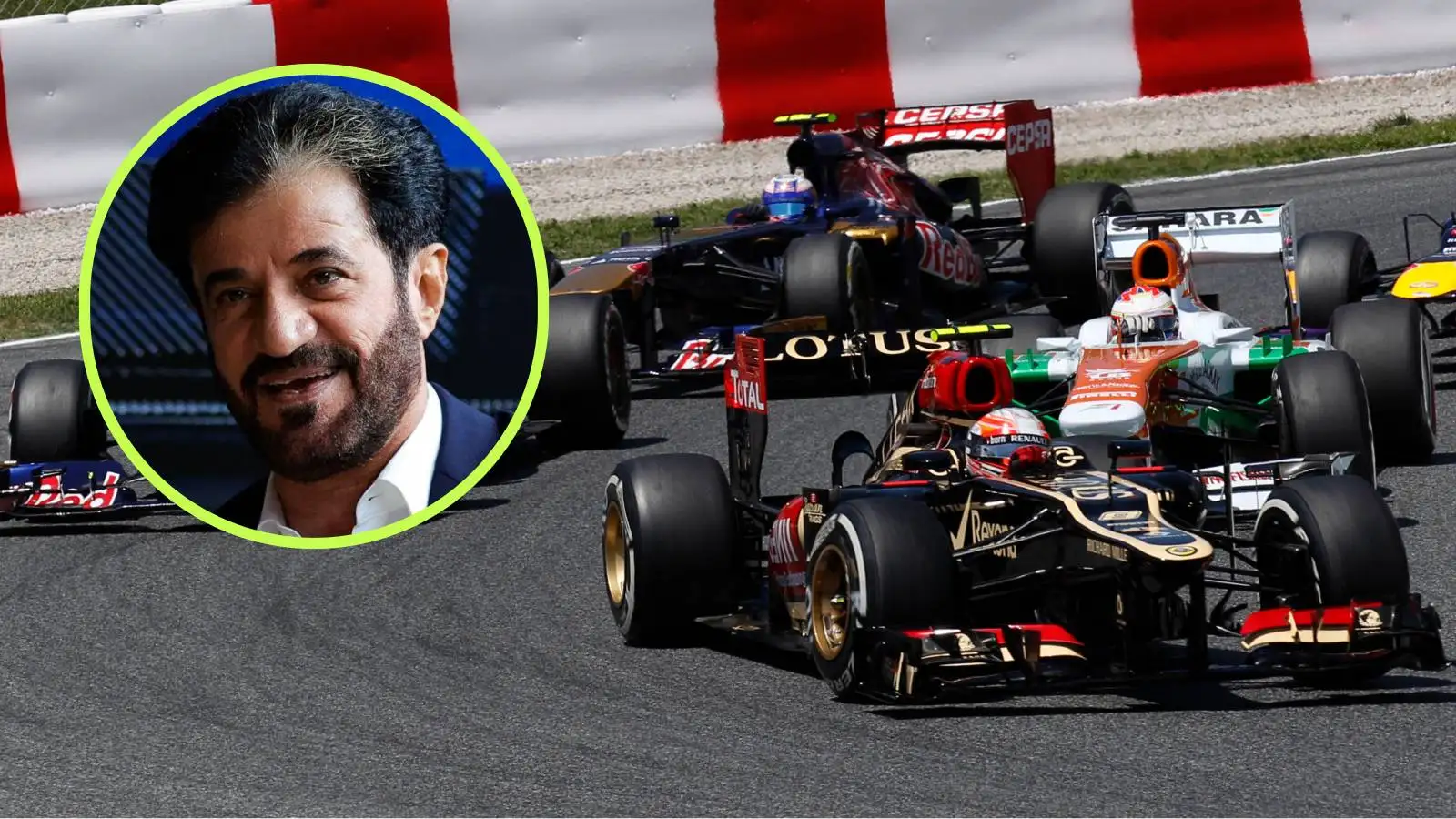
V8 engines to return? FIA president reveals possible timeline in ‘right way forward’ update
Mohammed Ben Sulayem has said the V8 engine proposal is "the right way" to go for Formula 1, as he offered a possible introduction date.www.planetf1.com
“It’s about reaching the [Net Zero] numbers when it comes to the environment. If we can reach it this way or that way, who cares?"
Airlines, too, are working on sustainable fuels.
As F1 technology, like aviation, is a precursor to road vehicle technology, are we more on track to Net Zero 2050 for transport this way?
Is sustainable fuel feasible? What issues do you see with this? Care to share what you know of the science behind sustainable fuel?

I think you're probably right about jet fuel. In the case of automobile fuel, electric vehicles seem to be a scalable alternative.Just visiting from the coconut oil jet fuel thread.
Anything can be sustainable, if you don't use much of it.
The thing we like about fossil fuels is the absolutely absurd amount of potential energy they contain, per weight and per volume. Geologic processes working over geologic time. It's the kind of thing you can only get from a rocky planet with a molten core (and a metric fuckton of fixed carbon to work with).
And here we are, burning it all to power our luxuries. If we were a truly wise species, with a world government as benevolent as it was ruthless, we'd be using it for some once-in-a-civilization project. Something truly befitting an era's worth of planetary grinding.
Anything can be sustainable, if you don't use much of it. The thing about these other fuels is that none of them* store nearly as much potential energy as fossil fuels do. A one-to-one replacement is never going to be feasible. Not for jet fuel. Not for automobile fuel. Not for fuel to keep our cities lighted and plumbed and heated. To get to sustainable fuel consumption levels, we'd have to start consuming a lot less fuel. Which, ironically, would mean our fossil fuel emissions would go way down, and our fossil fuels would last a lot longer... perhaps rendering the question of efficient biofuels entirely moot.
I think the only real answer to the question of sustainable airplane fuel is for people to take less plane rides. There is no such thing as ethical overconsumption.
*Except uranium, which nobody besides me likes for some reason.
The lower hanging fruit still accounts for more. Perhaps more fuel-efficient aircraft are also possible. They would still run on (mostly) fossil fuels, just more efficiently.Road transport accounts for roughly 45% of global transport carbon emissions, while aviation accounts for about 11.6%.
And claims that hydrogen fuel cell prop planes have a better weight efficiency than turboprops for the same range.There are already short-haul electric planes.
Electric vehicles are based on batteries that store energy. Do they store energy as efficiently as an equivalent mass of gasoline?I think you're probably right about jet fuel. In the case of automobile fuel, electric vehicles seem to be a scalable alternative.
The lower hanging fruit still accounts for more. Perhaps more fuel-efficient aircraft are also possible. They would still run on (mostly) fossil fuels, just more efficiently.
Battery weight when it comes to planes. Otherwise, we've already shown its fit for purpose on cars. I don't know where we stand with all electric planes but if the power/energy weight ratio gets to the point we don't need combustion, awesome.Why not just use the electricity as it is, without the inefficiencies of going through hydrogen and back again?

