Senate Health bill

I heard on the radio today that actually, under the proposed bill, if someone sought medical insurance that covered abortion, they would be disqualified from medical coverage under the government plan.
The caller certainly wasn't wording it correctly--at least not if they were discussing the Senate bill.

The government doesn't provide any medical coverage (other than existing programs like Medicare) under the Senate bill. The abortion language in the Senate bill is as I described a few posts earlier.
 
Apparently the Senate took the second of these 3 procedural votes today. This one was on Reid's amendments, and it passed 60-39. (To me a vote on content isn't what I'd call a "procedural vote"--but that's how it's being reported.)

CNN says a third and final procedural vote is expected Wednesday, and then a final vote on the Senate version would happen on Christmas Eve.

A final vote on a merged bill won't happen until January.

http://www.cnn.com/2009/POLITICS/12/22/health.care.senate.vote/index.html
 
Apparently the Senate took the second of these 3 procedural votes today. This one was on Reid's amendments, and it passed 60-39. (To me a vote on content isn't what I'd call a "procedural vote"--but that's how it's being reported.)

CNN says a third and final procedural vote is expected Wednesday, and then a final vote on the Senate version would happen on Christmas Eve.

A final vote on a merged bill won't happen until January.

http://www.cnn.com/2009/POLITICS/12/22/health.care.senate.vote/index.html

Yup, it'll be nice to finally put this massive piece of legislation to rest and move on to other pressing issues.

Btw, I don't know about you, but the hardcore right-wing Tea Party nuts are going absolutely ballistic nowadays. I expect to see the crazy factor on their part go up by a couple orders of magnitude in the next month or two, especially since GOP primaries are coming up and they were unable to stop health care reform.
 
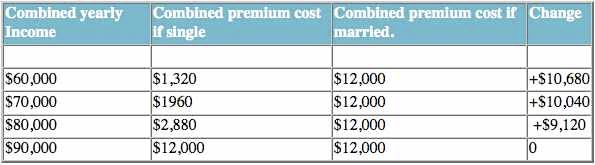
This bill is crap and should be scraped. It does nothing but cost you more money out of pocket. 60% of the populous does not want this, yet it will be passed against the will of the people. If you are married and, combined, make as little as 60K you will pay 12,000 a year. 20% of your gross income. You ready for that?
 
This bill is crap and should be scraped. It does nothing but cost you more money out of pocket. 60% of the populous does not want this, yet it will be passed against the will of the people. If you are married and, combined, make as little as 60K you will pay 12,000 a year. 20% of your gross income. You ready for that?

You know, TP, this sort of fear-mongering gets old after awhile. But, when crummy arguments like this (that, and the "socialism!!11!1 :jaw-dropp" one) are all you've got, then... :rolleyes:
 
Last edited:
It does nothing but cost you more money out of pocket.
Painter, you have a nasty habit of dishonesty that I've called you on before in this very thread but here you go again. Nothing consists of:
- elimination of recision
- elimination of pre-existing conditions
- elimination of annual and lifetime caps

and those are just off the top of my head. Now, just as before, do you want to repeat your "nothing" assertion with a straight face?

60% of the populous does not want this, yet it will be passed against the will of the people.
That may well be but note that the decline of the popularity of this bill parallels the conservative efforts to turn it into mush and an insurance give away. The overwhelming percentage of the population wants meaningful health care reform, just not the neocon variety. Hell, if I was polled I would not be supportive of this bill because, as you say, it is crap. Crap that came out of the nether regions of the right.
 
This bill is crap and should be scraped.
I was going to ask what it means to scrape a bill, but. . .

It does nothing but cost you more money out of pocket. 60% of the populous does not want this, yet it will be passed against the will of the people. If you are married and, combined, make as little as 60K you will pay 12,000 a year. 20% of your gross income. You ready for that?
. . .now I know what it means.

ETA: My next question involves the meaning of "60% of the populous".
 
- elimination of recision
- elimination of pre-existing conditions
- elimination of annual and lifetime caps
For the record, the last I heard, the wording of the Senate bill didn't completely prohibit annual caps. I think it would only prohibit unreasonable annual caps.

At any rate, I agree with your point. For all the problems with this bill, prohibiting the practice of recision alone would be worth it.

So would getting an estimated 30-40 million people insured (people with little or no access to healthcare under the status quo would have at least some basic coverage).

I just read that the 3rd and final of these procedural votes (again 60-39) has happened, and the final vote on the Senate plan will happen tomorrow.
 
For the record, the last I heard, the wording of the Senate bill didn't completely prohibit annual caps. I think it would only prohibit unreasonable annual caps.

I think the Manager's Amendment improved that. As soon as I have an opportunity I'll check into it.
 
I think the Manager's Amendment improved that. As soon as I have an opportunity I'll check into it.

I think you're right.

I see something about it on page 2 of the Manager's Amendment. (Section 2711.)

I haven't read that entire thing. At a glance, it looks like the annual cap would phase in over several years. (I could be wrong about that--I'm on my way out the door.)
 
I think you're right.

I see something about it on page 2 of the Manager's Amendment. (Section 2711.)

I haven't read that entire thing. At a glance, it looks like the annual cap would phase in over several years. (I could be wrong about that--I'm on my way out the door.)

Exactly, unless I am misreading it, there can be no limits on plans starting after Jan 1 2014. Now if the conference can get the House anti-trust provisions in the bill.
 
At any rate, I agree with your point. For all the problems with this bill, prohibiting the practice of recision alone would be worth it.
But its not necessary to pass this bill to get that. Just pass a seperate bill banning recision specifically. Who would vote against it? At the start of this debate, even Republicans were running away from that chunk of the insurance companies.

So would getting an estimated 30-40 million people insured (people with little or no access to healthcare under the status quo would have at least some basic coverage).
But this is a terrible way to achieve that. Forcing people to buy into a private health insurance plan and giving them a subsidy if they can't do it themselves will do nothing to address the real causess of rising healthcare costs in the US. It migh buy us five to ten years of breathing room, and then we will be right back here again with the exact same problem.
 
This bill is crap and should be scraped. It does nothing but cost you more money out of pocket. 60% of the populous does not want this, yet it will be passed against the will of the people. If you are married and, combined, make as little as 60K you will pay 12,000 a year. 20% of your gross income. You ready for that?
This is where the expansion of Medicaid, and the subsidies come into play.

2whjeww.jpg
 
But its not necessary to pass this bill to get that. Just pass a seperate bill banning recision specifically.
My understanding is the insurance companies would never go for that without getting the individual mandate in return. (Earlier I cited the House investigation into rescission, and I think that's pretty much what the industry representatives said.) And you can't do that without providing assistance to the people who honestly can't afford an actual premium.

It's all pretty interconnected.

ETA: Here's what I was thinking of:

House Energy & Commerce Committee said:
IV. CONCLUSION
In written testimony for today's hearing, all three insurance companies stated that the
passage of comprehensive health care reform legislation would eliminate the controversial
practices of denying coverage based on preexisting conditions, investigating policyholder
medical records for omissions, and the rescission of coverage for policyholders.
Richard Collins, the CEO of UnitedHealth Group's subsidiary, Golden Rule Insurance
Company, stated:
[O]ur country needs comprehensive health reform.... Until comprehensive reform is
achieved, we believe that the medical underwriting of individual policies will continue to
be necessary. If these changes are instituted, most of the reasons for individual medical
underwriting - as well as most of the reasons that individual policies are rescinded or
terminated - would cease to exist.68
Similarly, Brian Sassi, the President and CEO of Consumer Business at WellPoint, Inc.,
stated:
[T]he elimination of medical underwriting combined with an effective and enforceable
personal coverage requirement ... would render the practice of rescission unnecessary.69
Finally, Don Hamm, the President and CEO of Assurant Health, statedmhis written
testimony:
[W]e can achieve the goal we share - providing health care coverage for all Americans.
. .. If a system can be created where coverage is available to everyone and all Americans
are required to participate - the process we are addressing today - rescission -
becomes unnecessary.70

This is from the end of the "Supplemental Memo", but all the testimony (in PDF form) is available on this page.
 
Last edited:
But this is a terrible way to achieve that. Forcing people to buy into a private health insurance plan and giving them a subsidy if they can't do it themselves will do nothing to address the real causess of rising healthcare costs in the US. It migh buy us five to ten years of breathing room, and then we will be right back here again with the exact same problem.

Those comments were in response to the claim that this bill does nothing good at all. And it does.

At any rate, this is the most favorable congress for healthcare reform we're going to have for a long time, and it seems like even this bill is going to require every last vote and even that at the cost of lots of political quid pro quo.
 
So would getting an estimated 30-40 million people insured (people with little or no access to healthcare under the status quo would have at least some basic coverage).

.

If this is so important to get it done NOW, why does it not start until 2014. All those without insurance won't get it until 2014. How does this help them?

MM not fear mongering, just the truth and the truth is scary.

Allen-Quist-Article-Graphic-12-9-09.jpg

A marriage penalty
 
If this is so important to get it done NOW, why does it not start until 2014. All those without insurance won't get it until 2014. How does this help them?

One of the immediate effects of the bill is that high risk pools (Sec 1101) would be created while the exchanges are setup. Individuals who currently don't have insurance would have access to those with the protections in the bill, like not getting turned down for a preexisting condition.
 
If this is so important to get it done NOW, why does it not start until 2014. All those without insurance won't get it until 2014. How does this help them?

First, what jdp said.

Second, it's important to get it done now because this is the most favorable Congress we're going to have for a long long time for actually passing healthcare reform (since it will always have to overcome a Republican filibuster).

Third, even putting aside that political question, if it didn't pass until 2014, then it probably wouldn't phase in until 2018. Ask Rep. Dingell how long overdue healthcare reform is already. This notion that it's something that only just recently popped up and is being rammed through in haste just doesn't fit the history.
 
If this is so important to get it done NOW, why does it not start until 2014. All those without insurance won't get it until 2014. How does this help them?

Do you have no sense of history at all? I've seen so many people make this stupid argument that it just galls me. Think about what happened with Social Security. The legislation was passed in 1935, but the system didn't kick into full swing and start making regular payments until 1940 - it took five years for the program to kick in. Such things take time - duh.

MM not fear mongering, just the truth and the truth is scary...

A marriage penalty

Yeah, no fear-mongering :rolleyes:
 
Last edited:

Back
Top Bottom