In trying to make my point I have probably oversold it. If I give off the impression that people are prancing around the woods, chasing fairies whilst singing “Tra-la-laa” then I assure you that is not what I am getting at. I’m struggling to find the right vocabulary to describe it better in a roundabout manner:
If you get the time read this (
http://home.yowieocalypse.com/Yager_Yowie/) – it’s a good example of Enchantment (albeit for children). When adults do Enchantment for other adults (or for themselves) it is more subtle and multifaceted. Consider the “phenomenon” of fairy doors – tiny doorways constructed innocuously at the base of parkland trees and some inner-city buildings. Many people pass by without ever noticing and why would they? Fairies don’t exist so you shouldn’t be looking for their non-existent homes. Others may see it on occasion (ie enters their visual field) but it may not even register because they are not really paying attention and a tiny doorway is not something that one expects to see.
Imagine that you do see a fairy door in a spot you’ve been passed through time and time again. “Hey, what the…” – THAT MOMENT. That brief moment of wonder before reason steps in and you then smile/snort. That’s the feeling I am trying to get at and the subtle mindset of creative visualization I am trying to describe when I say “engaging with make-believe”.
Did that help or just make it less clear?
Working in the music industry for many years you will know that the entire industry has changed significantly over the last 15 years or so, right? In many ways its harder because the entire recording/distributing environment is different – you’ve had to change and adapt your business to survive, right? But whatever happens in the years to come people will still be making music even if there is no money in it, even if it costs them to do so because music is in some way an essential part of who we are. Music “touches” people in that Enchanting way. Follow me so far?
So, like music, the stories we live have similar significance to attain that magical experience that exists beyond quantification. Just as the music industry is changing so is the manner in which people share their stories. People are no longer content to be passively entertained, they want to be actively immersed within the story, participants even. People don’t even have to make money off storytelling – its an intrinsic thing that comes naturally to all of us, organically. It harkens back to something primal and has communal value. Bigfoot is an example such organic immersive storytelling – Bigfoot is for anyone but its also not for everyone. Bigfoot, then, is a bit like the fairy doors – you have to be paying attention to see it and if you do how would you react? Smile or snort?
I’ve addressed the apparent dangers of Bigfoot hunting above. Hysteria by any other name still smells like BS…
There is no evidence to suggest that they are any less sane than any other subculture (including that of “Bigfoot skeptics”). Folk-beliefs and practices are not valid criteria for diagnosing mental illness, you know…
I agree and that is what I did with my own children. But making stuff up is also really cool, creativity is cool, copying what other creative people do is cool, music and stories are cool and so is engaging with others who enjoy similar things, to be a part of an experience, a tradition, or something new – its all really cool. Bigfoot is way cool. People do cool “weird stuff” all the time and it is so cool that they can express themselves creatively without being judged… well, that is the ideal anyway. But, then, I am a dreamer. Can I ask if music just a business for you?
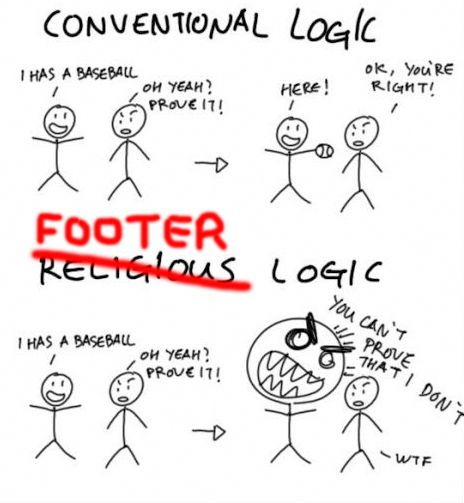
[qimg]http://i60.tinypic.com/1z4lq4n.jpg[/qimg]
If that’s an accurate reflection of how Bigfoot and the like moves you personally, if that’s what really works best for you then I salute you in your choice –
Go, you indignant crusader of righteousness!