• Security incident: ISF was recently accessed by intruders. Please change your password, and change it anywhere else you used it. Read more

Sacrificing food for energy

It wouldn't be precisely photovoltaic--but it would still be solar energy. It's one of several types of solar power plants being constructed around the country just now.
 
More or less, yeah. At least, that's my understanding. They do have to be somewhat careful--too much concentrated sunlight will actually weaken the structure holding the steam, so they have to spread the beam out a bit.
 
panels are only efficient if they track, and remain perpindicular to the sun.

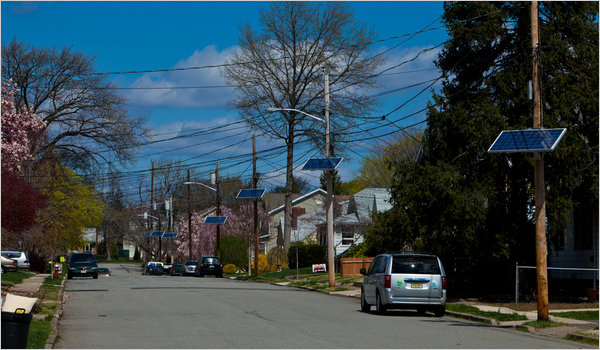
None of the ones I see track the sun. I assume they are place at a fixed angle that maxes out average solar illumination. Also in our state we have thousands of solar panels installed on telephone poles, about a meter square and fixed and not tracking. Want pics? Perhaps the additional cost and maintenance of panels that track cancels out their greater efficiency.
 
None of the ones I see track the sun. I assume they are place at a fixed angle that maxes out average solar illumination. Also in our state we have thousands of solar panels installed on telephone poles, about a meter square and fixed and not tracking. Want pics? Perhaps the additional cost and maintenance of panels that track cancels out their greater efficiency.

oil field installations in my area also use fixed mount panels.
that does not change the fact that panels are only at peak eficiency when the sun is directly perpindicular to the panels. they lose power dramatically as the sun moves from this position.
if they do not track, you need many more panels to match the power output of tracking panels.

this is a fact.
 
These fixed solar panels my state is installing on utility poles together (200,000) would cover a farm of 170 acres:
67364eb29a1c6c74f.jpg


"One panel will produce enough kilowatt hours in one year to light four 60-watt bulbs around the clock for around six weeks, the company said.

When complete, the panels on the poles are expected to provide half of the 80 megawatts of electricity generated by the utility's overall $515 million solar investment — enough to power 6,500 homes."

NY Times
 
Last edited:

ISF - Join now!

Every member here is approved by hand. No bots, no spam, just people who care about evidence and honest debate.

Membership is free!

Create your free account

Back
Top Bottom