Merged Relativity+ / Farsight

Yes. Much of this is evidence that we need a theory which accounts for the wave nature of matter that also including quantization, high-energy scattering, spatially-localized states, etc.. Quantum mechanics, specifically QFT, is exactly such a theory. The things you cite are evidence for QFT.
And like I said, it's quantum field theory. Not quantum point-particle theory. The electron is field. It isn't some point particle that has a field.

You seem to think evidence of waves is evidence against particles. Nope.
I'm telling you that the evidence of the wave nature of the electron is evidence against it being a point-particle. And that there is no evidence of the latter. There's no evidence of substructure down to a small size, and the wrong inference is drawn. Like I said, it's like probing a whirlpool with a bargepole and declaring that the billiard ball must be very small.

ben m said:
QFT includes all these wave behaviors in a manner 100% compatible with the particle-like (indeed point-particle-like) behavior I've mentioned.
It includes these wave behaviours, but it is not at all compatible with point particles. In QFT the electron is described as an excitation of the electron field. Not a point particle.

ben m said:
Weird, isn't it? Wave-particle duality, even more than "uncertainty", is the aspect of quantum mechanics that beginners, even mathematically-savvy beginners, have the hardest time grasping. You are not alone in failing to understand it.
Oh but I do understand it. Everybody can. All they have to do is take a look at topological quantum field theory and note that it's related to knot theory. They'll soon work out that the electron is a Dirac's belt wave configuration. Then they'll work out that you see it as a competitor theory and want to stifle it.

ben m said:
You are pretty much alone in thinking that all of the experimental physics of the 20th century is a giant disproof of all of the theoretical physics of the 20th century.
Not me. I'm the one who refers to the evidence. You're the one who tries to dismiss it because it proves you wrong.

ben m said:
Not so long ago (this thread? another? I forget) I put a fair amount of effort into a clear and accurate explanation of the "virtual pair" business that you are mangling again. I welcome you to quote that explanation and attempt to understand it again. I'm not re-explaining it.
Bah. It was your usual cargo-cult popscience non-explanation that didn't hold water. And LOL, are you trying to evade the issue? Let's have it again shall we?

In two-photon physics one of the photons is alleged to fluctuate into an electron-positron pair, which the other photon interacts with. That's a nonsense, a tautology. Photons do not morph into fermion pairs which morph back into one photon which nevertheless managed to travel at c. Pair production does not occur because pair production occurs. Spontaneously, like worms from mud.

All: the issue we have here is that there are some fairy-stories touted around under the banner of physics or cosmology. But here at JREF there are some people who will say anything to try and suppress any debate or skepticism of them.
 
...

All: the issue we have here is that there are some fairy-stories touted around under the banner of physics or cosmology. But here at JREF there are some people who will say anything to try and suppress any debate or skepticism of them.

No, the issue we have here is that the loopy photon models of the electron you've been talking about are pseudo-scientific crackpottery which are internally inconsistent and cannot make testable predictions.
 
And like I said, it's quantum field theory. Not quantum point-particle theory.
You put a lot of meaning into the name. Others, who seem to know a lot more about QFT than you do, claim that the particle nature is part of QFT. Can you show that they are wrong by presenting the theory itself without resorting a semantic analysis of its name?
 
Sure. Just take a look on wikipedia. It says QFT treats particles as excited states of an underlying physical field. It doesn't treat them as point particles which "have" a field. Or take a look at Quantum Field Theory by David Tong at DAMTP, where you can read that the Compton wavelength is the distance at which the concept of a single pointlike particle breaks down completely. The electron Compton wavelength is 2.42 ×10ˉ¹² m. But ben m will tell you the electron is some 10ˉ²² m speck that "has" a field, and ctamblyn will accuse me of pseudo-scientific crackpottery. When actually it's me telling you about QFT and TQFT and the legit physics.
 
If you were simply arguing over how best to interpret QFT and translate it into words for pedagogical purposes, I suspect we wouldn't have the problem we do.

The problem, Farsight, is that you say stuff like
Shades of TQFT, an electron is a Dirac's belt spindle-sphere-torus trivial-knot standing-wave of displaced frame-dragged space.
and link to stuff like this and this, which to put it exceptionally politely we find unconvincing.

Those aren't parts of quantum field theory, regardless of what that theory says about the spatial extent of an electron.
 
No they aren't parts of quantum field theory. But Dirac's belt is legit. As is electron diffraction. As is electrons existing as standing waves in atomic orbitals. As is displacement current and the frame dragging of gravitomagnetism, which Heaviside developed as an analogue of electromagnetism. As is Maxwell and Minkowski referring to the screw nature of the electromagnetism. As is TQFT. But what? You'd rather disregard all that, and the field aspect of quantum field theory, and go round saying the electron is some mysterious fundamental point-particle that is created spontaneously like worms from mud? With no actual explanation at all? Like the photons pop out of existence, and the electron and positron pop into existence? Like the grace of God surpasseth all human understanding, and woe betide anybody who is sceptical of that.
 
But when I try and tell people about the screw nature of electromagnetism, I get shouted down by the troll-patrol.
Your bleatings about the screw nature of electromagnetism are shouted down because you continue to say things like this:

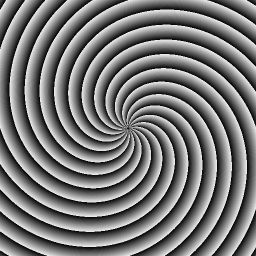
pinwheel.jpg


That’s what the electron’s electromagnetic field would look like if you sliced through it from any direction. It’s isotropic. Let your eyes linger on it. Does it remind you of a whirlpool? A vortex? Ever heard of a vorton? Now maybe you understand what Maxwell was groping for with his vortexes. He thought an electromagnetic field was a sea of vortices, and particles moved through it. But he got it back to front.
So far as anyone can tell, that field has no connection to real electromagnetic fields as described by Maxwell's equations. Maxwell's equations say electric fields can't look like that, and Maxwell's equations also say magnetic fields can't look like that. The combined electromagnetic field is six-dimensional, so it's a little harder to talk about what the full electromagnetic field would look like in a two-dimensional projection, but John Duffield of Poole (aka Farsight) has never been able to explain any scientific connection between that picture and the electromagnetic fields described by Maxwell's equations.

The screw nature of electromagnetism is easily illustrated by showing true pictures of magnetic fields and the motion of charged particles through electromagnetic fields, but you have tried to shout down those true pictures by claiming the magnetic field is not a field. To support your claim, you quoted a textbook that's chock-full of references to the magnetic field.

The proper response to your argument is laughter, and that's pretty much the response you've gotten.
 
Last edited:
...and ctamblyn will accuse me of pseudo-scientific crackpottery.

...

To be precise, I said the loopy photon models of the electron you've been talking about are pseudo-scientific crackpottery which are internally inconsistent and cannot make testable predictions, which is perfectly true. You claim to disagree, yet you cannot show us how any one of the loopy photon models you've been talking about can be used to make experimentally testable assertions.
 
...

Like the grace of God surpasseth all human understanding, and woe betide anybody who is sceptical of that.

Your quite right that existing mainstream theories leave several questions unanswered. You're wrong if you think that the pseudoscience you've been posting in this thread provides those answers.
 
Sure. Just take a look on wikipedia. It says QFT treats particles as excited states of an underlying physical field. It doesn't treat them as point particles which "have" a field. Or take a look at Quantum Field Theory by David Tong at DAMTP, where you can read that the Compton wavelength is the distance at which the concept of a single pointlike particle breaks down completely. The electron Compton wavelength is 2.42 ×10ˉ¹² m. But ben m will tell you the electron is some 10ˉ²² m speck that "has" a field, and ctamblyn will accuse me of pseudo-scientific crackpottery. When actually it's me telling you about QFT and TQFT and the legit physics.
Sounds convincing to me. Particularly after having skimmed through Tong's lecture notes (I cannot understand math).

Can anybody else in the same fashion show that point particles are part of QFT?
 
...So far as anyone can tell, that field has no connection to real electromagnetic fields as described by Maxwell's equations...
Of course it has. Find an article on gravitomagnetism. See the depiction of frame dragging? Heaviside developed gravitomagnetism, and Maxwell's equations are actually the Maxwell-Heaviside equations.

...Maxwell's equations say electric fields can't look like that, and Maxwell's equations also say magnetic fields can't look like that.
The field concerned is the electromagnetic field. See wikipedia and note the mention of greater whole? Also see section 11.10 of Jackson’s Classical Electrodynamics and note where he says “one should properly speak of the electromagnetic field Fuv rather than E or B separately”. That’s because E and B denote forces that result from field interactions. Remember what Minkowski said again?

"In the description of the field caused by the electron itself, then it will appear that the division of the field into electric and magnetic forces is a relative one with respect to the time-axis assumed; the two forces considered together can most vividly be described by a certain analogy to the force-screw in mechanics..."

See that screw? You depict E with radial lines of force, you depict B with concentric lines of force. To visualise that greater whole, the field caused by the electron itself, you combine the radial and concentric lines like this:
 

Attachments

  • EMfield.jpg
    EMfield.jpg
    43.3 KB · Views: 117
Last edited:
See that screw? You depict E with radial lines of force, you depict B with concentric lines of force. To visualise that greater whole, the field caused by the electron itself, you combine the radial and concentric lines like this:

[qimg]http://bogpaper.wpengine.com/wp-content/uploads/2013/08/emfield.jpg[/qimg]
That is not a mathematical equation. That is a crackpot equation.

I'm not the one shouting down here. The field is the electromagnetic field. Maxwell unified electricity and magnetism over a hundred and fifty years ago.
Yes. Maxwell also explained how that electromagnetic field can be decomposed into electric and magnetic fields, and devised equations that say how the electric field is related to the magnetic field.

As I have said elsewhere, the decomposition of an electromagnetic field into electric and magnetic fields is directly analogous to the decomposition of spacetime into space and time.
 
Sounds convincing to me. Particularly after having skimmed through Tong's lecture notes (I cannot understand math).
Good stuff steen.

Can anybody else in the same fashion show that point particles are part of QFT?
Somebody will probably refer you to this CPEP standard-model image:

http://www.cpepphysics.org/images/chart_2006_4.jpg

See how the electron is shown as something very small with a size of < 10-18m? It's catch 'em young pop-science misinformation for kids, and guys like ben will not permit any criticism of it.
 
No they aren't parts of quantum field theory. But Dirac's belt is legit. As is electron diffraction. As is electrons existing as standing waves in atomic orbitals. As is displacement current and the frame dragging of gravitomagnetism, which Heaviside developed as an analogue of electromagnetism. As is Maxwell and Minkowski referring to the screw nature of the electromagnetism. As is TQFT. But what? You'd rather disregard all that, and the field aspect of quantum field theory, and go round saying the electron is some mysterious fundamental point-particle that is created spontaneously like worms from mud? With no actual explanation at all? Like the photons pop out of existence, and the electron and positron pop into existence? Like the grace of God surpasseth all human understanding, and woe betide anybody who is sceptical of that.

I think you're putting words in my mouth. Although I am quite happy with photon number not being a conserved quantity, I'll give you that.
 
Sorry Clinger, I changed my post because the image was too wide.

That is not a mathematical equation. That is a crackpot equation.
It's a depiction relating to one should properly speak of the electromagnetic field Fuv rather than E or B separately.

Yes. Maxwell also explained how that electromagnetic field can be decomposed into electric and magnetic fields, and devised equations that say how the electric field is related to the magnetic field.
No. He unified the electric field and the magnetic field to yield the electromagnetic field. They are not two different fields, they are two aspects of "the greater whole".

As I have said elsewhere, the decomposition of an electromagnetic field into electric and magnetic fields is directly analogous to the decomposition of spacetime into space and time.
Minkowski did talk about spacetime. But he referred to a screw too. As did Maxwell. Obviously you've never read the original material.
 
I think you're putting words in my mouth...
Maybe I am. But it didn't sound like you were backing me up when I referred to the wave nature of the electron. Are you? If so, what kind of a wave is it? Is it a wave propagating linearly at c? Don't think so. But let's see now, we made it along with a positron in gamma-gamma pair production, it's got a magnetic moment, it's got spin ½, there's the Einstein-de Haas effect which demonstrates that spin angular momentum is like classical angular momentum, we've got atomic orbitals where electrons exist as standing waves, we can diffract it, we can refract it as per Ehrenberg and Siday. Et cetera et cetera. I know, it must be a point particle!
 
That you can combine E and B fields into the electromagnetic tensor does not legitimise your cartoon spiral.
 
And I'm not engaging in an argument of whether the electron is point like or not. My issue is with the model of it as a photon confined to some kind of Möbius loop.
 
edd[/quote said:
That you can combine E and B fields into the electromagnetic tensor does not legitimise your cartoon spiral.
What does is the resemblance between my "cartoon spiral" and depictions of gravitomagnetism. And the way Maxwell referred to vortices. And the way counter-rotating vortices attract whilst co-rotating vortices repel. A cyclone is a vortex. If you could set down two cyclones next to one another they’d move linearly apart. If you could set down a cyclone near to an anticyclone they’d move linearly together. And if you could hurl the cyclone past the anticyclone, they’d swirl around one another too. Like electrons and positrons do in positronium. Sigh, I suppose you're going to tell me that electrons etc move the way they do because they're somehow magicking up photons and throwing them another. As if hydrogen atoms twinkle, and magnets shine.

edd said:
And I'm not engaging in an argument of whether the electron is point like or not.
What you mean is that you know I'm right, but you won't admit it.

edd said:
My issue is with the model of it as a photon confined to some kind of Möbius loop.
You mean like Dirac's belt? Like I made that one up:

"In contrast, the Mobius strip is a non-orientable surface, because a right-handed figure, moved continuously around the loop until arrive back at its starting point, becomes left-handed. An object must be translated around the loop twice in order to be restored to its original position and chirality. In this sense a Mobius strip is reminiscent of spin-1/2 particles in quantum mechanics, since such particles must be rotated through two complete rotations in order to be restored to their original state".

You'll be telling me all about the multiverse next, won't you edd?
 
Sounds convincing to me. Particularly after having skimmed through Tong's lecture notes (I cannot understand math).

Can anybody else in the same fashion show that point particles are part of QFT?


Oh certainly…

http://en.wikipedia.org/wiki/Compton_wavelength#Limitation_on_measurement

This argument also shows that the reduced Compton wavelength is the cutoff below which quantum field theory – which can describe particle creation and annihilation – becomes important.

The Compton wavelength can be contrasted with the de Broglie wavelength, which depends on the momentum of a particle and determines the cutoff between particle and wave behavior in quantum mechanics.

Rather curious that given Farsight’s apparent fixation on particular words that he evidently misses (perhaps deliberately) the word “single” in the quote he cites. Indeed when you have to consider at least 2 point particles (due to the additional energy of a measurement of an electron at the Compton scale) “…the concept of a single pointlike particle breaks down completely”.

Bolding added.

The problem with quote mining is that you can often get buried by it.

ETA: for those interested here is the relevant portion that Farsight mined the quote from (bottom of page two going to page three).

We learn that particle-anti-particle pairs are expected to be important when a particle of mass m is localized within a distance of order {formula did not copy}

At distances shorter than this, there is a high probability that we will detect particleanti-
particle pairs swarming around the original particle that we put in. The distance _
is called the Compton wavelength. It is always smaller than the de Broglie wavelength
_dB = h=j~pj. If you like, the de Broglie wavelength is the distance at which the wavelike
nature of particles becomes apparent; the Compton wavelength is the distance at which
the concept of a single pointlike particle breaks down completely.
 
Last edited:

Back
Top Bottom